To Van Duong stopped in the bedroom doorway.
Her eyes immediately fell on the two suitcases beside my bed.
“Thu Y, are you going somewhere?”
I zipped the smaller suitcase.
“Business trip.”
“For how long?”
“Eighteen months.”
Her face changed.
“Eighteen months?”
I nodded.
“Denmark.”
For several seconds, she said nothing.
Then her hand unconsciously moved toward her stomach.
I noticed.
She noticed me noticing.
Her hand immediately dropped.
“When did you decide?”
“Today.”
“But Tu Ngon knows?”
“No.”
She seemed more anxious than I expected.
“You should discuss something this important with your husband.”
Husband.
The word almost made me laugh.
I looked at her.
“Why?”
She froze.
“We’re family.”
“Are we?”
Her face went pale.
Before she could answer, the front door opened.
Luong Tu Ngon had returned.
He walked into the bedroom and stopped when he saw the suitcases.
“What is this?”
“I’m going abroad for work.”
His eyebrows tightened.
“You already rejected that project.”
“I changed my mind.”
“When?”
“Today.”
His expression became cold.
“And you didn’t think you should discuss it with me?”
I folded another sweater.
“You’ve been making important decisions without discussing them with me for seven years.”
His face stiffened.
For one brief second, fear appeared in his eyes.
Then it vanished.
“What’s wrong with you lately?”
“Nothing.”
“Thu Y.”
He reached for my arm.
I stepped aside.
His hand remained suspended in the air.
To Van Duong quickly intervened.
“Maybe she’s just tired. Don’t argue because of me.”
Because of her.
Again.
Everything somehow returned to her.
I smiled.
“Don’t worry. I’m not arguing.”
Then I closed the suitcase.
“I leave Friday.”
That night, Luong Tu Ngon slept beside me.
Or pretended to.
At two in the morning, his phone lit up.
A message appeared.
Van Duong.
“I can’t sleep. The baby keeps making me nauseous.”
He immediately picked up his phone.
Then remembered I was beside him.
He turned the screen facedown.
“Who is it?” I asked.
“Work.”
I looked at him in the darkness.
Seven years.
And he could still lie without hesitation.
“Go,” I said.
“What?”
“If work is urgent, go.”
He studied my face.
Finally, he got dressed.
Twenty minutes later, I watched his car leave through the window.
I didn’t cry.
Instead, I opened my laptop and changed the password to my house’s smart lock.
Four days remained.
The next morning, my brother came.
He didn’t knock gently.
He entered angrily.
“You’re going to Denmark?”
I poured myself coffee.
“Van Duong told you?”
“Why didn’t you tell me?”
“Would it change anything?”
“Of course!”
He slammed his palm on the table.
“Van Duong just returned. Her health is unstable. You’re leaving at exactly the worst time.”
I stared at him.
“My job has nothing to do with her.”
“How can you say that? She’s practically our sister.”
“No.”
My voice remained calm.
“She is your responsibility because you’ve chosen to make her your responsibility.”
He frowned.
“What’s that supposed to mean?”
“It means I’m finished giving her my share.”
His expression changed.
“Thu Y.”
I interrupted him.
“Since childhood, whenever there was one good thing, you asked me to give it to her because she had less.”
Clothes.
School supplies.
Birthday trips.
My mother’s jewelry.
My time.
My room whenever she stayed with us.
“You always said I was stronger.”
His anger weakened.
“Her parents died young.”
“So did ours.”
He became silent.
I looked directly at him.
“Why was I never allowed to be the person who needed protecting?”
He opened his mouth.
Nothing came out.
I almost told him I knew.
About the pregnancy.
About the fake marriage certificate.
About his betrayal.
But suddenly I didn’t want an explanation.
There are truths that stop mattering once the damage is complete.
So I simply said:
“Please leave.”
He stared at me as though he no longer recognized his younger sister.
Maybe he didn’t.
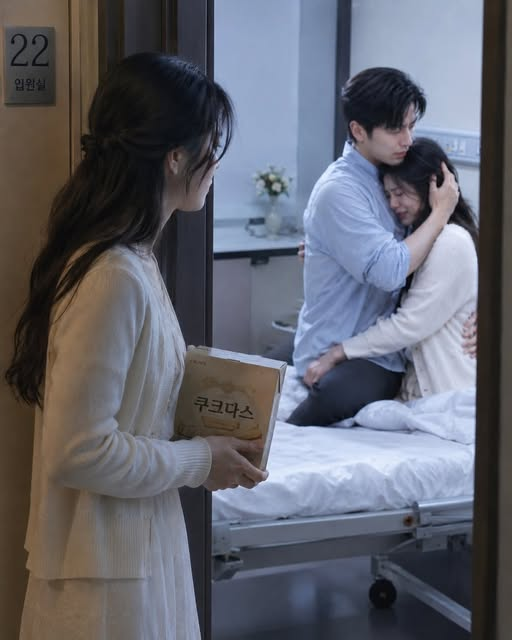
The old Khuong Thu Y would have forgiven him before he even apologized.
That woman was already gone.
Friday morning arrived quietly.
Luong Tu Ngon thought my flight was Saturday.
I had deliberately given him the wrong date.
At six thirty, I carried my two suitcases downstairs.
The house looked exactly as it always had.
Except for one envelope on the dining table.
Inside were three things.
A copy of the official confirmation showing I had never legally registered a marriage.
Photographs of the fake certificates.
And a handwritten note.
Only one sentence:
“Seven years was long enough to live inside your lie.”
I didn’t wait to see his reaction.
At 8:40, I boarded my flight.
At 9:17, my phone began vibrating.
Luong Tu Ngon.
Again.
Again.
Again.
Twenty-three missed calls.
Then my brother.
Then Van Duong.
Messages appeared rapidly.
“Thu Y, where are you?”
“Listen to me.”
“It’s not what you think.”
“Come back first.”
“We can explain.”
I switched my phone to airplane mode.
The plane left the ground.
For the first time in seven years, nobody needed anything from me.
I slept almost the entire flight.
Eighteen months became three years.
I stayed in Denmark.
The project succeeded.
I became regional technical director.
I learned Danish badly, learned to sail slightly better, and learned something far more important:
Loneliness and freedom can feel almost identical at first.
The difference appears when you stop being afraid of silence.
Three years later, my company sent me back for an industry conference.
I had been home less than twenty-four hours when someone waited outside the hotel.
Luong Tu Ngon.
He looked older.
Much older.
“Thu Y.”
I stopped.
“How did you know I was here?”
“Your brother told me.”
Of course he did.
Tu Ngon stepped closer.
“I’ve waited three years.”
I almost smiled.
“I waited seven.”
He lowered his head.
“I know.”
Then he told me what had happened after I left.
Van Duong gave birth to a boy.
Tu Ngon tried to build a family with her.
It lasted eleven months.
Apparently loving someone in secret and living with them every day were very different things.
They argued constantly.
Van Duong resented that he still kept things from our old home.
He resented that she expected him to become the man she had imagined.
Eventually, she left with the child.
“I was wrong,” he said.
“About what?”
“Everything.”
“That isn’t an answer.”
His eyes reddened.
“I thought because you were strong, you would always be there.”
That sentence sounded familiar.
My brother had thought the same.
So had Van Duong.
Everyone had treated my strength as permission to hurt me.
Tu Ngon continued.
“The fake certificate was my greatest shame.”
“No.”
He looked at me.
“The fake certificate was paper.”
I spoke calmly.
“The worst part was waking beside me every morning for seven years knowing I believed something that wasn’t true.”
His face crumpled.
“I loved you too.”
I shook my head.
“Don’t insult me again.”
He fell silent.
Then he whispered:
“Is there any chance?”
“No.”
The answer came easily.
He closed his eyes.
I walked past him.
My brother was waiting for me the next day.
Unlike Tu Ngon, he didn’t ask for forgiveness immediately.
He placed a small box in front of me.
Inside was our mother’s bracelet.
The bracelet he’d once persuaded me to give Van Duong because “she had nothing from a mother.”
“She returned it,” he said.
I pushed the box back.
“Keep it.”
“Thu Y—”
“I don’t need compensation.”
His eyes became wet.
“I failed you.”
“Yes.”
He nodded.
No excuses.
No mention of Van Duong’s childhood.
No reminder that I was stronger.
Just:
“I failed you.”
That was the first apology I could accept.
Not forget.
Not erase.
Accept.
Before leaving, he asked:
“Will you come home someday?”
I looked around the café.
“I have a home.”
He understood.
Six months later, I returned to Denmark permanently.
On my thirty-eighth birthday, I bought a small house overlooking the sea.
The ownership certificate had one name.
Mine.
The first evening there, I sat by the window watching offshore turbines rotate beyond the gray horizon.
My phone buzzed.
A message from my brother.
A photograph.
Luong Tu Ngon had finally returned the keys to my old house.
The house was empty.
I stared at the photograph for a while.
Then deleted it.
Seven years earlier, I believed marriage meant building a home with another person.
But there had never been a marriage.
The government record confirmed it clearly: I had no marriage registration at all.
There had only been a house I owned, a man I loved, and a lie everyone else agreed to protect.
Perhaps that should have made those seven years meaningless.
Strangely, it didn’t.
They taught me something.
The people closest to you can call you strong while using that strength as an excuse to give you less.
Less protection.
Less honesty.
Less consideration.
Less love.
And if you accept it long enough, one day they’ll convince themselves you don’t need anything at all.
I once rejected Europe because I believed my family couldn’t live without me.
When I finally left, I discovered the truth.
They could.
And so could I.
The difference was that, for the first time—
I was finally living for myself.
