Julian called my mother from the hospital parking lot.
She answered on the fifth ring.
“Mrs. Lin, where is Nora?”
My mother was silent.
“Please.”
Another silence.
Then:
“Why?”
Julian gripped the phone.
“I need to see her.”
“You needed to see her fifteen days ago.”
“I know.”
“No, Julian. You know now.”
He closed his eyes.
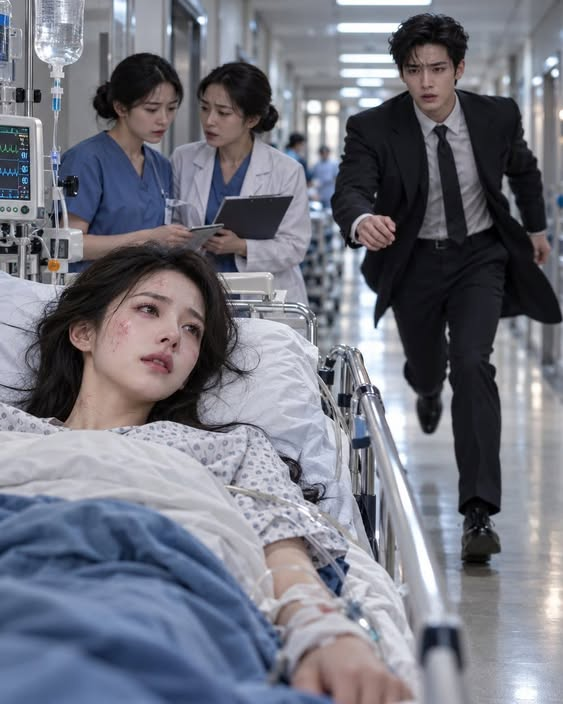
“I went to the hospital. They said there were complications.”
My mother’s voice changed slightly.
Not softer.
Just tired.
“She almost died.”
Julian stopped breathing.
“What?”
“There was severe bleeding.”
His hand tightened around the phone.
“But she’s okay?”
“She survived.”
Survived.
Not recovered.
Not fine.
Survived.
Julian leaned against his car.
“Why didn’t anyone call me?”
My mother laughed once.
It wasn’t kind.
“The hospital asked Nora who they should contact.”
Julian said nothing.
“She said there was no one.”
That sentence broke something in him.
Because technically, I had a husband.
I had him.
And yet, when a nurse asked whether there was anyone in the world who should know if I died, I had said no.
My mother continued:
“Then, after discharge, she removed you as her emergency contact.”
Julian whispered:
“Where is she?”
“Safe.”
“Please tell me.”
“No.”
“I’m her husband.”
“Then perhaps you should ask yourself why your wife had surgery, spent six days in the hospital and recovered for another week before you even noticed she was gone.”
The call ended.
I was staying at my mother’s apartment.
For the first few days, I could barely walk from the bedroom to the bathroom without help.
She washed my hair.
Prepared soup.
Changed the dressings.
Sat beside me at three in the morning when pain medication wasn’t enough.
She never said:
I told you so.
That almost made it worse.
One afternoon, she found me staring at my abdomen in the mirror.
The surgical scars were still angry and red.
I touched one gently.
“For years,” I said, “I hated this part of me.”
My mother stood behind me.
“Nora…”
“I thought if I could just fix it, everything else would be fixed too.”
The pregnancies.
My marriage.
Julian.
Myself.
My mother put a robe around my shoulders.
“You are not a broken machine.”
I started crying.
Not loudly.
The tears simply came.
“I know.”
And for the first time, I meant it.
Julian found me three days later.
My mother opened the door and immediately tried to close it.
He put his hand against the frame.
“Please. Five minutes.”
“You’ve had nine years.”
“Mom.”
My voice came from behind her.
She turned.
I was standing in the hallway.
Julian looked at me.
And went completely still.
I had lost weight.
My face was pale.
I was wearing loose pajamas because anything touching my abdomen hurt.
He looked at me as if someone had removed the floor beneath him.
“Nora.”
I hated how my heart reacted to my name in his voice.
Nine years don’t disappear because fifteen days reveal the truth.
“Five minutes,” I said.
My mother looked at me.
I nodded.
She walked into the kitchen but left the door open.
Julian remained near the entrance.
He didn’t try to touch me.
For that, at least, I was grateful.
“I didn’t know.”
I almost smiled.
“That’s becoming everyone’s favorite sentence.”
His eyes reddened.
“I forgot the date.”
“Yes.”
“The presentation—”
“Don’t.”
He stopped.
“If you explain the presentation to me, I’ll ask you to leave.”
He lowered his head.
“I have no excuse.”
“No.”
“I was angry.”
“So was I.”
“I thought you needed space.”
“For fifteen days?”
His mouth opened.
Nothing came out.
I continued:
“I told you my abdomen hurt.”
His face changed.
“I saw that message.”
“I know.”
“I thought…”
He couldn’t finish.
“What did you think, Julian?”
He looked at me.
“That you’d contact me again if it was serious.”
There it was.
The truth.
Quiet.
Ugly.
Familiar.
I nodded.
“You were waiting for me to do what I’ve always done.”
“Nora—”
“Call again. Explain again. Ask again. Make it easier for you to care.”
His eyes filled with tears.
“I was hurting too.”
“I know.”
That surprised him.
“I know you were grieving those pregnancies too. I know you were afraid. I know every appointment probably reminded you of what we’d lost.”
I swallowed.
“But your pain doesn’t explain why mine became something you could ignore.”
He wiped his face.
“I don’t know how we became this.”
“I do.”
He looked at me.
“We stopped being on the same side.”
He asked about the surgery.
This time, I told him.
Not because he was entitled to my medical information.
Because after nine years, I wanted one conversation in which neither of us hid.
“They preserved my uterus.”
His eyes closed briefly.
“But the reconstruction wasn’t completed. The doctors don’t know what future pregnancy would look like yet.”
He sat down heavily.
“So we still could—”
I stared at him.
He stopped immediately.
There.
Even now.
We.
Pregnancy.
Future.
He understood his mistake almost as soon as the words left his mouth.
“I’m sorry.”
I sat across from him.
“That’s what I meant that night.”
His face tightened.
“I wake up from surgery, and everyone wants to know what this means for my ability to have a child.”
I placed my hand over my abdomen.
“I almost died, Julian.”
His eyes dropped.
“And when I woke up, for the first time, I didn’t care whether this body could give anyone a baby.”
My voice trembled.
“I was just grateful it had kept me alive.”
Julian covered his face.
His shoulders shook.
I had seen him cry only three times in nine years.
At our wedding.
After the first miscarriage.
And now.
Once, I would have crossed the room.
I would have held him.
This time, I stayed where I was.
His grief belonged to him.
I didn’t have to carry it.
“I want to come home,” he eventually said.
I looked at him.
“There is no home right now.”
“We can rebuild it.”
“Maybe.”
Hope appeared in his face.
I shook my head.
“I didn’t say together.”
He went pale.
“Nora.”
“I’ve spoken to a lawyer.”
His expression collapsed.
“You want a divorce?”
“I want a life where I don’t have to become an emergency before someone notices I’m gone.”
He stared at me.
“I love you.”
“I believe you.”
That was worse than telling him I didn’t.
Because love had never been the entire problem.
“I think you loved me for years,” I said. “I think I loved you too.”
“Then why end it?”
“Because sometimes love survives after trust doesn’t.”
He cried silently.
I did too.
There was no villain in that room.
No mistress.
No secret second family.
No dramatic betrayal.
Just two people who had been hurt by the same losses and had responded by moving in opposite directions.
I kept reaching.
Julian kept retreating.
Eventually, I reached so far that there was nothing left of me behind.
The divorce took four months.
Julian didn’t fight it.
He moved out of our apartment before I returned to collect my things.
On the kitchen table, he left a box.
Inside were photographs.
University.
Our wedding.
The tiny apartment with balcony plants.
Street food at midnight.
One ultrasound image.
I sat on the floor holding it for a long time.
Then I placed it back.
I didn’t throw those years away.
They had happened.
They had mattered.
Something doesn’t have to last forever to have once been real.
At the bottom of the box was a note.
I almost didn’t read it.
Nora,
I spent fifteen days waiting for you to speak first.
Then I spent months wishing I could go back and answer one message.
I can’t.
I’m sorry that I made you feel alone while standing close enough to have held your hand.
I hope you build a life that never requires you to beg to be seen.
Julian.
I folded it.
And cried.
Then I closed the box.
A year later, I returned to the hospital.
Not for fertility treatment.
For my final follow-up.
Dr. Morales reviewed the scans.
“You’ve healed well.”
I smiled.
That sentence meant more to me than she could know.
“What about pregnancy?” I asked.
She explained the uncertainties.
The risks remained.
There were options if I ever wanted to explore them.
No guarantees.
I listened.
Then I said:
“I don’t need to decide today.”
She smiled.
“No. You don’t.”
Outside the hospital, the sun was bright.
I sat on a bench and opened my phone.
There was a message from Julian.
We hadn’t spoken in three months.
I hope your appointment went well. You don’t need to answer.
I looked at it.
A year earlier, I would have searched those words for hidden meaning.
Regret?
Hope?
Love?
Now they were simply words.
I typed:
It did. Thank you.
Then I put my phone away.
That was all.
No reconciliation.
No dramatic reunion.
Some endings don’t need to become beginnings again.
That evening, I worked late in my studio.
After the divorce, I returned to illustration.
For years, my sketchbooks had sat unopened while my life became doctors, calendars, pregnancy tests and appointments.
Now there were drawings everywhere.
One covered almost an entire wall.
A woman standing beneath a huge tree.
No husband.
No baby.
No hospital.
Just a woman.
Alive.
My mother once asked what the picture meant.
I told her I didn’t know yet.
But that night, looking at it, I finally understood.
For years, I believed my body owed me a particular future.
Then I believed my husband owed me the strength to survive losing that future.
Neither belief saved me.
What saved me was waking up and realizing I was still here.
Nora Lin.
Thirty-three years old.
Artist.
Daughter.
Friend.
Woman.
Not a failed mother.
Not an abandoned wife.
Not a defective body waiting to be repaired.
Just me.
And strangely, that was enough.
Julian remembered my surgery fifteen days too late.
For a long time, I thought that was the tragedy.
It wasn’t.
The real tragedy was that I had spent years forgetting myself while waiting for him to remember me.
The surgery left a scar across my abdomen.
The marriage left others no one could see.
But scars aren’t proof that something is ruined.
Sometimes they’re simply proof that when something tried to break you…
your body chose to heal.
