I read the access log three times.
Bruno’s private account.
Date: two days before our divorce became final.
Files consulted:
Obstetric hospitalization.
Pathology report.
Genetic analysis of fetal tissue.
Post-loss psychological evaluation.
My hands went cold.
There was only one reason those records had been restricted.
After the miscarriage, the doctors had performed genetic testing because the loss had been unusually complicated.
Months later, I had received the final report.
The baby had been a girl.
And the testing had revealed something else.
There had been no chromosomal abnormality.
No congenital defect.
Nothing that made the pregnancy inevitably nonviable.
The report couldn’t establish a single cause for the miscarriage, but it specifically noted that my physical exhaustion, severe anemia and delayed treatment were clinically relevant factors.
I had never shown Bruno that report.
Not because I wanted to hide it.
Because by the time it arrived, he had already taught me that my grief was mine to carry.
But there was one page I had guarded more carefully than all the others.
The psychological evaluation.
I remembered exactly what I’d told the doctor.
“My husband wasn’t there.”
Then:
“I think if I disappeared tomorrow, Bruno would send flowers to the funeral and assume that counted as saying goodbye.”
I closed the file.
Someone knocked.
Not at my apartment door.
At the clinic consultation room.
The nurse entered.
“Ms. Duarte?”
“Yes?”
“There has been an unauthorized access complaint automatically generated because those files were restricted. The compliance department will contact you.”
“Can you tell me exactly what was downloaded?”
She checked.
“All of it.”
My stomach twisted.
Bruno had read everything.
Including the sentence about my funeral.
My phone rang.
Him.
I almost ignored it.
Then I answered.
“What?”
Silence.
For once, Bruno Salvatierra had no polished response prepared.
Finally:
“Valentina…”
His voice sounded wrong.
“Did you read my medical records?”
“I needed to understand.”
“You needed my permission.”
“I know.”
“No. If you knew, you wouldn’t have done it.”
Another silence.
Then he said:
“I didn’t know she was a girl.”
I closed my eyes.
Of course that was what had broken through.
Not my blood loss.
Not the operating room.
Not the five unanswered calls.
A daughter.
A detail concrete enough for him to finally imagine what I had lived through.
“You weren’t supposed to know.”
“She was my daughter too.”
“Yes.”
My voice remained steady.
“And you were invited to grieve her with me.”
He breathed sharply.
“I didn’t know how serious it was.”
“I told you I was in the hospital.”
“Camila’s inauguration had already started and—”
He stopped.
Even he finally heard how obscene that sentence sounded.
I waited.
Nothing came.
Then Bruno whispered:
“I read what you told the psychologist.”
I looked toward the clinic window.
“And?”
“You said I’d send flowers to your funeral.”
“Yes.”
“Did you really believe that?”
I almost laughed.
“Bruno, you sent flowers when our baby died.”
That ended the call.
Three days later, the clinic’s compliance department confirmed that Bruno’s access had been inappropriate.
Years earlier, when we were married, I’d signed broad administrative permissions allowing him to assist with certain medical matters.
Those permissions had long since expired.
The recent access wasn’t covered.
Bruno apologized formally and asked that I not pursue the matter further.
I didn’t want revenge.
I wanted boundaries.
So I requested a complete lock on my records and removed every old authorization associated with him.
Then I added a new emergency contact.
My older sister, Elena.
When I told her, she went silent.
Then she said:
“You finally remembered you have a sister?”
I smiled.
“You’re never going to let me forget that, are you?”
“Absolutely not.”
She had been angry with me for years.
Not because she hated Bruno.
Because she’d watched me disappear inside my marriage.
When I miscarried, Elena had offered to fly in.
I’d refused.
Bruno would come, I’d told her.
When I was hospitalized with bleeding, she’d offered again.
I’d refused again.
Bruno was my husband.
Bruno was my emergency contact.
Bruno would come.
Eventually.
There is something humiliating about waiting so long for someone that you begin rejecting the people who would have arrived immediately.
I stopped doing that.
Bruno, however, seemed to be unraveling.
Camila called me one afternoon.
I nearly declined.
Then curiosity won.
“Valentina?”
“Yes.”
“I think we should talk.”
“We really shouldn’t.”
“It’s about Bruno.”
“Then we definitely shouldn’t.”
She became quiet.
Finally she said:
“He hasn’t answered me in days.”
I waited.
“I don’t understand what’s happening.”
That sentence almost made me smile.
For years, Camila had called and Bruno had gone running.
Now, for the first time, he wasn’t.
And somehow she thought I should explain him.
“Ask Bruno.”
“He says he’s busy.”
“Then he’s busy.”
“Valentina, did something happen between you two?”
“We got divorced.”
She fell silent.
Apparently Bruno hadn’t told her.
“He said you were going through a phase.”
I actually laughed.
A phase.
The divorce certificate in my drawer was apparently a phase.
“Camila, listen carefully.”
My voice wasn’t angry.
“You were never the reason my marriage ended.”
She seemed startled.
“I wasn’t?”
“No.”
“You called. He answered. You needed him. He went.”
I paused.
“The person who had vows with me was Bruno.”
That was the first time I said it aloud and truly understood it.
Blaming Camila had always been easier.
But Camila hadn’t promised to hold my hand in a hospital.
Bruno had.
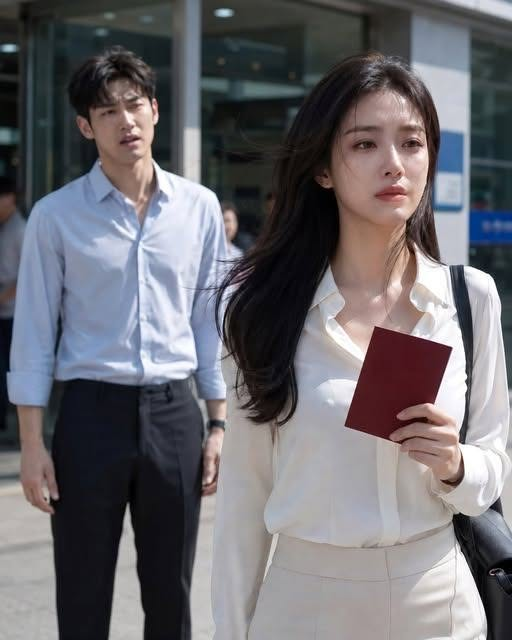
A week later, he came to my apartment again.
This time, I almost didn’t recognize him.
He was carrying a cardboard box.
Not flowers.
“I brought your things.”
Inside were books, an old scarf, some photographs and a ceramic cup I’d forgotten in the penthouse.
Then I saw a small white box.
My breath caught.
The baby socks.
The ones I’d bought to tell him I was pregnant.
I had assumed they’d been thrown away years ago.
“Where did you find these?”
“In the back of your old closet.”
He swallowed.
“I didn’t know what they were.”
“Of course you didn’t.”
His eyes closed.
“Valentina, please.”
“Please what?”
“I don’t know.”
For the first time, he looked completely lost.
“I keep thinking about that night.”
“Which one?”
He stared at me.
That was the problem.
There were too many.
“The miscarriage.”
I said nothing.
“You called me five times.”
“Yes.”
“I checked my old phone backups.”
My chest tightened.
“I saw them.”
“You saw them then too.”
He looked down.
“Yes.”
There it was.
No excuse.
No lost signal.
No assistant failing to pass on the message.
He had seen my calls.
And chosen not to answer.
“Why?”
He sat down slowly.
“Camila’s exhibition was important to her. There were investors there. She was panicking. I thought…”
He rubbed his face.
“I thought I’d finish there and then come to you.”
“But you didn’t.”
“No.”
“Why?”
He looked at me.
“I was afraid.”
That answer surprised me.
“Of what?”
“The hospital.”
His voice broke.
“Of the baby being gone. Of seeing you and not knowing what to say. Camila’s problems were easy. She needed introductions. A ride. Someone to stand beside her.”
He swallowed.
“You needed something I didn’t know how to give.”
I finally understood.
Bruno hadn’t repeatedly chosen Camila because she mattered more.
He had chosen situations where he could feel useful without being emotionally vulnerable.
And every time life became truly painful, he abandoned me with flowers.
“That explains you,” I said.
His eyes lifted.
“It doesn’t excuse you.”
“I know.”
He looked around my apartment.
“Can we start again?”
“No.”
The answer came so gently that it seemed to hurt him more.
“I can change.”
“I hope you do.”
“For us.”
“No, Bruno.”
I shook my head.
“For yourself.”
His eyes filled.
“Is there someone else?”
I almost smiled.
Still searching for a rival.
“No.”
“Then why can’t I try?”
“Because I already spent eight years being your opportunity to try.”
He looked down.
I picked up the little baby socks.
“I needed you when we lost her.”
My voice trembled.
“I needed you on my birthday.”
I took a breath.
“I needed you when I was bleeding in an emergency room and didn’t know whether I would need surgery.”
He covered his face.
“You don’t get to arrive after the divorce and call that finally showing up.”
He cried then.
Quietly.
I had imagined that moment many times during our marriage.
Bruno realizing what he’d done.
Bruno begging.
Bruno finally seeing me.
Strangely, it gave me no satisfaction.
Only sadness.
Six months later, I heard that Camila had moved to Barcelona for a long-term photography project.
Bruno didn’t follow her.
Their friendship gradually faded.
Not because I demanded it.
Because without me waiting at home, perhaps he finally had to see the pattern for himself.
I didn’t go back either.
I moved closer to Elena.
I changed jobs.
I started therapy.
I learned that independence wasn’t proving I needed nobody.
It was knowing the difference between choosing someone and depending on their absence to define you.
Almost a year after our divorce, I saw Bruno unexpectedly.
I was leaving a medical center after a routine examination.
He was coming out of a nearby building.
We stopped.
His eyes went to the folder in my hand.
“Everything okay?”
The question was so ordinary that it almost broke my heart.
Eight years too late, my former husband had finally learned to ask.
“Yes.”
He nodded.
“Good.”
Then his eyes dropped to my phone.
The screen had lit up with a notification.
At the top of my medical profile were the words:
Emergency contact: Elena Duarte.
He stared at the name.
“Your sister?”
“Yes.”
He gave a small smile.
“She always hated me.”
“No.”
I put my phone away.
“She hated watching me wait for you.”
He absorbed that.
Then he asked:
“When did you know it was really over?”
I could have said the miscarriage.
My thirtieth birthday.
The hemorrhage.
The divorce office.
Instead, I told him the truth.
“The day I deleted your name.”
His face tightened.
“From your phone?”
“No.”
I looked at him.
“From my emergency contact.”
He understood.
An emergency contact isn’t the person whose name looks correct on a form.
It isn’t automatically a spouse.
It isn’t the person who sends soup through an assistant or flowers from another part of the city.
It is the person you trust to come when the world becomes frightening.
For years, every hospital form had contained Bruno’s name.
And every real emergency had contained his absence.
We said goodbye outside the medical center.
No accusations.
No promises.
No white lilies.
That evening, Elena came over carrying groceries and complaining that my refrigerator was empty.
While she cooked, I found the little box containing the baby socks.
For years, they had represented the loneliest night of my life.
That night, I finally allowed them to represent something else.
My daughter had existed.
Briefly.
She had been loved.
And losing her had not made me difficult, dramatic or too needy.
I put the box away carefully.
Then I joined my sister in the kitchen.
My phone was on the counter.
If something happened, Elena’s number was there.
But for the first time, that wasn’t what made me feel safe.
I felt safe because I had finally stopped waiting for someone who had taught me, again and again, that he wouldn’t come.
Bruno sent me white lilies for years whenever he should have given me his presence.
After our divorce, he never sent them again.
Perhaps he finally understood.
Flowers are beautiful when they celebrate love.
But when they repeatedly arrive in place of the person you need—
eventually, they stop looking like flowers.
They start looking like absence.
And the day I removed Bruno Salvatierra from my emergency contact list was the day I stopped confusing his absence with love.
