The divorce papers reached Lucas three days later.
I knew because at 11:47 that night, he came home.
Not walked.
Stormed.
The front door slammed hard enough to wake Mrs. Elisa.
I was sitting in the living room with a script on my lap.
Lucas stopped in front of me and threw an envelope onto the coffee table.
“What is this?”
I glanced at it.
“My divorce petition.”
“I can read.”
“Then why are you asking?”
His jaw tightened.
For a man trained to remain calm under gunfire, Lucas had never learned what to do when I stopped behaving predictably.
He stood there in uniform, shoulders rigid.
“You filed this the night of the fire.”
“Yes.”
“The same night we lost our child.”
“Yes.”
His eyes hardened.
“You were under medication. You were traumatized.”
“I knew exactly what I was signing.”
“Valeria.”
I turned another page.
That seemed to anger him more than screaming would have.
He took the script from my hands.
I finally looked up.
“Give it back.”
“No.”
“Lucas.”
“We are going to talk.”
I studied the man I had once chased shamelessly because I thought his coldness hid something precious.
Maybe it had.
But love hidden so deeply that your wife could die waiting for it wasn’t useful to anyone.
“Fine,” I said. “Talk.”
His anger faltered.
He clearly hadn’t prepared for permission.
Finally, he said:
“I went for Camila because she was unconscious.”
“I know.”
“You were conscious.”
“I know.”
“My team was coming behind me.”
“I know.”
“I calculated that they would reach you.”
I stared at him.
There it was.
The explanation.
Cold.
Logical.
Military.
He had calculated.
Camila needed him more.
I could survive a few more seconds.
Except our baby hadn’t.
“You made a tactical decision,” I said.
“Yes.”
“Then why are you upset?”
His brows drew together.
“Because I’m your wife?”
He froze.
“You decided who needed saving more.”
“I decided what relationship I can survive without.”
His expression changed.
“That’s not the same.”
“It is to me.”
Lucas stepped closer.
“I never intended for you to lose the baby.”
“Of course not.”
“I would never sacrifice our child.”
“You already did.”
His face went white.
For the first time, my voice trembled.
I hated that.
So I stood.
“At the hospital, while I was bleeding, you were holding her.”
“She was in shock.”
“So was I.”
“She couldn’t breathe.”
“Neither could our baby.”
“Valeria—”
“And the next day?”
Silence.
“You came to see me.”
I swallowed.
“And then Camila had another crisis.”
Lucas closed his eyes.
He remembered.
“You left.”
My voice became quiet again.
“That wasn’t fire.”
“There was no smoke.”
“No collapsed building.”
“No tactical decision.”
“You simply chose her again.”
He had no answer.
I took the script from his hand.
“The divorce isn’t punishment, Lucas.”
I walked toward the stairs.
“It’s me finally believing what you’ve been showing me.”
That night, he didn’t sleep in our bedroom.
Neither did I.
The next morning, I moved out.
Not dramatically.
No reporters.
No photographs.
I packed two suitcases and went to the apartment my agency kept for me near the studio.
Lucas called.
I didn’t answer.
He sent messages.
I answered only those concerning lawyers.
Then something strange happened.
For the first time since marrying him, my career exploded.
Maybe grief made me reckless.
Maybe freedom did.
I accepted a role I had previously rejected because filming required four months abroad.
I returned to music.
I stopped scheduling my life around military deployments.
I stopped checking my phone during dinner.
And slowly, the woman who had once sat watching a security screen for her husband’s silhouette came back to life.
Three weeks later, Camila called me.
I almost didn’t answer.
“Valeria?”
Her voice was fragile.
Of course it was.
“I wanted to apologize.”
“For what?”
Silence.
“I never wanted you to lose your baby.”
My fingers tightened around the phone.
“Then we’re finished.”
“Wait.”
I almost hung up.
Then she said:
“Lucas requested my transfer.”
That surprised me.
I said nothing.
“He doesn’t answer my personal calls anymore.”
“Camila, why are you telling me this?”
“Because I need you to understand there was never anything physical between us.”
I smiled without humor.
“You think that’s what destroyed my marriage?”
She went quiet.
“I didn’t care whether you slept with him.”
My voice remained calm.
“I cared that every time you needed my husband, he stopped being mine.”
“That wasn’t my intention.”
“Maybe not.”
I looked through the studio window.
“But you learned that if you cried, Lucas came.”
She started breathing faster.
“You knew exactly which number to call.”
“I have anxiety.”
“And I had a miscarriage.”
Silence.
Then I ended the call.
I thought Lucas had requested Camila’s transfer because he finally understood.
The truth was worse.
Two days later, Colonel Herrera came to see me.
He had commanded Lucas years earlier.
We met in a private room at my agency.
“I shouldn’t be discussing internal military matters,” he said.
“Then don’t.”
He looked uncomfortable.
“But you deserve to know one thing.”
I waited.
“The night of the gala, Navarro was not assigned to extract civilians personally.”
I frowned.
“What?”
“He entered that section because he knew you were there.”
My chest tightened.
“He came for me?”
“Yes.”
“Then why—”
Herrera looked away.
“He saw Dr. Duarte.”
The rest didn’t need saying.
Lucas had broken procedure to come for me.
Then, when he saw Camila, he chose her.
That somehow hurt more.
I thanked Herrera and left.
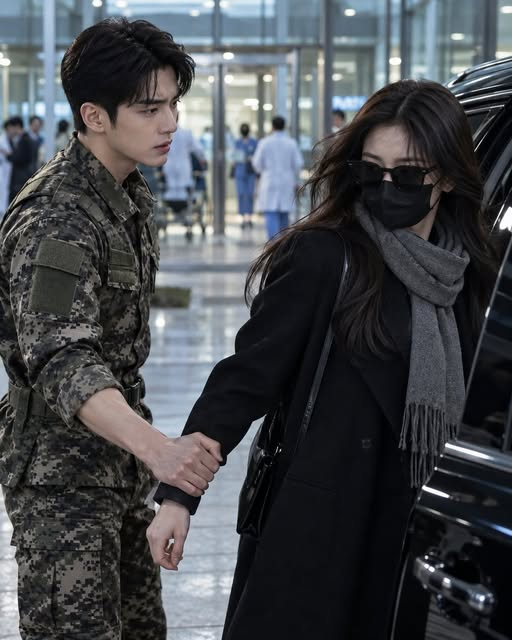
That evening, Lucas was waiting outside my studio.
Reporters stood across the street.
He remained beside his military vehicle, expression unreadable.
I walked past him.
“Valeria.”
I stopped.
“Five minutes.”
“No.”
“I requested discharge from active field operations.”
That made me turn.
“What?”
“I’ve accepted an administrative posting.”
Months earlier, those words would have been everything I wanted.
I would have cried.
Thrown myself into his arms.
Started planning dinners, weekends, a second pregnancy.
Instead, I asked:
“Why?”
“Because you were right.”
I laughed softly.
“You changed your entire career because I filed for divorce?”
“No.”
He looked at me.
“Because I finally understood why you did.”
He stepped closer but didn’t touch me.
“I kept telling myself that responsibility was love.”
“I paid bills.”
“I protected your reputation.”
“I came home whenever I could.”
“I thought because I never slept with another woman, I had been faithful.”
His voice lowered.
“But I gave someone else the part of me you kept asking for.”
For once, Lucas understood perfectly.
Unfortunately, understanding something doesn’t undo it.
“I requested Camila’s transfer,” he continued.
“I know.”
“I won’t contact her outside professional requirements.”
“That isn’t necessary.”
“It is.”
“For you, perhaps.”
His eyes tightened.
“Not for me.”
That landed.
He looked down.
Then he asked the question I knew was coming.
“Is there really nothing I can do?”
I thought about the fire.
The hospital.
The empty place inside me where our child had been.
And then I remembered something even simpler.
Three years of waiting.
“No.”
He nodded once.
Like a soldier receiving an order he hated but understood.
Then he stepped aside.
The divorce became final four months later.
Lucas didn’t fight it.
He signed everything.
The house was sold.
I kept nothing from it except a wooden box containing photographs.
For months, I couldn’t open it.
Then one rainy evening, I did.
Our wedding.
Lucas in uniform.
Me laughing while trying to straighten one of his medals.
A vacation where he spent half the trip answering military calls.
An ultrasound photograph.
That one stopped me.
I sat on the floor for a long time.
Then I cried.
Not beautifully.
Not like actresses cry in movies.
I cried until my face hurt.
I had loved that child.
I had loved Lucas.
Both things could be true.
And leaving him could still be right for me.
A year after the fire, the city held a memorial ceremony for the victims and rescuers.
I wasn’t planning to attend.
Then my agency told me one of the families had specifically requested that I present an award.
So I went.
Lucas was there.
Different uniform.
Same straight posture.
Same unreadable face.
When his name was announced, the room applauded.
Colonel Lucas Navarro.
Decorated for bravery during the gala fire.
The man half the country still called a hero.
I applauded too.
Because he was one.
That had never been the problem.
Lucas could run into burning buildings for strangers.
He could face armed men without hesitation.
He could carry wounded soldiers for kilometers.
But marriage required a different kind of courage.
The quiet kind.
Choosing the same person when nobody applauds.
Coming home.
Listening.
Staying.
And by the time Lucas learned that, I no longer needed him to.
After the ceremony, we met in the hallway.
For a moment, neither spoke.
Then he looked at me.
“You look well.”
“I am.”
He nodded.
“I saw your new film.”
That surprised me.
“You hate romantic movies.”
“I’ve been trying new things.”
I smiled.
So did he.
Barely.
Then his eyes dropped for a second.
“I still think about the baby.”
My smile disappeared.
“So do I.”
“I’m sorry.”
This time, I believed him.
Not because an apology could repair anything.
Because he finally said it without defending himself.
“I know.”
He looked toward the exit.
“Are you happy?”
I thought about my apartment.
My work.
My friends.
The silence that no longer felt lonely.
The fact that I hadn’t checked a security camera in almost a year.
“Yes.”
Something in his face broke and healed at the same time.
“Good.”
Then he saluted me.
It was absurd.
Formal.
Very Lucas.
I laughed.
He almost did too.
Then we walked in opposite directions.
Outside, cameras were waiting.
Someone shouted:
“Valeria! Was that Colonel Navarro?”
Another reporter asked:
“Are you two getting back together?”
I put on my sunglasses.
“No.”
“Do you hate him?”
I stopped.
For a moment, I thought about the man who had once saved me from a ravine.
The man I had chased.
The husband I had waited for.
And the soldier who had looked directly at me through smoke and chosen someone else while I was trapped beneath a beam—the choice after which I lost our child. Pasted text
“No,” I said.
And that was the truth.
I didn’t hate Lucas.
Hatred would have been another way of waiting for him.
I had spent enough of my life doing that.
So I turned toward the cameras and walked into the sunlight.
Behind me stood a national hero.
Ahead of me was something I had almost forgotten how to recognize.
My own life.
