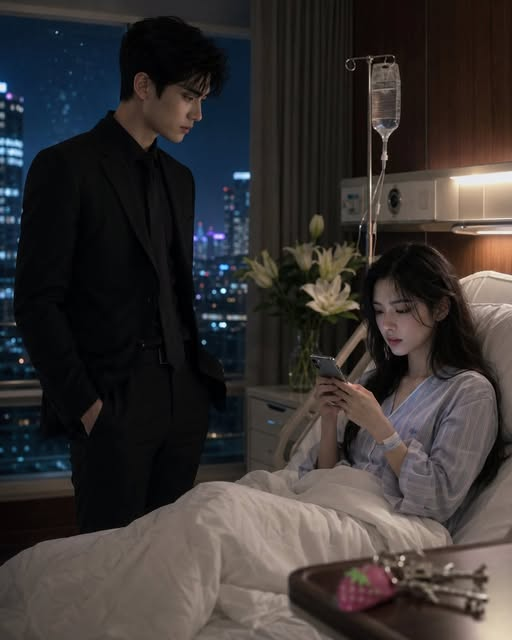
The nurse threw the keychain away.
I watched it disappear into the medical waste bin without feeling anything.
That frightened me more than anger would have.
Three months ago, I would have taken a photograph.
I would have confronted Alejandro.
I would have asked why Sofía had the matching half.
I would have cried until my chest hurt and demanded that he prove I was more important.
Now I simply signed my discharge papers.
Before leaving, I sent one message to my lawyer.
File it.
Then I went home.
Alejandro returned at two in the morning.
I was awake.
Not waiting for him.
Packing.
He stood in the bedroom doorway.
Two suitcases were open on the floor.
“What are you doing?”
“Organizing my things.”
“Why?”
I folded another sweater.
“I won’t need most of them.”
His eyes narrowed.
“Where are the studio keys?”
“I threw them away.”
For several seconds, he didn’t move.
“You what?”
“The keychain wasn’t mine.”
His face changed.
So he knew exactly what I meant.
“Valeria, Sofía and I made those stupid things with the whole team.”
“Okay.”
“It meant nothing.”
“I believe you.”
That answer unsettled him more than an accusation.
He walked closer.
“Then why throw it away?”
“Because I didn’t want it.”
“Do you know how much that studio cost?”
“No.”
“You begged me for a studio for three years.”
“I know.”
“And now that I give it to you, you don’t want it?”
I closed the suitcase.
“No.”
Alejandro stared at me as if I were speaking a language he didn’t understand.
Then his phone rang.
Sofía.
I saw her name.
He saw me see it.
For the first time in years, he didn’t answer immediately.
He actually looked at me first.
I smiled faintly.
“Answer.”
He rejected the call.
“I don’t have to.”
“It might be important.”
“Valeria.”
“Yes?”
“Stop doing that.”
“Doing what?”
“This.”
He gestured toward me.
“This calm act.”
I looked at him.
“I’m tired, Alejandro.”
“Then sleep.”
“I will.”
He seemed relieved.
Until I added:
“Somewhere else.”
The next morning, I moved into a serviced apartment near my old art school.
I took surprisingly little.
Clothes.
Documents.
My grandmother’s jewelry.
My paints.
One photograph of my parents.
I left our wedding pictures behind.
Alejandro called fourteen times before noon.
I answered the fifteenth.
“Where are you?”
“At work.”
“You don’t work.”
The words came naturally to him.
Then silence.
Because we both remembered who I had been before marriage.
I had studied fine arts in Florence.
At twenty-six, I had held my first solo exhibition.
At twenty-eight, a London gallery offered me a three-year residency.
Then Alejandro proposed.
He said long-distance marriages failed.
I believed him.
I declined London.
Eventually, I stopped exhibiting altogether.
“Alejandro,” I said quietly, “my lawyer will contact you.”
“What lawyer?”
“The divorce lawyer.”
Nothing.
I checked the screen to make sure the call hadn’t disconnected.
Then he laughed.
Not because it was funny.
Because the alternative was believing me.
“Come home.”
“No.”
“We’ll discuss this tonight.”
“There is nothing left to discuss.”
His voice hardened.
“Is this because of Sofía?”
“No.”
“Then what?”
I thought about how impossible that question would have been six months earlier.
Now the answer was simple.
“Because I don’t want this life anymore.”
“You’re depressed.”
I closed my eyes.
There it was.
“You’re making an irrational decision because you’re sick.”
“My psychiatrist knows I’m filing.”
He went quiet.
“My lawyer knows.”
Silence.
“My parents know.”
Longer silence.
“You told everyone except your husband?”
I almost laughed.
“I spent years telling my husband things.”
“You stopped listening.”
I ended the call.
For the next two weeks, Alejandro became the man I had spent years begging him to be.
He came home early.
He stopped attending dinners with Sofía.
He sent breakfast to my apartment.
Flowers arrived every morning.
He remembered my psychiatric appointments.
He even found the name of the antidepressant I’d been prescribed.
The irony was almost unbearable.
When I stopped monitoring him, he started monitoring me.
My assistant called one afternoon.
“Mrs. Fuentes, Director Fuentes asked whether you’ve been eating.”
“Tell him yes.”
“He also asked where you went yesterday.”
“Don’t tell him.”
She hesitated.
“He seems worried.”
“I know.”
That was the problem.
Alejandro had never feared hurting me.
He feared losing me.
Those were different things.
Three weeks after I left, Sofía appeared at my apartment.
I almost didn’t recognize her without Alejandro beside her.
She looked nervous.
“I came to explain.”
“You don’t need to.”
“There really isn’t anything between us.”
I opened the door wider.
“Then why are you here?”
She swallowed.
“Director Fuentes won’t speak to me anymore.”
That almost made me smile.
“So?”
“He says you misunderstood.”
“I didn’t.”
“He canceled my project.”
“That sounds like something you should discuss with your supervisor.”
Her face reddened.
“You’re doing this to punish me.”
“No.”
“You hate me.”
“No.”
That answer seemed to offend her more.
She suddenly pulled out her phone.
“There was nothing inappropriate on the yacht.”
She showed me photographs.
Alejandro smiling.
Alejandro steering.
Alejandro holding a glass while Sofía stood beside him.
I barely looked.
Then she swiped once too far.
A photograph appeared.
Alejandro asleep on a sofa.
Sofía beside him.
Her head rested against his shoulder.
My stomach tightened.
But only for a moment.
Sofía quickly locked the screen.
“That was nothing.”
“I know.”
She stared at me.
“Why do you keep saying that?”
“Because whether he slept with you doesn’t matter anymore.”
Her expression changed.
“He gave you what belonged to me emotionally long before he gave you anything physically.”
She had no answer.
I closed the door.
A month later, my first exhibition in almost four years opened.
Small gallery.
Twenty-two paintings.
Most had been created during the worst period of my depression.
There were empty rooms.
Half-finished faces.
Women standing behind glass.
One painting showed a dining table set for two, but only one chair had a shadow.
I called it Marriage.
It sold before opening night.
At seven thirty, Alejandro appeared.
He wasn’t invited.
He stood beneath the gallery lights in a black suit, surrounded by people who knew my name without attaching his surname to it.
For once, he looked out of place in my world.
He stopped in front of Marriage.
Then he found me.
“Is that us?”
“It was.”
His eyes reddened.
“I didn’t know you were painting again.”
“You didn’t ask.”
He flinched.
“Valeria, come home.”
“No.”
“I haven’t seen Sofía in six weeks.”
“That isn’t why I left.”
“I bought the studio because I remembered.”
“No.”
He frowned.
I looked at him.
“You bought it because you realized I was disappearing.”
He went silent.
I continued.
“When I begged, you thought I would never leave.”
My voice remained soft.
“When I cried, you thought I loved you too much to leave.”
His face slowly changed.
“And when I stopped asking where you were…”
I smiled sadly.
“That was when you became afraid.”
His voice broke.
“I love you.”
There had been a time when I would have given anything to hear those words with that expression on his face.
Now they arrived like a letter sent to an address where I no longer lived.
“I believe you.”
He stared at me.
“Then why isn’t that enough?”
“Because love isn’t always enough.”
He looked almost angry.
“What else do you want?”
That question told me everything.
“I wanted consideration.”
I counted quietly.
“Respect. Honesty. Companionship. To be chosen without having to compete for it.”
I looked around the gallery.
“I wanted to remain myself.”
His eyes dropped.
“I can give you those things now.”
“Maybe.”
Hope flashed across his face.
“But I don’t want to stay long enough to find out.”
The divorce was finalized four months later.
Alejandro signed on the last possible day.
My lawyer told me he sat with the papers for almost an hour before writing his name.
I didn’t ask anything else.
I kept the apartment.
Not the rooftop studio.
That stayed with him.
Instead, I accepted a six-month residency in London.
The same city I had once refused for our marriage.
On my first morning there, I walked into a studio with enormous northern windows.
There were blank canvases everywhere.
My phone vibrated.
One final message from Alejandro.
Did you arrive safely?
I stared at it.
Then I typed:
Yes.
Nothing more.
No photograph.
No location.
No explanation of who picked me up.
No question about where he had slept.
I put the phone facedown.
My therapist once told me that recovery would not necessarily feel like happiness.
Sometimes it would simply feel like wanting tomorrow to exist.
That morning, standing before a blank canvas, I understood.
I opened the windows.
London air filled the room.
I mixed the first color.
And for the first time in years, I wasn’t wondering where my husband was.
I was wondering what I wanted to paint.
That was how I knew I had finally begun to come back to life.
