My father stared at the bill as if I had placed a court summons in front of him.
“Sofia.”
I picked up my coat.
“Yes?”
“We just came back.”
“I noticed.”
“We don’t have that kind of money.”
I looked at the table.
Twenty people.
Lobster.
Imported wine.
A private room in a five-star hotel.
Then I looked at Aunt Marta.
“Interesting choice of restaurant, then.”
Her face reddened.
“We thought you’d be happy to celebrate.”
“You thought I’d pay.”
Nobody denied it.
My mother stood.
“Sofia, please. Sit down. We’re not asking for much.”
I looked at her.
“You haven’t asked yet.”
That silenced the table.
Because we all knew she was about to.
My father finally pushed the bill toward Marta.
“You arranged this.”
Marta immediately pushed it back.
“You’re Sofia’s parents.”
I laughed.
For ten years, nobody wanted that title.
Now apparently it came with restaurant privileges.
I left.
The next morning, they were waiting outside my apartment.
All three of them.
My father looked thinner than I remembered.
My mother looked older.
And Lily was wearing headphones, staring at her phone.
Beside them were six suitcases.
I stopped.
“No.”
My mother blinked.
“You haven’t even heard what we’re asking.”
“The suitcases explained it.”
“We only need somewhere temporary.”
“No.”
My father’s face hardened.
“Sofia, your mother is ill.”
“I heard you yesterday.”
“We spent almost everything on treatment.”
“Then you need to find housing within your budget.”
“We don’t have a budget!”
His voice echoed through the hallway.
A neighbor opened her door slightly.
My father lowered his voice.
“We have nothing.”
I stared at him.
For a moment, I was sixteen again.
Standing in front of an almost empty refrigerator.
Opening cupboards.
Counting coins.
Calling relatives who told me:
“Your parents will surely send money soon.”
They didn’t.
I remembered sleeping in the university library until security noticed me.
I remembered pretending I had already eaten when classmates offered food.
I remembered the first winter after they left.
My shoes had holes.
I stuffed cardboard inside them because I couldn’t afford another pair.
And now my father stood in front of me saying:
We have nothing.
As if poverty were an emergency only when it happened to him.
“I know what that’s like,” I said.
My mother’s eyes filled with tears.
“Sofia…”
“You’ll survive.”
She covered her mouth.
My father stepped forward.
“How can you say that?”
“Because that’s what you taught me.”
Lily finally removed one earphone.
“Are we staying here or not?”
“No.”
She looked at my parents.
“You said she had a big apartment.”
My mother immediately said something to her in English.
“Lily, sweetheart, give us a minute.”
I caught only part of it.
But enough.
She had told Lily about me.
Not as a sister.
As a solution.
I looked at my mother.
“What exactly did you tell her?”
Nothing.
“Mom?”
Lily rolled her eyes.
“You said Sofia would take care of us.”
My mother’s face changed.
There it was.
The truth.
Not hope.
Expectation.
I stepped around their suitcases and unlocked my door.
My father put his hand against it before I could close it.
“We gave you life.”
I looked at his hand.
“Move it.”
“Sofia—”
“Move your hand.”
Something in my voice finally reached him.
He did.
I closed the door.
That afternoon, Aunt Marta called seventeen times.
I blocked her.
Then cousins started messaging.
Ungrateful.
Heartless.
Cruel.
Your mother is sick.
Your father sacrificed everything for you.
That last one was my favorite.
I replied only once.
To the family group.
I uploaded a photograph.
The napkin.
Yes.
I still had it.
For ten years, I had kept that ridiculous little piece of paper.
Sofia, when you grow up, you’ll understand our quest for freedom.
Under it, I wrote:
I understand now. Please respect mine.
Then I left the group.
Three days later, my father came to my office.
Security called upstairs.
“There’s a man claiming to be your father.”
“Don’t let him up.”
“He says it’s an emergency.”
Everything was always an emergency now.
I went downstairs.
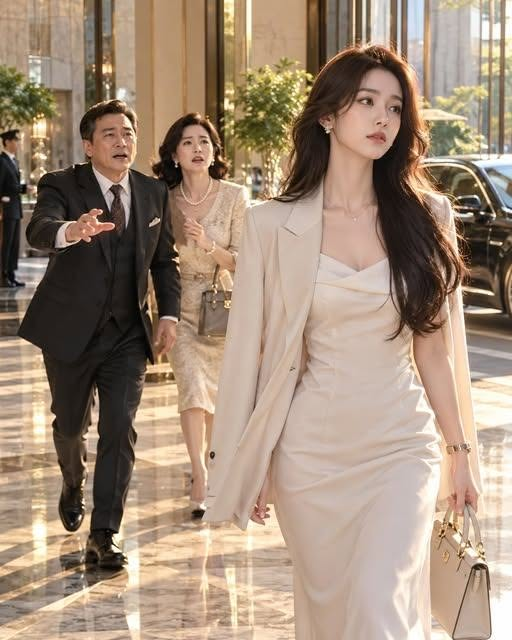
My father stood in the lobby holding a folder.
He looked exhausted.
“Your mother needs treatment.”
He opened the folder.
Medical reports.
Bills.
Medication lists.
I didn’t touch them.
“How much?”
His face brightened slightly.
Too quickly.
“Treatment will be expensive. And we need an apartment. Lily needs school. Your mother can’t work. I probably can’t either because of my health.”
“So you’re asking me to support four people.”
“Three.”
I stared at him.
Then he understood.
“You’re family too.”
“No. I’m the bank.”
“That isn’t fair.”
“Fair?”
For the first time, my voice rose.
“Where was fair when you took my university savings?”
People in the lobby turned.
My father whispered:
“Keep your voice down.”
“No.”
He flinched.
“You don’t get to abandon a sixteen-year-old and return ten years later demanding discretion.”
“We made mistakes.”
“A mistake is missing my birthday.”
I stepped closer.
“You sold my home.”
He looked away.
“You took the money Grandpa left for my education.”
Silence.
“You left me without a legal guardian.”
His lips parted.
“And then you had another child.”
“Sofia, Lily had nothing to do with—”
“I know.”
That stopped him.
“I don’t hate Lily.”
And I didn’t.
She was a child.
She hadn’t abandoned me.
“But I’m not raising her because you failed twice.”
My father sat down.
Suddenly he looked very old.
“What do you expect us to do?”
I thought about sixteen-year-old me.
Nobody had given her instructions.
Nobody had arranged housing.
Nobody had handed her money.
Still, I wasn’t them.
“I’ll give you information for social assistance, low-cost medical programs and employment services.”
His face fell.
“That’s it?”
“Yes.”
“You can afford more.”
That sentence erased the last trace of guilt.
There it was.
Not need.
Entitlement.
“You know what the difference is between us?”
He stared at me.
“When I had nothing, I asked how I could survive.”
I closed the folder and handed it back.
“You’re asking how much of my life you’re entitled to.”
I walked away.
Two weeks later, my mother contacted me from a new number.
She didn’t ask for money.
She asked to meet.
I almost refused.
Then she wrote:
Alone. No Marta. No your father. I need to tell you why we really left.
That got my attention.
We met at a small café.
My mother looked terrible.
She had lost weight.
For the first time, I noticed how badly her hands trembled.
She placed an old envelope on the table.
“Your father didn’t tell you everything.”
I didn’t touch it.
“About what?”
“The money.”
She swallowed.
“We didn’t spend all of your grandfather’s savings abroad.”
My body went still.
“What?”
“Before we left, your father gave part of it to Marta.”
I stared at her.
“Marta?”
“She promised to look after you.”
For several seconds, I couldn’t hear anything except the coffee machine behind the counter.
“How much?”
My mother told me.
It was enough to pay my living expenses for years.
Enough for food.
Enough for school.
Enough that sixteen-year-old Sofia should never have needed to clean Marta’s house for leftovers.
“Why didn’t she give it to me?”
My mother began crying.
“I don’t know.”
But I did.
The car.
The public scenes.
The constant reminders that she had “raised” me.
Marta hadn’t helped me.
She had profited from me.
My mother pushed the envelope toward me.
Inside were transfer records.
Bank statements.
And a handwritten agreement bearing Marta’s signature.
I photographed every page.
Then I called a lawyer.
The family exploded within forty-eight hours.
Marta called me selfish.
Then confused.
Then furious.
Finally afraid.
The car I had bought her?
I stopped paying its remaining expenses.
The money my parents had entrusted to her became a legal dispute.
Several relatives who had called me heartless suddenly became very quiet when they learned Marta had received money specifically for my care.
My parents didn’t magically become innocent.
They had still left.
They had still chosen another life over their sixteen-year-old daughter.
Money didn’t change that.
But the truth changed one thing.
I finally understood why Marta had spent ten years insisting I owed her.
Because if I was always the ungrateful child, nobody would ask what she owed me.
Months passed.
My mother began receiving treatment through assistance programs.
My father found part-time teaching work.
They rented a small apartment.
Lily enrolled in a public school.
I paid none of their rent.
None of their groceries.
None of their daily expenses.
But once, when Lily needed textbooks that my parents genuinely couldn’t afford, I bought them.
Not because my parents deserved it.
Because she did.
One afternoon, Lily came to my apartment alone.
She stood awkwardly at the door.
“I wanted to say thank you.”
“For the books?”
She nodded.
Then she asked:
“Do you hate me?”
“No.”
“Because they kept me?”
That question hurt more than anything my parents had said.
I crouched slightly so we were closer to eye level.
“You were a child, Lily.”
“So were you.”
I couldn’t answer immediately.
Finally, I smiled.
“Yes.”
She hugged me.
I didn’t expect it.
For a second, my arms remained at my sides.
Then I hugged her back.
Not as my replacement.
Not as my parents’ responsibility transferred to me.
As my little sister.
A year after their return, my father asked me to dinner.
Not at a hotel.
At their apartment.
My mother had cooked.
Lily complained about homework.
My father washed the dishes.
Nobody asked me for money.
Before I left, my mother handed me the old napkin.
“You kept this all those years,” she whispered.
“Yes.”
“I thought one day you’d understand us.”
“I did.”
She lowered her eyes.
“Just not in the way I expected.”
“No.”
I folded the napkin and put it back in her hand.
“I don’t need this anymore.”
Then I left.
My parents had returned expecting the daughter they abandoned to become the parent they needed.
That never happened.
I didn’t rescue them.
I didn’t destroy them either.
I simply returned their lives to the people responsible for living them.
And perhaps that was the freedom they had taught me about ten years earlier.
The only difference was that when I finally chose mine…
I didn’t have to abandon a child to get it.
