Part 2: The Metadata That Refused To Lie
Nobody spoke.
The gallery’s white walls seemed to trap every breath in the room.
Audrey Grant stood frozen beside the presentation monitor.
The coordinator clicked open the final folder.
Inside were dozens of project files.
Layered artwork.
Digital drafts.
Reference sheets.
Revision histories.
Everything an artist creates before a finished piece ever reaches a gallery wall.
Judge Rebecca Collins leaned closer to the screen.
Her expression darkened.
Then she opened a document labeled:
Project Origin Timeline
A chart appeared.
Creation dates.
Editing sessions.
File transfers.
Revision records.
The entire history of the artwork.
Someone in the crowd whispered, “Oh no.”
The first timestamp appeared.
January 14.
Then another.
January 18.
Then February 2.
Each file belonged to the same project.
Each file listed the same creator.
And that creator wasn’t Audrey.
The room became deathly quiet.
Audrey swallowed hard.
“There has to be a mistake.”
But Judge Collins wasn’t listening anymore.
She had already opened the creator identification document.
The original author name appeared in the center of the screen.
Several sponsors gasped.
One teacher covered her mouth.
Because the creator wasn’t a professional artist.
Wasn’t a sponsor’s child.
Wasn’t even a finalist.
The name belonged to a quiet scholarship student.
Emma Carter.
The gallery erupted.
Part 3: The Student Nobody Had Noticed
Emma Carter stood near the back wall.
Most people hadn’t even realized she was attending.
She was seventeen.
Quiet.
Reserved.
Usually hidden behind sketchbooks and oversized sweaters.
When everyone turned toward her, she looked terrified.
Judge Collins motioned her forward.
Emma hesitated.
Then slowly approached.
The audience parted for her.
The coordinator opened another folder.
Inside were scanned notebook pages.
Hundreds of them.
Hand-drawn concepts.
Character studies.
Color experiments.
Development sketches.
Years of work.
Each page carried Emma’s initials.
Each page carried dates stretching back nearly three years.
The judges examined everything carefully.
There was no doubt anymore.
Emma had created the original concept.
Not last month.
Not this year.
Years earlier.
Audrey stared at the screen.
Her face looked pale beneath the gallery lights.
“I only used it as inspiration.”
The statement made several judges exchange glances.
Because the files showed far more than inspiration.
Entire compositions matched.
Color structures matched.
Layer organization matched.
Even naming conventions matched.
The evidence was overwhelming.
Then one sponsor noticed something hidden inside the archive.
A contract file.
And everything became worse.
Part 4: The Contract Hidden In The Folder
The sponsor opened the document.
The room immediately quieted.
Contracts didn’t belong inside an art portfolio.
Yet there it was.
The file carried a date from six months earlier.
Judge Collins began reading aloud.
Halfway through, she stopped.
Her expression shifted from concern to disbelief.
“What is this?”
The sponsor stepped closer.
Then another.
Then another.
The contract revealed something nobody expected.
Audrey hadn’t merely copied artwork.
Someone had attempted to buy the rights.
The agreement offered Emma money.
Not much.
Just enough to tempt a struggling student.
In exchange, Emma would surrender ownership of her concept.
Every future claim.
Every credit.
Every acknowledgment.
The room went silent.
Emma lowered her eyes.
“I refused.”
The words barely carried across the room.
But everyone heard them.
Judge Collins looked stunned.
“You were approached directly?”
Emma nodded.
“Twice.”
Audrey immediately interrupted.
“I didn’t write that contract.”
But nobody seemed interested in her explanation.
Because another name appeared at the bottom.
A family representative from Grant Creative Holdings.
The audience erupted again.
And then Emma revealed something even more shocking.
Part 5: The Sketchbook That Survived The Fire
Emma reached into her backpack.
Carefully.
Slowly.
Then she removed a worn sketchbook.
The cover looked damaged.
Partially burned.
The edges were blackened.
Several people frowned.
Judge Collins accepted it.
“What happened to this?”
Emma’s voice trembled.
“There was a fire in our apartment building last year.”
The gallery fell silent.
She touched the cover gently.
“This was one of the only things I saved.”
Judge Collins opened it.
Every page contained early versions of the exhibition concept.
The same concept Audrey had displayed as her own masterpiece.
The earliest sketch carried a date.
Three years old.
Far older than any file in Audrey’s possession.
Sponsors studied the pages carefully.
Collectors examined the details.
The evidence was now impossible to challenge.
Then Judge Collins found something folded inside the final page.
A handwritten letter.
Addressed to Emma.
And signed by someone everyone recognized.
Part 6: The Letter From A Famous Curator
The signature belonged to Victor Langley.
One of the most respected gallery curators in California.
The audience immediately recognized the name.
Judge Collins unfolded the letter.
Then began reading.
The letter praised Emma’s concept.
Praised her originality.
Praised her artistic vision.
Most importantly, it confirmed that Victor had reviewed the project nearly two years earlier.
Long before Audrey publicly displayed it.
Long before the exhibition.
Long before the controversy.
The room listened in stunned silence.
The letter ended with a single sentence.
“Never let anyone convince you this idea belongs to them.”
The impact was immediate.
Emma looked away.
Several teachers wiped their eyes.
Audrey stared at the floor.
The room had already accepted the truth.
But then the coordinator discovered one final file inside the USB.
A recording.
And nobody was prepared for what it contained.
Part 7: The Recording Audrey Forgot To Delete
The audio file lasted less than two minutes.
The coordinator clicked play.
Static filled the speakers.
Then voices emerged.
The first voice belonged to Audrey.
The second belonged to a family employee.
The room froze.
Audrey’s recorded voice said:
“Nobody knows where the concept came from.”
The employee sounded uncertain.
“What if someone checks?”
Audrey laughed.
“By the time they do, it’ll already be mine.”
The recording ended.
No editing.
No manipulation.
No ambiguity.
Just a conversation.
Real.
Raw.
Damning.
The gallery exploded into chaos.
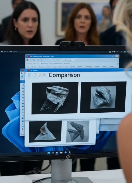
Reporters rushed forward.
Sponsors immediately began distancing themselves.
Teachers looked horrified.
Audrey stood motionless.
For the first time all day, she had no defense left.
Then Judge Collins raised her hand.
Silence returned.
Because she was about to make the final announcement.
Part 8: The Exhibition That Changed Forever
The decision came unanimously.
Audrey’s submission was removed from the exhibition.
Her finalist status was revoked.
The scholarship committee withdrew consideration.
Every official record was corrected.
But the biggest surprise came afterward.
Judge Collins stepped onto the stage.
She looked directly at Emma.
Then at me.
Then at the audience.
“This exhibition was created to celebrate creativity.”
She paused.
“Today it will celebrate honesty too.”
The judges restored full credit to Emma.
Her artwork became the centerpiece of the exhibition.
The crowd rose in a standing ovation.
Emma looked completely overwhelmed.
Tears filled her eyes as gallery owners approached her.
Collectors requested meetings.
Scholarship representatives introduced themselves.
For the first time, people saw her.
Really saw her.
Then Judge Collins turned toward me.
“Lily Adams.”
My heart nearly stopped.
She smiled.
“The judges also reviewed community contribution records.”
The audience looked confused.
Judge Collins continued.
“Your artwork sales funded your education, but they also funded supplies for younger students who couldn’t afford materials.”
I froze.
I had never told anyone that.
The judge held up receipts.
Donation records.
Supply purchases.
Everything.
The audience erupted into applause again.
A special community arts scholarship was awarded on the spot.
To me.
Not because I was poor.
Not because people felt sorry for me.
Because I had quietly helped others create.
Months later, the exhibition adopted a permanent creator-verification system.
Every major submission required documented development histories.
Every original artist received protection.
And framed near the entrance stood a plaque inspired by what happened that day.
Visitors stopped to read it constantly.
The inscription said:
Talent creates art. Character protects it. And the truth always leaves a trail that cannot be erased.
