Part 2: The Door Closed Before She Could Run
Charlotte’s hand froze halfway around the brass handle.
For the first time since she had shouldered me in front of half the tennis squad, her face did not look bored, pretty, or untouchable.
It looked young.
Terrified.
The teacher, Mr. Adler, did not raise his voice. That made it worse.
“Step away from the door, Charlotte.”
The court went quiet except for the soft ticking of the ball machine still running at the far baseline. Yellow balls rolled uselessly across the clay, bumping against the white line like they had wandered into the wrong story.
Charlotte turned slowly, her blonde ponytail swinging over one shoulder.
“This is ridiculous,” she said, but her voice cracked on the last word. “That video does not show anything.”
“It shows you entering the equipment room at 7:14,” Mr. Adler replied. “It shows you leaving with a racket bag that was not yours.”
I stood beside the referee’s table with my arms wrapped around myself, trying not to shake. My teammate, Sofia Laurent, was still sitting on the bench with her damaged racket across her knees. The cut strings hung loose like snapped nerves.
Sofia had not cried when she found it.
That somehow made me feel worse.
She had just stared down at the frame and whispered, “That was my last chance.”
Charlotte glanced at Sofia, then at me.
Her eyes sharpened again.
“You think this proves I cut it?” she said. “Maybe I moved it because it was in the wrong place. Maybe someone else came in after me.”
Mr. Adler’s jaw tightened.
Behind him, Headmistress Moreau stepped onto the court.
She had been called from the main building and arrived still wearing her navy blazer, heels sinking slightly into the damp clay. Her presence changed the air at once. Students straightened. Parents stopped whispering. Even Charlotte’s friends took half a step back from her.
“Then we will open the full archive,” Headmistress Moreau said.
Charlotte’s lips parted.
“No,” she said too quickly.
That one word betrayed her more than the camera did.
Mr. Adler turned toward the referee. “Pull the internal log.”
The referee hesitated. “Madame Moreau, that requires administrative access.”
“I know.”
The headmistress took a keycard from her pocket and placed it on the table.
“Open it.”
Charlotte suddenly looked past all of us, toward the fence by the service gate.
A woman stood there in a cream coat, sunglasses pushed into her hair, one hand gripping the gate so tightly her knuckles showed white.
Charlotte’s mother.
Isabelle Fairchild.
The moment Charlotte saw her, whatever color remained in her face vanished.
And then I understood.
Charlotte had not been afraid of being caught.
She had been afraid of who would see why.
Part 3: The Mother Behind The Fence
Isabelle Fairchild did not walk onto the court.
She entered it like she owned the school, the tournament, and every breath we were allowed to take.
“Stop this immediately,” she said.
The referee stepped aside as if her voice had pushed him.
Headmistress Moreau did not move.
“Mrs. Fairchild, this is a disciplinary matter.”
“No,” Isabelle replied. “This is a public humiliation of my daughter based on a partial recording and a jealous accusation.”
The word jealous hit me like a thrown stone.
I had heard it before. Girls like Charlotte used it when they wanted the truth to sound ugly coming from someone else’s mouth.
Sofia gripped her broken racket tighter.
I looked at her fingers, pale around the handle, and forced myself to speak.
“This is not about jealousy,” I said. “Sofia earned her seed.”
Isabelle finally looked at me.
Her gaze moved from my worn tennis shoes to the loose threads on my school jacket, then back to my face.
“And you are?”
Before I could answer, Charlotte said, “Elena Varga.”
She said my name like an accusation.
Isabelle smiled faintly. “Ah. The scholarship girl.”
The court reacted in tiny ways. Someone inhaled. Someone looked down. Sofia flinched as if the insult had touched her too.
My throat tightened, but I did not look away.
“Yes,” I said. “And still right.”
For one second, Isabelle’s smile disappeared.
Then the laptop on the referee’s table chimed.
The internal equipment log opened.
A list appeared on the screen: access times, card IDs, storage cabinet activity, and equipment checkout notes.
Mr. Adler leaned closer.
“7:11. Sofia Laurent’s racket was checked into cabinet three by the stringing assistant.”
The referee scrolled.
“7:14. Cabinet three opened using Charlotte Fairchild’s student card.”
Charlotte shook her head. “Cards get copied.”
Her mother turned sharply toward her.
Not angry.
Warning.
The referee continued, slower now.
“7:16. Manual override entered.”
Headmistress Moreau frowned. “Manual override?”
He swallowed. “That would require staff credentials.”
A cold breeze moved across the court. The flags above the clubhouse snapped once, hard.
Mr. Adler looked at the next line, and his expression changed.
“Override code belongs to Coach Henrik.”
Everyone turned.
At the far end of the court, Coach Henrik Bauer stood beside the ball cart, his arms folded, face unreadable.
Sofia whispered, “No.”
Charlotte closed her eyes.
And Isabelle Fairchild said, very softly, “Henrik, say nothing.”
Part 4: The Coach Who Looked Away
Coach Henrik did not obey her.
That was the first crack.
He walked toward the table slowly, each step crushing damp clay under his white trainers. He looked older than he had that morning, like the court lights had drained years from his face.
“I did not cut the strings,” he said.
Nobody spoke.
“But I opened the cabinet.”
Sofia stood up so quickly the damaged racket slid from her lap and clattered to the ground.
“You opened it for her?”
Coach Henrik looked at Charlotte.
Charlotte looked at her shoes.
“It was supposed to be a harmless delay,” he said. “Mrs. Fairchild told me there was concern about Sofia’s equipment certification. She said the racket needed to be inspected before seeding.”
“That is a lie,” Sofia said, her voice thin but steady. “No one told me.”
Isabelle’s face hardened. “Careful, Coach.”
Headmistress Moreau turned to her. “No. You be careful.”
For the first time all afternoon, the power shifted.
Not completely.
But enough for everyone to feel it.
Coach Henrik rubbed both hands over his face. “I opened the cabinet. Charlotte took the bag. I thought she was bringing it to her mother.”
Charlotte snapped, “You said it would not matter!”
Her words flew out before she could stop them.
The court went dead silent.
Isabelle’s eyes flashed. “Charlotte.”
But Charlotte had already stepped into the trap of her own panic.
“You said Sofia would still play,” Charlotte cried, looking at her mother now, not at us. “You said she would just lose ranking points because she would have to use a backup racket. You said nobody would blame me.”
Sofia covered her mouth.
I felt something twist in my chest.
All this for a seeding match.
All this to move one girl out of the way.
Headmistress Moreau’s voice was ice. “Mrs. Fairchild, did you instruct your daughter to remove Sofia Laurent’s equipment?”
Isabelle gave a small laugh.
It sounded expensive and empty.
“My daughter is under stress. She is confused.”
Charlotte stared at her mother as if she had been slapped.
“No,” Charlotte whispered. “You told me to do it.”
Isabelle did not look at her.
That hurt worse than any denial.
Then Mr. Adler leaned toward the laptop again.
“There is another file,” he said.
The referee frowned. “What file?”
He clicked.
A folder appeared labeled: Recovered Audio — Clubhouse Office.
Coach Henrik went pale.
Isabelle Fairchild stepped forward.
“Close that.”
Headmistress Moreau did not blink.
“Play it.”
Part 5: The Recording From The Clubhouse Office
The first sound was a chair scraping.
Then Isabelle’s voice filled the court.
Clear. Calm. Unmistakable.
“Sofia Laurent cannot take first seed. Not this year.”
Charlotte made a small broken sound.
The recording continued.
Coach Henrik’s voice followed, lower and nervous. “She earned the ranking.”
“I do not care what she earned. My daughter has sponsors watching.”
A murmur rippled through the students.
My skin prickled.
I had thought this was about pride, maybe jealousy, maybe Charlotte needing to win.
But this was bigger.
This was adults building a ladder and using students as the wood.
Coach Henrik said on the recording, “I will not falsify match results.”
Isabelle replied, “No one asked you to falsify anything. Just create uncertainty. Equipment issue. Delay. Confusion. If Sofia misses the official inspection window, Charlotte moves up.”
Sofia sat down again like her legs had stopped working.
I moved without thinking and crouched beside her.
She did not look at me. Her eyes were fixed on the laptop.
Then came the line that changed everything.
Isabelle’s recorded voice said, “And if Elena Varga interferes, make sure people remember she has already caused trouble before.”
My breath disappeared.
The world narrowed to the clay beneath my shoes, the laptop glow, and the sudden ringing in my ears.
Sofia turned to me. “Elena…”
I shook my head because I did not trust myself to speak.
Caused trouble before.
That was what they had called it last winter when I reported missing scholarship funds from the tennis travel account.
Nothing had happened then.
Or so I thought.
I had been told it was a bookkeeping error. I had been told to stop asking questions. I had been told gratitude looked better than suspicion.
Now Isabelle’s voice was stitching both moments together in front of everyone.
Mr. Adler stopped the recording.
“No,” I said.
My voice sounded strange, too loud and too quiet at the same time.
He looked at me.
“Keep playing it.”
Headmistress Moreau studied my face.
“Are you sure?”
My hands were trembling, but I nodded.
“I want to know what they did.”
Mr. Adler pressed play.
Coach Henrik’s voice came back, barely above a whisper.
“The Varga file was closed.”
Isabelle laughed.
“No file is closed if the right donor wants it opened.”
Then Charlotte whispered beside us, “Mum, what did you do to her?”
Part 6: The Scholarship File They Buried
Headmistress Moreau ordered everyone except the involved students, staff, and parents off the court.
No one wanted to leave.
They drifted toward the fence in clusters, pretending to check their phones while listening with their whole bodies.
Sofia stayed beside me.
Charlotte stood alone.
For the first time since I had known her, no friends surrounded her. No one fixed her hair. No one handed her excuses. Her perfect white tennis dress looked suddenly too bright against the darkening clay.
Headmistress Moreau called the bursar’s office.
Within ten minutes, a woman named Frau Keller arrived with a tablet clutched to her chest and fear written across her face.
“I was told this could wait,” she said.
“It cannot,” the headmistress replied. “Open Elena Varga’s scholarship file.”
My stomach dropped.
“No,” Isabelle said. “That is confidential.”
Headmistress Moreau turned to her. “You are not in charge here.”
Frau Keller unlocked the file with shaking fingers.
Rows of documents appeared.
My application. My grades. My coach evaluations. Travel funding approvals.
Then a red marker beside one document: Conduct Concern — Pending Review.
I stared at it.
“I never had a conduct review.”
Mr. Adler took the tablet.
His expression darkened as he scrolled.
“This complaint says Elena intimidated younger students, manipulated equipment access, and created false accusations about funds.”
My mouth went dry.
“That is not true.”
“I know,” Mr. Adler said quietly.
He scrolled further.
“Filed by… Isabelle Fairchild.”
Charlotte looked at her mother with horror.
Isabelle lifted her chin. “I had concerns.”
“You had revenge,” I said.
The words left me before fear could stop them.
Everyone looked at me.
I stood straighter, though my knees felt weak.
“I asked why scholarship travel money disappeared. After that, coaches stopped inviting me to regional events. Teachers started watching me like I was dangerous. Sofia was the first person here who still hit with me.”
Sofia’s eyes filled.
Charlotte whispered, “I did not know.”
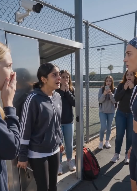
I looked at her.
“I believe you.”
She flinched as if forgiveness hurt more than blame.
Then Frau Keller made a tiny sound.
“There is an attachment,” she said.
Headmistress Moreau stepped closer. “Open it.”
Frau Keller tapped the screen.
A scanned invoice appeared.
Then another.
Then a bank transfer record.
All tied to the tennis development fund.
All redirected through a private sports consultancy.
The name at the bottom was not Charlotte’s.
It was not Coach Henrik’s.
It was Fairchild Performance Advisory Ltd.
Part 7: The Girl Who Chose The Truth
Isabelle Fairchild stopped pretending.
Her face became still in a way that frightened me more than her anger.
“Those documents are being misread,” she said.
Frau Keller whispered, “They are quite clear.”
Isabelle turned on her. “You approved half of them.”
The bursar went white.
Headmistress Moreau looked at Frau Keller.
“Is that true?”
Frau Keller’s lips trembled. “I processed them. I did not know the consultancy belonged to Mrs. Fairchild. The invoices were submitted as athlete development expenses.”
“For whom?” Mr. Adler asked.
No one answered.
Then Charlotte did.
“For me.”
Every head turned.
She looked at her mother, tears standing in her eyes but not falling.
“You said the school had a special fund. You said all elite players got support.”
Isabelle’s voice sharpened. “Charlotte, stop speaking.”
Charlotte shook her head.
Something had changed in her.
Not redemption yet.
Something rawer.
A girl realizing the pedestal under her feet had been built from other people’s stolen chances.
“My physio,” Charlotte said. “The private stringing. The Marbella training camp. The academy sessions in Lyon.”
Sofia stared at her.
I felt cold all over.
Those were the events I had been told the school could not afford for scholarship players.
Those were the doors that had closed in my face.
Charlotte wiped her cheek angrily.
“I thought it was sponsor money.”
Isabelle stepped toward her. “You owe me silence.”
Charlotte recoiled.
The sentence hung there, ugly and revealing.
Then Charlotte reached into her tennis bag.
For a wild second, I thought she was going to run after all.
Instead, she pulled out her phone.
“My father sent me this yesterday,” she said.
Isabelle’s composure finally cracked.
“Charlotte.”
Charlotte looked at Headmistress Moreau.
“He said if anything happened today, I should give this to someone who was not afraid of my mother.”
Her thumb moved across the screen.
An email appeared.
Attached were copies of company registration papers, invoices, and a message from Charlotte’s father, Lukas Fairchild, who had left their house three months before.
The subject line read: If She Uses The School Again, Open This.
Charlotte held out the phone.
Not to the headmistress.
To me.
“I am sorry,” she whispered. “Not because I got caught.”
Her hand shook.
“Because you were telling the truth and I helped make you look cruel.”
I took the phone slowly.
Behind us, a police siren wailed somewhere beyond the school gates.
And Isabelle Fairchild, who had made everyone afraid for years, finally looked afraid herself.
Part 8: The Seed No One Expected
By Monday morning, the private-school tennis court looked washed clean.
The clay had been brushed smooth. The lines had been repainted. The broken strings had been sealed in an evidence bag, along with access logs, invoices, and the recording from the clubhouse office.
But nothing at Saint Adelina Academy felt clean.
Parents whispered near the gates. Students watched Charlotte from a distance. Coach Henrik was suspended pending investigation. Frau Keller had resigned before anyone asked her to.
Isabelle Fairchild did not return.
The official statement said she had stepped down from the athletic donors’ board.
Everyone knew that was not the whole truth.
The police investigation had started quietly, then expanded quickly when Lukas Fairchild provided more records. The stolen scholarship money was not just from tennis. Swimming, fencing, music travel, debate tournaments—every program with quiet students and ambitious donors had a shadow behind it.
Sofia’s seeding was restored.
So was mine.
That was the part no one expected.
Headmistress Moreau called me into her office after lunch. I stood in front of her desk, ready for more paperwork, more apologies that would not give me back the year I lost.
Instead, she slid a folder toward me.
Inside was a letter from the European Junior Tennis Federation.
My old ranking appeal had been reopened.
My missed events had been reviewed.
My scholarship record had been cleared.
Then I saw the final page.
Invitation: Barcelona Junior Clay Series.
Main draw.
Not alternate.
Not reserve.
Main draw.
I sat down without being asked.
Headmistress Moreau’s voice softened. “You should have had this chance last year.”
I stared at the paper until the letters blurred.
Sofia squeezed my shoulder.
Charlotte stood near the window, silent.
She had asked to be there.
I had almost said no.
Then she stepped forward and placed something on the desk.
Her captain’s badge.
“I am withdrawing from the first two tournaments,” she said.
I looked up sharply.
Charlotte swallowed. “Not forever. I still want to play. But not with points Sofia and Elena should have had.”
Headmistress Moreau studied her. “That was not required.”
“I know.”
Charlotte looked at me then.
No performance. No audience. No perfect answer.
Just a girl standing in the wreckage of what her family had built.
“My mother always said winning was proof you deserved the court,” she said. “But she was wrong.”
She pushed the badge toward Sofia.
“The court belongs to whoever refuses to lie on it.”
Sofia did not take it right away.
Then she did.
Two weeks later, in Barcelona, I walked onto red clay under a sky so bright it almost hurt.
My first match was against a seeded player from Milan.
I lost the first set badly.
Then I remembered Charlotte reaching for the door, Sofia holding her broken racket, Isabelle’s voice on the recording, and the moment I had asked them to open the record while everyone watched.
I stopped playing like someone waiting to be allowed.
I played like someone who had already survived being erased.
I won in three sets.
Afterward, my phone buzzed.
A message from Sofia.
You did not just win. You made them update the record.
I laughed for the first time in days.
Then another message appeared.
From Charlotte.
I watched. You belonged there before any of us admitted it.
I looked across the Barcelona court, at the fresh marks my shoes had carved into the clay.
For once, nobody else’s lie was standing between me and the line.
And when the official score changed beside my name, it felt like the whole world had finally learned how to tell the truth.
