Part 2: The Harvest Log No One Expected
The donor’s voice cut through the ballroom like a blade.
“Why would you hide this?”
Every conversation died instantly.
The staff tablet glowed in the center of the room, illuminating rows of dates, signatures, and photographs. Guests crowded closer, expensive shoes scraping across polished marble floors.
I stood frozen.
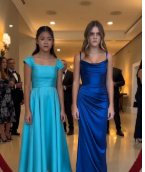
My turquoise dress still trembled around my knees from where Camille Vanderbilt had kicked it.
Across the screen appeared image after image from the lavender estate outside Provence, France.
Fields stretching toward the horizon.
Workers harvesting under summer sunlight.
Boxes labeled for charity auctions.
And in every record, one name appeared repeatedly.
Elena Parker.
My name.
A murmur spread through the crowd.
“That’s impossible.”
“I thought the Vanderbilt foundation managed the harvest.”
“Look at the signatures.”
Camille’s perfect smile began to crack.
The event coordinator stepped forward.
“We were preparing tonight’s ceremony package when we found these archived files.”
She tapped another folder.
The screen changed.
Hundreds of hours logged.
Equipment repairs.
Volunteer schedules.
Financial reports.
Every critical task behind the annual donor event had been organized by me during the previous eighteen months.
I heard someone gasp.
A wealthy patron in a silver gown looked directly at Camille.
“You told us you created the entire project.”
Camille swallowed.
The room watched.
For the first time all night, she looked afraid.
Then an older gentleman near the front raised his hand.
“Show the final attachment.”
The coordinator hesitated.
Then opened it.
The ballroom exploded into shocked silence.
Because the document wasn’t signed by me.
It was signed by Camille’s own grandfather.
And his handwritten note changed everything.
Part 3: The Signature Hidden Inside The Archive
The coordinator enlarged the document.
Everyone leaned forward.
The handwriting was elegant and unmistakably old.
The note read:
“Miss Elena Parker has contributed more to this foundation than any member of our family. If this project succeeds, her work deserves public recognition.”
A stunned hush settled across the room.
Camille looked as if someone had stolen the air from her lungs.
“No,” she whispered.
“That can’t be real.”
But several donors immediately recognized the signature.
“It belongs to Charles Vanderbilt.”
“He personally wrote our founding charter.”
“You can’t fake that.”
My heart pounded painfully.
I had never known that note existed.
Years earlier, Charles Vanderbilt had quietly hired me for seasonal work after seeing me help struggling farmers during a difficult harvest season.
He never treated me like charity.
He treated me like someone capable.
And apparently he had been documenting everything.
Camille stormed toward the coordinator.
“You’re embarrassing my family!”
The coordinator stood her ground.
“No, Miss Vanderbilt.”
She opened another folder.
“You did that yourself.”
The next file contained internal emails.
Dozens of them.
The room watched as message after message appeared.
Camille demanding my name be removed from brochures.
Camille insisting donor presentations credit her instead.
Camille instructing assistants to keep me away from sponsors.
A woman near the back covered her mouth.
“Oh my God.”
The evidence was overwhelming.
Yet Camille suddenly straightened.
Her panic vanished.
A strange confidence returned to her face.
She smiled.
And that smile frightened me more than her anger ever had.
“Then perhaps,” she said softly, “it’s time everyone saw the other file.”
The ballroom fell silent.
Because nobody knew what file she meant.
Except one person.
A pale-faced lawyer standing near the entrance.
And the second Camille looked at him, he turned white.
Part 4: The Lawyer Who Refused To Stay Silent
The lawyer tried to leave.
Camille moved first.
“Show them.”
His hands shook.
“Camille, this isn’t—”
“Show them.”
The command echoed through the room.
Several donors exchanged worried glances.
The lawyer slowly opened a leather briefcase.
Inside sat a sealed envelope.
I felt dread twist through my stomach.
Because I had never seen it before.
Neither had anyone else.
The lawyer cleared his throat.
“This document was placed under legal protection three years ago.”
The room became perfectly still.
“By Charles Vanderbilt.”
Camille smiled triumphantly.
For a moment I feared everything was about to collapse.
Then the lawyer continued.
“And Miss Camille has repeatedly attempted to prevent its release.”
Her smile vanished instantly.
“What?”
The lawyer removed several pages.
“The document contains instructions regarding future leadership of the Vanderbilt Agricultural Foundation.”
Donors leaned forward.
Trustees stared.
The lawyer looked directly at Camille.
Then read aloud.
“Should my descendants prove unwilling to uphold the foundation’s values, authority shall transfer to the individual whose service most benefits the community.”
Silence.
Absolute silence.
The lawyer lowered the page.
“There was only one person named.”
My chest tightened.
The room waited.
Then he spoke.
“Elena Parker.”
A collective gasp swept across the ballroom.
Camille physically staggered backward.
“No.”
The word came out broken.
“No. He couldn’t do that.”
But the lawyer wasn’t finished.
There was still one final page.
And when he unfolded it, his expression changed completely.
“There’s another condition.”
The donors leaned closer.
“What condition?”
The lawyer stared at the paper.
Then looked directly at Camille.
“Charles Vanderbilt ordered an independent audit of the family’s finances.”
The room erupted.
Because suddenly this wasn’t about credit anymore.
It was about money.
A lot of money.
Part 5: The Audit That Opened Every Door
Within forty-eight hours, auditors arrived in Provence.
Donors postponed investments.
Trustees demanded explanations.
News spread through elite circles across Europe.
And Camille Vanderbilt became the center of a growing scandal.
Meanwhile, I returned to the lavender fields.
I wanted distance from the chaos.
The rows of purple blossoms felt safer than marble ballrooms.
But peace didn’t last.
Three days later, the lead auditor appeared at the farm.
His face looked grim.
“Miss Parker, we found something.”
I set down my harvesting basket.
“What is it?”
He handed me a folder.
Inside were financial statements stretching back nearly a decade.
Millions of euros.
Transfers.
Shell companies.
Missing inventory.
My stomach dropped.
“Who did this?”
The auditor hesitated.
“That’s the problem.”
He pointed to several signatures.
The names belonged to Vanderbilt executives.
Board members.
Advisors.
But none belonged to Camille.
I looked up.
“She didn’t steal anything?”
“Not directly.”
The auditor sighed.
“She spent years taking credit for your work.”
“But someone else was stealing from everyone.”
A chill ran through me.
The entire scandal had just become much larger.
The next discovery arrived that evening.
And it changed the investigation forever.
Because hidden inside the oldest account records was a name nobody expected to find.
Charles Vanderbilt himself.
Part 6: The Truth Buried Beneath Ten Years
The revelation spread like wildfire.
Donors panicked.
Trustees demanded emergency meetings.
Reporters flooded Provence.
Everyone asked the same question.
Had Charles Vanderbilt been corrupt all along?
I refused to believe it.
The man I knew had spent years helping struggling communities.
Something felt wrong.
Very wrong.
Then an elderly archivist named Margot requested a private meeting.
She arrived carrying three dusty ledgers.
“I think Charles knew.”
I stared at her.
“Knew what?”
“That someone was stealing.”
She opened the first ledger.
Hidden among ordinary notes were coded markings.
Numbers.
Dates.
Locations.
A trail.
Charles had secretly tracked suspicious transactions for years.
He wasn’t stealing.
He was investigating.
And he had hidden the evidence where only someone patient would eventually find it.
Margot turned another page.
A map slipped free.
The location marked on it sat outside Avignon.
An abandoned storage estate.
The following morning trustees, auditors, and investigators traveled there together.
The warehouse looked forgotten.
Dust covered everything.
Broken windows rattled in the wind.
Then investigators opened a locked room.
Everyone froze.
Inside sat hundreds of missing records.
Boxes of contracts.
Financial documents.
And enough evidence to expose the real mastermind.
The name appeared over and over.
Not Camille Vanderbilt.
Not Charles Vanderbilt.
But Sebastian Vanderbilt.
Charles’s youngest son.
Camille’s father.
And suddenly the entire family empire began collapsing around him.
Part 7: The Night Her Father Finally Fell
Sebastian Vanderbilt arrived furious.
His private helicopter landed before sunset.
He stormed into the emergency board meeting.
“You’re all making a mistake.”
But nobody listened anymore.
Evidence covered every table.
The trustees had seen everything.
The auditors had verified every transaction.
The investigators had traced every hidden account.
For years Sebastian had siphoned foundation funds through fake vendors while allowing his daughter to become the public face of the organization.
Camille sat motionless.
She looked smaller than I had ever seen her.
Not arrogant.
Not powerful.
Just shattered.
When investigators escorted Sebastian from the building, he turned toward Camille.
“Say something.”
She didn’t.
“Camille.”
Still nothing.
Then she finally spoke.
“You taught me that stealing credit was normal.”
The room froze.
Tears filled her eyes.
“You taught me that people like Elena existed to be used.”
Sebastian stared at her.
For the first time, he looked defeated.
Investigators led him away.
The door closed.
And an entire dynasty seemed to collapse with it.
Later that night Camille approached me alone beneath the lavender fields.
Moonlight silvered the flowers around us.
Neither of us spoke for several seconds.
Then she whispered:
“I’m sorry.”
Not for being caught.
Not for losing.
For everything.
And somehow that hurt more than her cruelty ever had.
Because I realized she had spent her entire life becoming someone she never wanted to be.
Part 8: The Ceremony Nobody Could Have Predicted
Six months later, Provence looked different.
The foundation survived.
Barely.
But it survived.
Trustees implemented reforms.
Communities regained funding.
Workers received overdue compensation.
And for the first time, every contributor’s name appeared publicly.
No exceptions.
No hidden labor.
No forgotten people.
The reopening ceremony drew donors from across Europe.
Reporters gathered again.
Lavender stretched across the hills beneath golden sunlight.
I stood beside the ribbon waiting for the ceremony to begin.
My hands shook exactly as they had months earlier.
But this time for a different reason.
The crowd parted.
A familiar figure walked forward.
Camille Vanderbilt.
Gasps spread through the audience.
She wasn’t wearing designer couture.
No diamonds.
No entourage.
Only simple clothes and dirt-stained boots.
The kind worn by harvest workers.
She carried a wooden plaque.
Without speaking, she placed it beside the entrance.
Then stepped away.
The crowd moved closer.
Carved into the wood were hundreds of names.
Volunteers.
Laborers.
Farm workers.
Students.
Retirees.
Everyone whose efforts had built the foundation.
At the very top appeared one line.
NO LEGACY BELONGS TO A FAMILY ALONE.
The crowd erupted into applause.
Many were crying.
Including me.
Then the chairwoman of the board approached the microphone.
“We have one final announcement.”
I assumed it concerned the foundation.
I was wrong.
She smiled.
“Charles Vanderbilt left one last instruction.”
The crowd quieted.
The chairwoman unfolded a sealed letter.
“His final wish was never revealed because he feared it would sound impossible.”
She looked directly at me.
Then read aloud.
“Transfer ownership of the Vanderbilt estate into a public trust governed equally by workers, donors, and local communities.”
The audience gasped.
One of Europe’s largest private estates would no longer belong to any family.
It would belong to everyone who helped build it.
Exactly as Charles had always intended.
As cheers echoed across the lavender fields, Camille and I stood side by side watching the crowd celebrate.
Not as rivals.
Not as enemies.
But as two women finally freed from a legacy neither of us had chosen.
And beneath the summer sky of Provence, surrounded by thousands of blooming lavender flowers, the estate that had once divided everyone finally belonged to the people whose hands had made it flourish.
