Part 2: The Printer Who Refused To Stay Quiet
The printer did not look important when he stepped through the side gate.
He was a thin man in a dark green work jacket, holding a cream folder against his chest like it contained something breakable. The photographers turned first, then the donors, then Brielle Lancaster.
Her hand was still half-raised, as if the slap had frozen her in place.
The host, Mr. Albrecht, stared at the folder. “You said you had something for me?”
The printer swallowed. His name badge read Marek Vogel, and his voice trembled only once before it steadied.
“I printed the final gala programs,” he said. “And I kept the revision requests because the changes were unusual.”
Brielle laughed too quickly. “This is ridiculous. He’s staff.”
Marek looked directly at her. “Yes. That is why people send me things they think I will never question.”
A sound moved through the donor room, not a gasp, not yet. More like the first crack in ice.
I pressed my palm against the edge of the ribbon stand. My cheek burned where Brielle had hit me, but the pain had become distant, almost quiet. What I felt now was colder. The kind of cold that starts in your ribs when you realize the person humiliating you had not lost control.
She had planned it.
Mr. Albrecht opened the folder.
Brielle’s mother, Lady Vivienne Lancaster, rose from the front row with the slow elegance of a woman used to making rooms obey her. Her pearls caught the evening light, soft and white against her throat.
“Mr. Albrecht,” she said, “surely we are not interrupting a charity ceremony over a printing misunderstanding.”
“It is not a misunderstanding,” Marek replied.
He turned a page toward the host.
I saw my name there, printed cleanly in the original version.
Elena Moreau — Soil Recovery Lead And Ribbon Ceremony Honoree.
Then below it, in the revision request, the line had been crossed out.
The replacement read:
Brielle Lancaster — Garden Patron Representative.
Mr. Albrecht’s jaw tightened.
Brielle stepped forward. “Anyone could have typed that.”
Marek lifted a second page. “The email came from your family office.”
The whole garden seemed to stop breathing.
Brielle’s eyes flicked, just once, toward her mother.
That tiny look told me more than the folder did.
Lady Vivienne smiled, but the smile did not reach her eyes. “Our office sends hundreds of messages during gala season. My daughter has no reason to involve herself in program details.”
The host turned another page.
His face changed.
Not anger. Something worse.
Recognition.
“Marek,” he said quietly, “who requested the deletion of the soil report acknowledgment?”
My stomach dropped.
I had not known that part existed.
Marek pointed to a highlighted line. “The same account.”
Brielle’s mouth opened. No sound came out.
Behind us, the flower bed glowed under strings of warm garden lights. Peonies in blush pink, deep red, and white lifted their heavy heads toward the evening air. They looked perfect now, almost unreal. No one in that room knew how close they had come to rotting from the roots before the gala.
No one except me.
And apparently, someone else had known enough to erase it.
Mr. Albrecht turned toward the donors. “Two months ago, this garden nearly failed. The committee was told it was a minor delay.”
The donors shifted.
He held up the logbook.
“The truth is that Elena Moreau identified the contaminated soil batch before it reached the main beds. Her correction saved the entire peony season.”
My throat tightened so sharply I had to look away.
For weeks, I had worked before sunrise with mud on my shoes, my notebook damp from mist, my hands raw from testing soil trays in a greenhouse that smelled of clay and wet leaves. I had not done it to become the face of anything.
I did it because the flowers were alive.
And because my grandmother, who had taught me the names of plants before I could spell my own, always said, “A garden remembers who kneels for it.”
Brielle’s voice cut through the silence. “She is making this dramatic. It is a flower bed, not a rescue mission.”
That was when an older woman in a navy coat stood up in the second row.
She held a cane with a silver handle.
“No,” the woman said. “It was a rescue mission.”
Every head turned.
Mr. Albrecht’s expression shifted again. “Countess Emilia?”
Brielle went pale.
The woman walked slowly toward the stage. Each tap of her cane against the stone path sounded louder than the cameras.
“My late husband funded the original peony garden,” Countess Emilia said. “Not for the Lancasters. Not for committee photographs. For the public hospital children’s wing beside it.”
She stopped beside me, close enough that I could smell lavender soap and rain on wool.
Then she looked at Brielle.
“I asked for the project logs myself after the first bloom opened. I wanted to know who had saved my husband’s final gift.”
Brielle whispered, “You knew?”
The countess did not blink.
“I knew before you hit her.”
Part 3: The Woman Who Owned The Garden
A camera flash burst like lightning against the stone wall.
Brielle flinched.
For the first time since I had met her, she looked young. Not innocent, not sorry, but young in the way cruel people sometimes do when they discover the room is no longer afraid of them.
Countess Emilia reached into the pocket of her coat and unfolded a sealed envelope.
“This was meant for after the ribbon ceremony,” she said. “But since Miss Lancaster has chosen violence before witnesses, I see no reason to protect the evening’s schedule.”
Lady Vivienne moved down the aisle. “Emilia, this is unnecessary.”
The countess turned her head slowly.
“Do not use my name as if we are friends.”
The words landed gently, but they cut like glass.
The donor room went still again.
I felt Marek step a little closer, not in front of me, but near enough that I knew I was no longer standing alone.
Mr. Albrecht accepted the envelope and opened it with careful fingers. The paper inside was thick, embossed with a crest of three lilies and a fox.
He read silently.
Then he looked up at me.
“Elena,” he said, “did anyone tell you about the apprenticeship?”
I frowned. “What apprenticeship?”
Brielle’s breath caught.
That was answer enough.
The countess closed her eyes briefly, as if disappointment had become a physical weight.
“My husband’s foundation created a two-year botanical restoration apprenticeship in Florence,” she said. “Full funding. Housing. Field training. Research placement. It was designed for the person who saved the garden.”
My hand slipped from the ribbon stand.
I stared at her.
Florence.
Not just a certificate. Not a polite thank-you. A path.
A real one.
I heard my grandmother’s voice in my memory, soft from her hospital bed, asking me to promise I would not spend my whole life making beauty other people signed their names to.
Brielle’s face twisted. “She cannot just be given that. There are standards.”
Countess Emilia looked at her. “There were. She met them.”
Lady Vivienne’s voice hardened. “My daughter has chaired three youth patron committees.”
“Your daughter,” the countess replied, “tried to erase the selected applicant from tonight’s program.”
Brielle stepped backward.
A donor murmured something. Another lifted a phone. The photographer who had lowered his camera now raised it again, but he did not look excited. He looked grave, like he knew he was recording the end of a family’s perfect image.
Mr. Albrecht turned to Brielle. “Did you know about this apprenticeship?”
“No,” she said.
Too fast.
Marek opened the folder again. “There is one more message.”
Lady Vivienne snapped, “Enough.”
But Marek did not stop.
He read from the page, his voice quiet but clear.
“‘Remove Elena Moreau from all public-facing material before Emilia reviews the final copy. Brielle will accept the Florence placement on behalf of the youth committee if needed.’”
My skin went cold.
Brielle stared at the ground.
The words seemed to move through the garden like smoke, touching every table, every glass, every expensive dress.
She had not only wanted applause. She had wanted my future.
I heard myself speak before I knew I had decided to.
“You knew what it meant to me.”
Brielle looked up.
Something flickered in her face. Annoyance. Shame. Fear. I could not tell.
“You always act like needing something makes you noble,” she said. Her voice shook, but she sharpened it anyway. “Some of us are tired of watching people clap because you look humble.”
The slap had hurt.
That sentence hurt worse.
I stepped down from the platform. My legs were unsteady, but I kept walking until I stood close enough to see the gloss of tears she refused to let fall.
“I did not look humble,” I said. “I looked tired.”
Her mouth twitched.
“I was tired because I was doing the work you wanted photographed.”
Lady Vivienne reached for her daughter’s arm. “Brielle, we are leaving.”
But the countess’s cane tapped once.
“No,” she said. “Not yet.”
Two security staff had arrived near the side gate, but Countess Emilia did not look at them. She looked at Mr. Albrecht.
“Before they leave,” she said, “ask who authorized access to the greenhouse after midnight.”
A ripple moved through the committee.
The host frowned. “After midnight?”
The countess handed him another folded sheet.
Brielle whispered, “Mother.”
Lady Vivienne’s fingers tightened around her clutch.
For the first time, she looked afraid.
Part 4: The Midnight Greenhouse Recording
The garden lights buzzed softly overhead.
No one spoke while Mr. Albrecht read the access sheet.
The greenhouse was behind the gala lawn, partly hidden by clipped yew hedges and a row of old stone urns. I had loved it since the first week of the project. Even in winter, it smelled of damp earth, old wood, and lemon balm from the cracked pots near the east windows.
Now the thought of it made my stomach clench.
Mr. Albrecht lifted his eyes. “There were three midnight entries last month.”
He looked at Lady Vivienne.
“Lancaster Foundation card.”
Lady Vivienne gave a brittle laugh. “Our foundation funds security improvements. That card is used by assistants, drivers, delivery people—”
“Brielle used it,” said a new voice.
A young man stepped out from behind the arbor.
He had been standing near the catering staff with a tray of untouched glasses, but now he removed his black server’s jacket and folded it over his arm.
Brielle looked like someone had struck her.
“Lukas?” she breathed.
The young man did not look at her. He looked at me.
“I am sorry,” he said.
I knew him vaguely. Lukas Varga, Brielle’s cousin from Prague, quiet at committee meetings, always sitting near the back with a sketchbook. He had once helped me carry peat sacks when the delivery lift broke. Brielle had laughed and called him “tragically useful.”
Now he held a small silver flash drive between two fingers.
“I copied the greenhouse security file before it was deleted.”
Lady Vivienne’s face lost all warmth. “Lukas, think carefully.”
He did.
I watched him think.
I saw the moment the fear in his shoulders became something stronger.
“I have,” he said. “That is why I brought it.”
Mr. Albrecht gestured to the audiovisual table. The technician hesitated only until Countess Emilia nodded.
A screen behind the stage, originally meant to show donor names and flower photographs, flickered blue.
Then the greenhouse appeared.
Grainy. Moonlit. Empty rows of starter trays. Plastic tags. Soil bins.
A timestamp glowed in the corner.
00:43.
The side door opened.
Brielle entered in a pale coat, hair tucked under a scarf, face sharp with concentration. Behind her came a woman in dark gloves.
Lady Vivienne.
My breath stopped.
They moved directly to the trays marked with red flags.
My trays.
The ones I had quarantined after the soil pH readings came back wrong.
Brielle lifted a bag from under her coat and poured something into one of the bins.
The image was silent, but the room did not need sound.
A donor whispered, “My God.”
I heard Marek curse softly under his breath.
On the screen, Lady Vivienne checked the door while Brielle shook the bag empty.
Then Brielle turned toward the camera.
For a second, her face filled the screen.
Not furious. Not panicked.
Calm.
She knew exactly what she was doing.
The video cut.
Nobody moved.
The peonies behind us swayed in the evening breeze, their petals trembling like they knew a storm had arrived.
Mr. Albrecht’s voice was almost unrecognizable.
“What did you put in the soil?”
Brielle shook her head. “It was not poison. It was just… it was supposed to ruin the test results.”
Lady Vivienne hissed, “Do not say another word.”
But Brielle was unraveling now.
Her eyes darted from Lukas to the countess to me.
“She was not supposed to fix it that fast,” she said. “The committee was supposed to think she had failed. That was all.”
That was all.
As if destroying months of work was a prank.
As if a public hospital garden did not matter because no one in her world got their hands dirty enough to care.
I felt heat behind my eyes, but I refused to cry where she could see it.
Lukas spoke quietly. “Brielle, you told me you only wanted to scare the committee.”
She turned on him. “You were not supposed to betray family.”
He looked at her then.
“My family taught me not to steal from people who already have less than us.”
Lady Vivienne stepped forward, voice low and dangerous. “This will not leave this garden.”
Countess Emilia smiled sadly.
“It already has.”
She nodded toward the photographer.
He lowered his camera just enough to show the blinking red light.
The livestream had never stopped.
Part 5: The Apology That Broke Her Mask
Brielle made a sound I had never heard from her before.
Small.
Animal.
She grabbed for her phone, but her hands shook too badly to unlock it. Around the garden, donors were already checking screens. Notifications flashed. Messages arrived. Someone in the back whispered that the clip had been shared from the gala page before anyone realized what was happening.
Lady Vivienne turned to Mr. Albrecht. “Cut the feed.”
“The feed is archived automatically,” the technician said.
He sounded terrified, but he still said it.
Brielle spun toward me.
“This is your fault.”
I almost laughed because the words were so broken, so desperate, so familiar. People like Brielle never seemed to run out of ways to hand their guilt to someone else.
“No,” I said. “This is yours.”
She took one step closer.
Security moved.
Brielle stopped.
Her eyes shone now, wet and furious. The garden lights made the tears look like diamonds she hated wearing.
“You think they care about you?” she whispered. “They care because you make a good story. Poor girl. Muddy shoes. Saved the flowers. They will clap tonight and forget you tomorrow.”
I looked at the donors.
Some looked ashamed. Some looked curious. Some looked like they were already calculating which side would protect their reputation.
Maybe Brielle was partly right.
That hurt.
But not enough to make her right about me.
“You forgot me before tonight,” I said. “The flowers did not.”
Countess Emilia’s hand touched my elbow, light but steady.
Mr. Albrecht cleared his throat. “Miss Lancaster, the committee will remove you from all youth patron responsibilities immediately. Lady Vivienne, pending investigation, the Lancaster Foundation’s administrative access is suspended.”
Lady Vivienne’s smile returned, thin and deadly.
“Careful,” she said. “Many of these donors came because of our name.”
The countess looked around the garden.
“Then tonight will teach us who came for the work.”
One by one, something astonishing happened.
A retired surgeon stood first. Then the director of a children’s clinic. Then a pair of museum trustees. Then three local business owners I had seen at planning meetings but never spoken to.
They did not cheer.
They simply stood.
Not for Brielle. Not for Lady Vivienne.
For the garden.
For the truth.
My chest tightened until breathing hurt.
Brielle watched them rise, and each person standing seemed to peel another layer of certainty from her face.
Then a woman near the back called out, “Make Elena cut the ribbon.”
Another voice: “And give her the apprenticeship.”
Marek clapped once.
Lukas joined him.
Then the sound spread.
Not wild. Not theatrical. Just firm, growing, undeniable.
Applause filled the peony garden.
My fingers curled around the ribbon scissors, but I could not lift them yet.
Brielle stared at the scissors like they were a verdict.
Then she did something unexpected.
She walked toward me slowly, past security, past her mother’s outstretched hand.
For a second, I thought she was going to hit me again.
Instead, she stopped two feet away and said, “I am sorry.”
The applause faded.
Her voice shook. “I am sorry I slapped you.”
Everyone waited.
I did too.
But the apology sat there, polished and empty, like a vase with no water.
I looked at her. “And?”
Her jaw clenched.
“And I am sorry about the program.”
I kept holding her gaze.
“And?”
Her eyes flashed.
“That is enough.”
I felt something in me settle.
“No,” I said softly. “It is not.”
Brielle’s face hardened.
The mask came back so fast it was almost frightening.
“Fine,” she said. “Then enjoy Florence while you can.”
Lukas went still.
“What does that mean?” he asked.
Brielle’s mouth trembled, but this time not with regret.
With satisfaction.
“My mother already called them,” she said. “The placement was withdrawn yesterday.”
Part 6: The Call From Florence
The scissors slipped from my hand and struck the stone.
The sound was tiny, but everyone heard it.
Countess Emilia turned sharply to Lady Vivienne. “What did you do?”
Lady Vivienne did not answer.
She did not need to.
Her silence was smoother than any confession.
Mr. Albrecht pulled out his phone. “I will contact the foundation office.”
Brielle laughed through her tears. “Too late. They think Elena falsified the soil log.”
The world narrowed.
The lights blurred. The peonies blurred. Brielle’s face became a pale shape in front of me.
Falsified.
That word could ruin more than an apprenticeship.
It could ruin every reference, every application, every chance I had to leave the edge of other people’s gardens and build something of my own.
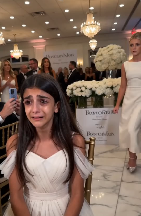
Lukas stepped toward his aunt. “You sent them a false report.”
Lady Vivienne finally spoke.
“I protected my daughter from a manipulated selection process.”
Countess Emilia’s voice was quiet. “You forged evidence.”
“I submitted concerns.”
“You lied.”
Lady Vivienne’s eyes sharpened. “Prove it.”
For a moment, no one did.
That was the terrible thing. We had the program emails. We had the greenhouse video. We had the access logs.
But a withdrawn placement in Florence? A false report already sent?
That damage had happened somewhere else, behind another door, in another country.
Brielle saw it too. Her breathing slowed. Color returned to her cheeks.
She had found the one place the garden could not reach.
Then Marek raised his hand.
Everyone looked at him.
He seemed embarrassed by the attention, as if he wished evidence could speak without needing a person to hold it.
“The Florence office requested printed courier copies,” he said. “For their review board.”
Lady Vivienne’s head turned.
Marek looked at me. “I printed those too.”
Brielle whispered, “No.”
Marek removed another sealed packet from his satchel.
“I thought it was strange,” he said. “The report used the committee letterhead, but the file formatting was wrong.”
Mr. Albrecht snatched the packet open.
His eyes moved quickly over the pages.
Then he looked at Lady Vivienne with disgust.
“This says Elena altered soil data to create a crisis she could ‘solve’ publicly.”
A sound broke from my throat.
I covered my mouth.
Not because I believed it. Because someone had written my name into a lie so coldly, so completely, that for one second I felt like I was looking at a stranger wearing my life.
Lukas stepped beside me.
“Elena’s original soil readings are in the lab portal,” he said. “The timestamps cannot be edited by committee accounts.”
Lady Vivienne snapped, “You have no access to that.”
“No,” Lukas said. “But the university lab does.”
Countess Emilia pulled out her phone.
“Then we call them.”
The call took less than a minute to connect and longer to survive.
The Florence review coordinator appeared on the stage screen by video link, an older man with silver hair and tired eyes. His name was Professor Matteo Ricci.
Countess Emilia spoke in Italian first, then English for the room.
Professor Ricci listened. His expression changed when the forged report was held up to the camera.
“We received that file yesterday,” he said. “And a phone call urging immediate withdrawal.”
Lady Vivienne folded her arms. “Because the candidate was unreliable.”
Professor Ricci looked down at something off-screen.
Then he said, “That is difficult to believe, Lady Lancaster.”
My heart began to pound.
He lifted a file.
“Because this afternoon we received a second packet from Brussels.”
Countess Emilia frowned. “From whom?”
Professor Ricci adjusted his glasses.
“From Dr. Anika Verbruggen, the independent soil specialist Elena Moreau consulted six weeks ago.”
I froze.
I remembered Dr. Verbruggen. I had emailed her at two in the morning after three failed pH corrections, expecting no answer. She had replied with two pages of notes and one sentence at the end:
Do not let them rush the roots. They are telling you the truth.
Professor Ricci continued.
“Her packet included lab confirmations, correspondence, and a recommendation letter.” He paused. “It also included a warning that someone might attempt to discredit Miss Moreau before the gala.”
Brielle whispered, “How would she know?”
Professor Ricci’s face darkened.
“Because someone offered her money to contradict Elena’s findings.”
Part 7: The Woman Brielle Tried To Buy
A low sound passed through the donors, deep and stunned.
Lady Vivienne’s composure cracked for half a second.
Only half.
But everyone saw it.
Professor Ricci looked into the camera. “Dr. Verbruggen declined the payment and forwarded the contact record to our ethics office.”
Mr. Albrecht’s voice was rough. “Who contacted her?”
Professor Ricci hesitated. “The message came through an intermediary. But the bank transfer request named a Lancaster advisory account.”
Lady Vivienne said, “That proves nothing.”
The countess stepped closer to the screen. “It proves enough to freeze the withdrawal.”
Professor Ricci nodded. “The apprenticeship was not withdrawn. It was suspended pending clarification.”
I could breathe again, but only barely.
Suspended was not saved.
Not yet.
Professor Ricci looked at me for the first time.
“Miss Moreau,” he said, “did you falsify your soil log?”
I stood in front of the entire garden with my cheek still aching and mud from the afternoon still dried beneath one fingernail.
“No,” I said. “I did not.”
“Did anyone pressure you to alter your records?”
I looked at Brielle.
Her eyes begged me for something. Not forgiveness. Not mercy.
Silence.
I thought of every morning I had arrived before the donors, every time Brielle had called me “useful,” every time I had smiled because I needed the project more than I needed pride.
Then I thought of the children’s hospital windows overlooking the garden. Small faces behind glass. Nurses pushing wheelchairs into the sun. A boy with a blue cap once asking me if the red peonies were brave because they opened first.
I faced the screen.
“Yes,” I said. “Brielle Lancaster told me to remove the contamination note from the public report because it made the committee look careless. When I refused, she said people like me should learn which doors were temporary.”
Lukas closed his eyes.
Brielle’s lips parted.
Professor Ricci typed something. “Thank you.”
Lady Vivienne moved suddenly. She grabbed Brielle’s wrist. “We are leaving now.”
Security blocked the path.
Lady Vivienne’s voice rose. “You cannot detain us.”
“No,” Countess Emilia said. “But the police can ask you to remain.”
Beyond the garden gate, blue lights flickered against the stone wall.
Brielle saw them and went completely still.
Her mother’s hand tightened around her wrist so hard Brielle winced.
That small wince changed something in me.
For all her cruelty, Brielle looked trapped too. Not by poverty, not by hunger, not by doors closing before she reached them.
By a mother who had raised winning as the only acceptable form of breathing.
Two officers entered quietly. No dramatic rush. No shouting. Just dark uniforms and serious faces.
Lady Vivienne immediately began speaking to them in a polished tone.
Brielle stared at me.
Her mouth shaped one word.
Please.
I did not know what she was asking.
Please lie?
Please stop this?
Please save me from what I helped create?
Professor Ricci spoke again from the screen.
“Miss Moreau, the board can reconvene tonight. But we will require one final confirmation of original authorship.”
My stomach tightened. “What confirmation?”
“The handwritten field journal.”
The journal.
My journal.
The one with soil notes, sketches, rainfall records, and my grandmother’s old plant sayings written in the margins.
The one I had not seen since that morning.
I turned toward my satchel under the registration table.
It was open.
Empty.
Brielle began to cry.
Not loudly. Not beautifully.
Just one tear slipping down as the truth arrived before her confession.
Lady Vivienne looked at her daughter with pure warning.
Brielle whispered, “I did not destroy it.”
My voice came out thin.
“Where is it?”
She shook her head.
“My mother took it.”
Part 8: The Journal Hidden Beneath The Peonies
Lady Vivienne smiled at her daughter as if Brielle had just made a childish mistake at dinner.
“Emotional girls invent things under pressure,” she said.
But Brielle was staring at the peony bed.
Not at her mother.
At the flowers.
My pulse changed.
The main bed was raised in a long oval, edged with pale stone. The silk ribbon still curved around it, untouched. Beneath the central white peonies stood a bronze plaque with the name of Countess Emilia’s husband.
Brielle’s eyes kept flicking there.
Lukas noticed too.
“Elena,” he said quietly, “why is she looking at the bed?”
I stepped off the platform.
Lady Vivienne’s voice snapped behind me. “Do not touch those flowers.”
I stopped.
The command was too sharp.
Too afraid.
Countess Emilia leaned on her cane. “Elena planted that bed. She may touch anything in it.”
I knelt beside the central peonies.
The soil smelled rich and clean, the way it had after weeks of correction. My hands shook as I moved the leaves aside. The stems brushed my wrist, cool and damp from evening mist.
At first, I saw nothing.
Then my fingers struck cloth.
A dark waterproof sleeve had been pushed beneath the mulch behind the plaque.
I pulled it free.
Mud streaked the edges.
My journal was inside.
For one second, I could not open it. I held it against my chest and bent over it like a person trying to keep a small animal warm.
Then I felt the shape was wrong.
Too thick.
There was something else in the sleeve.
A second notebook.
Old. Brown leather. Bound with a faded ribbon.
Countess Emilia made a sound behind me.
I turned.
Her face had gone white.
“That was my husband’s,” she whispered.
The garden forgot Brielle.
Forgot the police.
Forgot the livestream.
The countess reached for the notebook with trembling fingers.
Inside were pages of botanical drawings, notes, dates, and letters tucked between them. One photograph slid out and landed against my knee.
A young Countess Emilia stood beside a man in shirtsleeves, both laughing in an unfinished garden.
Between them stood a little girl.
The girl wore muddy boots and held a bunch of peonies too big for her hands.
On the back, in faded ink, were three words:
For our daughter.
Countess Emilia covered her mouth.
Lady Vivienne lunged forward. “That is private family property.”
The police stopped her.
Countess Emilia looked at Lady Vivienne, and something ancient broke open in her eyes.
“You told me the child died.”
No one breathed.
Lady Vivienne’s face hardened, but it was too late. The notebook had opened to a letter.
Countess Emilia read it aloud, voice shaking.
“My dearest Emilia, if my sister ever tells you the girl is gone, do not believe her. I placed the proof in the garden we built. One day, the roots will return what people buried.”
The countess swayed.
Lukas caught her arm.
I could not understand. Not fully. Not yet.
Then Countess Emilia looked at me.
Really looked.
At my eyes.
At the small birthmark near my wrist.
At the necklace I wore under my collar, the only thing my grandmother had said belonged to my mother.
Her lips parted.
“Your grandmother,” she whispered. “What was her name?”
“Clara Moreau,” I said.
The countess began to cry.
Not quietly.
Not politely.
Like someone who had been holding a scream for twenty years.
“Clara was my daughter.”
The world tilted.
My knees pressed into the soil. My hands clutched the journal. Brielle stood frozen. Lady Vivienne closed her eyes because she already knew what everyone else was just beginning to understand.
My grandmother had not been my grandmother by blood.
She had been the woman who raised the child Lady Vivienne had hidden to protect an inheritance.
My mother, Clara, had died believing she had been abandoned.
And I had walked into the gala thinking I was fighting for a ribbon, while the garden had been holding my family’s truth under its roots.
Countess Emilia knelt in the soil beside me, pearls sinking against her coat, cane forgotten on the stones.
She reached for my muddy hand.
“Elena,” she said, voice breaking around my name, “I thought I had no one left.”
I looked at the peonies, at the journal, at the ribbon still waiting.
Then I placed the scissors in her hand and closed my fingers over hers.
“We can cut it together,” I said.
Behind us, Professor Ricci’s voice came softly from the screen. “Florence confirms the apprenticeship. Effective immediately.”
But the applause that followed was not for Florence.
It was for the countess crying in the dirt, for the printer who kept the emails, for Lukas who chose truth over blood, and for the flowers that had guarded a secret no mansion could bury.
When the ribbon finally fell, it did not feel like an opening.
It felt like a door in my life had been unlocked from the other side, and the first person waiting there was family.
