THE SIGNED MENTOR FORM SIENNA HART TRIED TO HIDE EXPOSED THE STUDY ROOM LIE
Part 2: The Phone She Was Suddenly Afraid To Open
Sienna Hart’s fingers closed around her phone like it had become something hot enough to burn her.
The quiet study room stayed silent.
Not library-silent. Not respectful-silent. This was the kind of silence that comes when everyone realizes the story they believed may have been built to collapse on someone else.
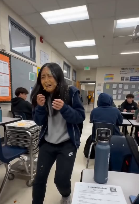
There was still sauce on my sleeve from the food she had thrown at me. It had slid down the cuff of my sweater and dried sticky against my wrist. A few minutes earlier, people had looked at me like I was the problem. Now they were looking at Sienna’s hand.
Mrs. Albright, the academic support coordinator, kept her voice calm.
“Sienna, unlock the phone.”
Sienna gave a quick laugh. “You can’t make me.”
“No,” Mrs. Albright said. “But you told us the mentor schedule was sent to you incorrectly. You said Maya altered it. Your phone can show the original message.”
My name sounded strange in her mouth.
Maya Romano.
For most of the semester, I had been the girl who came early, cleaned up the whiteboards, organized extra pencils, and stayed late helping freshmen who were too embarrassed to ask teachers for help. I was not popular. I was useful.
Sienna had always understood the difference.
She knew how to smile when she needed something copied and how to look through me when important people were watching.
Now her best friend, Clara Voss, was standing two steps away from her.
Not beside her anymore.
Away.
Sienna noticed.
Her eyes flashed. “Clara?”
Clara’s face looked pale beneath her perfect makeup. “Just unlock it.”
Sienna stared at her. “You too?”
Clara hugged her books tighter. “If you didn’t lie, then it won’t matter.”
That was the first crack.
Sienna unlocked the phone.
Mrs. Albright did not touch it. She simply said, “Open the message thread about the mentor schedule.”
Sienna’s thumb trembled as she tapped.
The screen lit up.
The group chat name appeared.
Study Circle.
My stomach dropped when I saw it. I had never been in that chat, but I had heard people laugh about it from across the room. The smart kids. The polished kids. The students who made leadership look effortless because other people did the labor under their names.
Mrs. Albright leaned closer.
The first visible message was from Sienna.
“Make sure Maya gets the wrong version. She’ll panic and look guilty.”
A sound went through the room.
Someone whispered, “Oh my God.”
Sienna yanked the phone back. “That’s out of context.”
Mrs. Albright’s eyes sharpened. “Put it back on the table.”
Sienna didn’t.
For one second, she looked like she might run.
Then Mr. Keane, the assistant principal, stepped forward. “Sienna.”
She placed the phone down.
Mrs. Albright scrolled.
Another message appeared.
“Jules needs the library slot because his safety accommodation can’t be public. If Maya keeps asking questions, say she’s trying to expose him.”
My chest tightened.
Jules Moreau stood near the printer station, frozen.
He was a junior who used noise-canceling headphones during crowded periods and always took the corner seat during mentor sessions. Nobody was supposed to discuss why. That was the whole point of the signed form.
The mentor schedule wasn’t just about grades.
It protected students who needed specific rooms, specific partners, specific privacy.
Sienna had twisted that into a trap.
Jules looked at me with wet eyes.
I shook my head quickly, silently telling him, I didn’t say anything.
He nodded once.
Small.
Shaken.
But he believed me.
That mattered more than the whole room.
Sienna said, “I was trying to keep the schedule organized.”
Mrs. Albright scrolled again.
Then stopped.
Her expression changed.
The next message had a photo attached.
It was the signed mentor form.
The one Sienna claimed I had stolen.
The one I had only picked up after finding it folded under the study room sign-in binder.
Under the photo, Sienna had typed:
“Her name is already on the access line. Perfect. If this goes wrong, Maya touched it last.”
My mouth went dry.
Mrs. Albright looked up slowly.
“Maya touched it last,” she repeated.
Sienna’s face went white.
Clara whispered, “Sienna, what did you do?”
Sienna said nothing.
Because there were no perfect words left.
Part 3: The Name On The Access Line
Mrs. Albright printed the screenshots immediately.
The printer made a soft mechanical sound in the corner, almost gentle, as if it did not understand it was producing evidence that could ruin someone’s carefully polished life.
Nobody moved while the pages came out.
Sienna stood beside the table with both hands pressed flat against the wood. Her friends had formed a loose half-circle around her, but not the way they had before. Earlier, they looked like a wall.
Now they looked like witnesses.
Mr. Keane picked up the signed mentor form and placed it beside the printouts.
“Let’s go through this carefully,” he said.
Sienna’s head snapped up. “Carefully? You let everyone watch her accuse me.”
I flinched at the word accuse.
“I didn’t accuse you,” I said. “I asked why Jules was moved out of the quiet slot after his form had already been approved.”
Sienna turned on me. “You knew exactly what you were doing.”
“No,” Clara said suddenly.
Everyone looked at her.
Clara swallowed hard. “Maya asked in the hallway. She asked quietly. You’re the one who brought it into the study room.”
Sienna stared at her like she had been slapped.
Clara’s eyes filled, but she kept going. “You told us to act shocked if Maya mentioned the schedule.”
Sienna whispered, “Stop.”
But Clara did not stop.
“You said she would look like she was snooping through private forms. You said the adults already thought she was overinvolved.”
Something in my chest twisted.
Overinvolved.
That was the word Sienna used for people who cared without being invited.
Mrs. Albright looked at me then, and I saw guilt move across her face. Maybe she remembered all the times she had asked me to help sort sign-in sheets, deliver passes, check room lists, and then acted surprised when I knew things.
The truth was simple.
I knew the schedule because adults had trusted me with work they didn’t want to do.
Sienna had used that trust against me.
Mr. Keane tapped the signed form. “This access line shows Maya signed as student assistant at 7:42 a.m.”
I nodded. “Mrs. Albright asked me to check which freshmen hadn’t turned in mentor slips.”
Mrs. Albright closed her eyes briefly. “That’s correct.”
Mr. Keane continued. “Sienna’s message about Maya touching it last was sent at 8:19 a.m.”
He looked at Sienna.
“So you already knew Maya’s signature was on the form before the conflict happened.”
Sienna’s voice came out tight. “Everyone could see the binder.”
“But everyone did not photograph the form,” he said.
Jules spoke for the first time.
His voice was quiet, but the room bent toward it.
“My accommodation was on that form.”
Sienna looked away.
Jules continued, “You sent it to the group chat.”
“I blurred part of it,” Sienna said quickly.
Mrs. Albright checked the printed screenshot. “Not enough.”
The sentence landed hard.
Jules took off his headphones slowly, like even the weight of them had become too much. “I didn’t want people knowing.”
Nobody said anything.
There was no defense for that.
Sienna’s mouth trembled. “I wasn’t trying to hurt you.”
Jules looked at her.
“You didn’t care if you did.”
That was worse than shouting.
Sienna’s eyes filled with tears, but I could not tell if they were for Jules, for herself, or for the version of her that had just been exposed.
Then Mr. Keane’s phone buzzed.
He checked it, frowned, and stepped toward the doorway.
“Mrs. Hart is here,” he said.
Sienna exhaled like rescue had arrived.
Clara’s face changed.
Mrs. Albright whispered, “Of course.”
The door opened.
Sienna’s mother entered wearing white linen, gold bracelets, and the expression of someone already certain the room had made a mistake.
She looked at the food on my sleeve.
Then at her daughter’s tears.
Then at me.
“What did that girl do to Sienna?”
And just like that, the old story tried to come back to life.
Part 4: The Mother Who Came Ready To Blame Me
Mrs. Hart did not wait for an answer.
She crossed the study room in three sharp steps and put one arm around Sienna as if her daughter were the injured one. Sienna leaned into her immediately, trembling in a way that looked practiced but still real enough to confuse people who wanted an easy villain.
“My daughter called me crying,” Mrs. Hart said. “She said this girl cornered her.”
I felt every eye return to me.
That was how power worked.
Even after proof appeared, one confident adult could make the room doubt what it had just seen.
Mr. Keane stood straighter. “Mrs. Hart, we are reviewing evidence.”
She laughed once, cold and polished. “Evidence? From students?”
Mrs. Albright slid the printed screenshots across the table. “From Sienna’s phone.”
Mrs. Hart barely glanced down.
Then she looked at Sienna.
For one tiny second, her face changed.
Not shock.
Recognition.
She knew.
My stomach tightened.
Sienna saw it too and whispered, “Mom.”
Mrs. Hart’s hand tightened around her shoulder.
“Children text foolish things,” she said. “That does not mean Maya had permission to handle confidential forms.”
Mr. Keane replied, “Maya was assigned to assist with the binder.”
“By whom?”
Mrs. Albright’s face flushed. “By me.”
Mrs. Hart turned toward her. “Then perhaps the adult failure here is obvious.”
Mrs. Albright went still.
That was when I realized Mrs. Hart wasn’t only trying to save Sienna.
She was trying to move the blame onto anyone softer.
Me.
Mrs. Albright.
Maybe even Jules.
Clara took another step away from Sienna.
Mrs. Hart noticed.
Her eyes narrowed. “Clara, why are you standing over there?”
Clara’s lips parted, but no sound came.
Sienna whispered, “Don’t.”
Mrs. Hart looked between them. “What else did you say?”
No one answered.
Then Clara reached into her backpack.
Sienna’s face collapsed.
“Clara, please.”
Clara pulled out a folded paper.
“I printed this yesterday,” she said, voice shaking. “Because I thought Sienna was going too far.”
Mrs. Hart’s expression hardened. “Give that to me.”
Clara handed it to Mr. Keane instead.
He unfolded it.
His eyes moved across the page.
Then he looked at Sienna.
“This is a draft complaint.”
Mrs. Albright leaned in. “Against whom?”
Mr. Keane’s jaw tightened.
“Against Maya.”
My breath caught.
Clara started crying. “Sienna wrote it before anything happened. She said if Maya questioned the schedule, we’d file it together.”
The floor seemed to shift under me.
Before anything happened.
Before I asked about Jules.
Before the food.
Before the slap of public humiliation that came from being called a liar without being touched.
Sienna had built a punishment and waited for me to walk into it.
Mrs. Hart said sharply, “That document was never submitted.”
Mr. Keane looked at her. “But it shows intent.”
“It shows teenage frustration.”
“No,” Clara said, tears streaking down her cheeks. “It shows what you told her to do.”
The room froze.
Sienna’s mother turned slowly.
“What did you say?”
Clara looked terrified, but something had broken open inside her.
“You told Sienna not to let Maya look like the responsible one. You said scholarship committees love quiet girls with sad stories.”
My face burned.
Mrs. Hart smiled in a way that did not reach her eyes. “Be very careful.”
Clara whispered, “I have the voicemail.”
Sienna began sobbing.
Mrs. Hart’s perfect posture stiffened.
And for the first time since entering the room, she looked afraid.
Part 5: The Voicemail That Exposed The Real Plan
Clara’s phone almost slipped from her hand.
I had never seen her look so young.
Around Sienna, Clara usually seemed polished and untouchable, one of those girls who carried expensive pens and always knew which teacher to charm. But standing there with her thumb hovering over the recording, she looked like someone finally stepping out of a house that had been burning for a long time.
Mrs. Hart’s voice turned soft.
Too soft.
“Clara, sweetheart, you are upset. Don’t make this worse for yourself.”
Clara flinched at the word sweetheart.
Sienna cried harder. “Clara, I’m sorry.”
Clara looked at her. “You’re only sorry I kept it.”
Then she pressed play.
Mrs. Hart’s voice filled the room.
“Sienna, listen to me. Maya cannot be the one who reports the schedule issue. If she does, she becomes the responsible student and you become the careless one. Move the room assignment, let her touch the form, and then make it about privacy. People like her always overreach because they’re desperate to be needed.”
My throat closed.
People like her.
Mrs. Hart continued.
“And if Jules complains, act concerned. Concern is harder to punish than anger.”
The recording ended.
Nobody breathed.
Mrs. Albright’s hand covered her mouth.
Mr. Keane looked like he was trying very hard not to shout.
Jules stared at the table.
Sienna’s mother lifted her chin. “That was private family guidance.”
My voice came out before I could stop it.
“You taught her how to hurt people politely.”
Mrs. Hart looked at me.
For a moment, she seemed almost amused. “And you taught yourself how to play victim very well.”
My father’s voice came from the doorway.
“She didn’t teach herself that.”
I turned so fast my shoulder hit the table.
My father stood just inside the quiet study room, still wearing his work shirt from the hotel kitchen, hair damp at the temples like he had rushed across campus in the humid Honolulu heat.
His name was Adrian Romano.
He had raised me to keep receipts, keep calm, and never mistake silence for weakness.
His eyes moved from my stained sleeve to Sienna’s mother.
Then to me.
“Are you okay?”
I nodded, but my eyes stung.
Mrs. Hart sighed. “Wonderful. Another parent ready to perform outrage.”
My father stepped farther into the room.
“No,” he said. “I’m here because my daughter sent me a photo of the signed form this morning.”
Mrs. Hart’s face sharpened.
Mr. Keane looked at me.
I swallowed. “I sent it before I asked Sienna anything. I was scared it would disappear.”
My father lifted his phone. “The photo includes the timestamp.”
Mr. Keane took the phone carefully.
The screen showed the mentor schedule form on the study room table.
7:51 a.m.
Jules assigned to Quiet Room B.
My student assistant signature at the bottom.
Sienna’s name nowhere on the access line.
Then my father swiped to the next photo.
The same form.
8:33 a.m.
Jules moved to Open Study Hall.
Sienna’s handwriting in the margin.
The room went completely still.
Sienna whispered, “I didn’t think she took another picture.”
My father looked at Mrs. Hart.
“She didn’t overreach,” he said. “She protected the first version before your daughter rewrote it.”
Mr. Keane placed both screenshots beside the printed chat.
A clean trail.
The setup.
The altered form.
The false complaint.
The food thrown to make me look unstable.
Sienna sat down slowly.
For the first time, she did not look like she was acting.
She looked cornered by her own handwriting.
Then Jules suddenly spoke.
“There’s one more thing.”
His voice was small, but his eyes were fixed on Mrs. Hart.
“She called my mother yesterday.”
Part 6: The Call That Made Jules Afraid
Jules did not want to say more.
I could see it in the way his fingers curled against the strap of his backpack, in the way he looked toward the door like part of him wished he could walk out and leave his own truth behind.
Mrs. Albright moved gently. “Jules, you don’t have to speak in front of everyone.”
Mrs. Hart said quickly, “Exactly. This has become a circus.”
Jules looked at her.
“No,” he said. “That’s why I have to.”
Sienna lowered her face into both hands.
Jules pulled out his phone and opened a message thread with his mother. He did not show the room the private messages. He showed Mr. Keane only.
Mr. Keane read quietly.
His expression darkened.
“Mrs. Hart,” he said, “did you contact Mrs. Moreau yesterday afternoon?”
Mrs. Hart crossed her arms. “I make many parent calls.”
“Did you tell her Jules was being placed in quiet mentoring because he was becoming disruptive?”
Jules flinched.
Mrs. Hart replied, “I expressed concern.”
Jules’s voice shook. “You made my mom cry.”
Sienna looked up, tears caught on her lashes.
Jules continued, “She thought I was losing control at school. She asked if I had done something wrong. I kept telling her no, but she had already heard it from an adult.”
Mrs. Hart said, “I am not school staff.”
“You’re on the family advisory board,” Mrs. Albright said sharply. “Parents trust what you say.”
Mrs. Hart’s mouth tightened.
Sienna whispered, “Mom, why would you do that?”
Mrs. Hart looked at her daughter like the answer should have been obvious.
“To protect you.”
Something about that sentence changed Sienna.
Until then, she had been crying because she was caught, because Clara had turned, because the room had evidence. But now she looked at Jules. Really looked at him.
He was not a rumor.
He was not a schedule slot.
He was a person whose mother had spent a night afraid because Mrs. Hart wanted Sienna protected from responsibility.
Sienna whispered, “I didn’t ask you to call his mom.”
Mrs. Hart snapped, “No, you asked me to fix it.”
The words cracked across the room.
Sienna went silent.
Then Mrs. Hart realized what she had admitted.
Mr. Keane wrote it down.
Mrs. Albright looked at Sienna. “Fix what?”
Sienna shook her head.
Clara answered for her.
“The leadership nomination.”
I frowned.
Mrs. Albright’s face went still.
Clara wiped her cheeks. “Sienna needed the mentor coordinator recommendation for the Pacific Scholars program. Maya was getting it because she had the most service hours. Sienna said it wasn’t fair because Maya only helped so much because she needed money for college.”
My father’s hand tightened around the back of a chair.
I felt heat climb my neck.
I did need money for college.
That did not make my work fake.
Mrs. Hart said, “Service hours should reflect leadership, not desperation.”
My father stepped forward, but I touched his sleeve.
I wanted to answer this one myself.
“My work counted when you needed rooms organized,” I said. “It counted when freshmen needed help. It counted when Jules needed his quiet slot protected. It only became desperation when it made me harder to erase.”
Mrs. Albright’s eyes filled.
She looked down at the form, the screenshots, the printed messages, and then at me.
“Maya,” she said softly, “I owe you an apology.”
The room shifted.
Not because everything was fixed.
Because one adult finally said the thing adults often avoided.
Mr. Keane closed the folder. “Here is what happens next. Sienna, you will leave the study room with me. Mrs. Hart, you will wait in the main office. The advisory board will be notified. The Pacific Scholars recommendation process will be frozen until this investigation is complete.”
Mrs. Hart’s face went white. “You cannot freeze my daughter’s nomination.”
Mr. Keane met her stare. “Your daughter’s nomination is evidence.”
Sienna stood shakily.
As she passed me, she stopped.
For a second, I thought she would apologize.
Instead, she whispered, “You still don’t know everything.”
Then she walked out.
And Clara’s face told me Sienna was right.
Part 7: The Recommendation Letter In The Wrong Folder
After Sienna left, the study room felt too large.
The air-conditioning hummed softly over the tables. The untouched lunches sat abandoned beside open notebooks. A smear of sauce marked the floor near my shoes, bright and embarrassing, proof of the moment everyone had decided watching was safer than helping.
Mrs. Albright brought me paper towels.
“I’m sorry,” she said again.
I took them because I did not know what else to do.
My father wanted to take me home. I could see it in his face. But leaving felt wrong. The truth had finally opened, and I was afraid that if I stepped away, someone would close it again before all the light got in.
Clara stayed near the window.
She looked at me like she wanted permission to speak.
I nodded once.
She reached into Sienna’s abandoned folder and pulled out a cream envelope.
My name was written across the front.
Maya Romano.
Not in Sienna’s handwriting.
In Mrs. Albright’s.
Mrs. Albright froze. “Where did you get that?”
Clara held it with both hands. “Sienna took it from your desk yesterday.”
Mrs. Albright looked stricken. “That’s impossible. I sealed it.”
“She steamed it open in her mom’s kitchen,” Clara whispered.
My stomach turned.
Mrs. Albright took the envelope and opened it.
Inside was a recommendation letter.
But not the one I expected.
Mrs. Albright read the first line, then stopped.
Her face crumpled.
Mr. Keane returned just as she sat down.
“What is it?” he asked.
Mrs. Albright handed him the letter.
He read in silence.
Then he looked at me with something like grief.
“Maya,” he said carefully, “this letter recommends you for the Pacific Scholars service award.”
I stared at him. “But Sienna said the recommendation wasn’t decided yet.”
Mrs. Albright shook her head. “It was decided last week.”
Clara whispered, “Sienna found out.”
My father’s voice was low. “And?”
Mr. Keane looked at the envelope again.
“And this letter was removed before it could be submitted.”
Clara opened Sienna’s folder wider. “There’s another one.”
She pulled out a second envelope.
This one had Sienna’s name printed neatly on the front.
Inside was a different recommendation letter.
Not written by Mrs. Albright.
Written to look like it.
Mrs. Albright’s hand flew to her mouth. “That is not mine.”
The room chilled.
The fake letter praised Sienna for building the mentor schedule, supporting vulnerable students, and resolving a “privacy conflict caused by a student assistant’s poor judgment.”
My poor judgment.
The setup had not been random.
It had been a whole replacement.
Sienna was not only trying to stop my recommendation.
She was trying to wear it.
Mr. Keane’s face hardened. “This is forgery.”
Clara started crying again. “I didn’t know about the fake letter until this morning. I swear. I knew she wanted Maya blamed, but I didn’t know she copied Mrs. Albright’s signature.”
Mrs. Albright took the fake letter.
Her eyes moved to the bottom.
Her signature was there.
Almost perfect.
My father looked at me, and I saw anger in him so deep it had gone quiet.
Then Mrs. Albright noticed something on the back of the fake letter.
A faint indentation.
She held it under the desk lamp.
Three words appeared from pressure marks left by another page.
“Mom approved final.”
Nobody spoke.
Then Mr. Keane took out his phone.
“This is no longer just a school discipline matter,” he said.
Mrs. Hart’s voice suddenly sounded from the hallway.
“You have no right to keep me out.”
The door opened before anyone could stop her.
She saw the fake letter in Mrs. Albright’s hand.
And her face told the whole room she recognized it.
Part 8: The Award She Tried To Steal
Mrs. Hart did not deny it fast enough.
That was what ruined her.
For half a second, the mask slipped. Her eyes went to the fake signature, then to Clara, then to me, measuring how much damage each of us could do.
Mr. Keane saw it.
So did Mrs. Albright.
So did my father.
Then Mrs. Hart smiled.
“You are making a serious accusation over a student draft.”
Mrs. Albright stood slowly. “That is my forged signature.”
“It resembles your signature.”
“It was submitted in a sealed scholarship packet.”
Mrs. Hart’s smile faded.
My heart began pounding.
“Submitted?” I asked.
Mr. Keane checked the packet tracking page on his laptop. His mouth tightened.
“The digital copy was uploaded this morning.”
Mrs. Albright closed her eyes.
I felt suddenly cold.
The fake letter was already out there.
Sienna’s version of my work, my mistake, my blame, her leadership.
Mrs. Hart said, “Then perhaps the committee will decide.”
My father stepped toward her. “You tried to steal from a child.”
Mrs. Hart looked at him. “I tried to protect my daughter’s future.”
“At the cost of mine,” I said.
She turned to me, and for the first time, she did not pretend kindness.
“Your future was never in the same room as hers.”
The sentence hit hard.
But it did not land the way she wanted.
Because Mrs. Albright opened her laptop and turned the screen toward us.
“The Pacific Scholars committee hasn’t reviewed the packet yet,” she said. “Final review begins at four.”
It was 3:38.
Mr. Keane moved fast.
He scanned the original letter, the fake letter, Clara’s printed draft complaint, the screenshots, the signed form, and my father’s timestamped photos. Mrs. Albright wrote a formal statement with hands that shook only once. Jules gave a short statement too, not about his accommodation details, but about the call that had frightened his mother.
Clara hesitated before adding hers.
Then she signed.
When it was my turn, I stared at the blank statement box.
My father stood beside me.
“Tell it plain,” he said softly. “That’s what you do.”
So I did.
I wrote that I had noticed Jules’s quiet room assignment changed after approval. I wrote that I had photographed the signed form because the timeline felt wrong. I wrote that Sienna threw food at me after I asked adults to check the record. I wrote that I did not want anyone’s private information exposed.
Then I wrote the line that mattered most.
I was not trying to take Sienna Hart’s future. I was trying to stop her from taking someone else’s dignity.
Mr. Keane sent the packet at 3:56.
Four minutes before review.
Nobody celebrated.
We just stood there in the study room, surrounded by the wreckage of a story that had nearly swallowed me.
Sienna came back at 4:10 with red eyes and no mother beside her.
Mrs. Hart had been escorted to the district office.
Sienna looked smaller without her.
She stopped in front of Jules first.
“I’m sorry,” she whispered.
Jules did not answer right away.
Then he said, “Don’t use me in your apology.”
Sienna nodded, crying silently.
She turned to Clara. “I hate that you kept proof.”
Clara’s face crumpled.
Sienna wiped her face. “But I think I needed someone to.”
Then she looked at me.
“I thought if you got the recommendation, it proved everything my mom said about me was wrong.”
I did not understand at first.
Sienna swallowed.
“She always said if I wasn’t first, I was nothing.”
The room softened, but only slightly.
Pain explained her.
It did not excuse her.
I said, “You made other people feel like nothing first.”
Sienna nodded.
“I know.”
The Pacific Scholars decision came two weeks later.
Not by dramatic announcement.
Not under a spotlight.
Just an email I opened at our kitchen table while my father stood behind me pretending not to hover.
I had won the service award.
But that was not the shocking part.
The committee had created a second honor after reviewing the evidence: the Student Integrity Citation.
It went to Jules Moreau for speaking up about privacy harm.
To Clara Voss for turning over evidence against her closest friend.
And to Sofia Bellamy, a freshman I barely knew, who had reported that Sienna’s fake letter was uploaded from Mrs. Hart’s advisory account.
Sienna received a suspension and lost her nomination, but later she gave a statement that helped remove her mother from the advisory board completely.
The mentor system changed after that.
No more single-person access to signed forms. No more student privacy details in open binders. No more letting helpful students carry adult responsibilities without adult protection.
On the first day the quiet study room reopened, I found a new sign taped to the binder cabinet.
ASKING ABOUT THE TIMELINE IS NOT TROUBLEMAKING. IT IS HOW WE PROTECT EACH OTHER.
Jules had written it.
Clara had laminated it.
Mrs. Albright had signed it.
I stood there with my award letter folded in my backpack and my stained sweater finally washed clean at home.
For once, the room did not go silent when I entered.
People looked up.
Made space.
And when Jules raised one hand from the corner table, inviting me over without needing to explain why, I understood that Sienna had failed in the one way that mattered most: she tried to bury the truth under a signed form, but instead, she taught the whole room how to read it.
Part 2: The Phone She Was Suddenly Afraid To Open
Sienna Hart’s fingers closed around her phone like it had become something hot enough to burn her.
The quiet study room stayed silent.
Not library-silent. Not respectful-silent. This was the kind of silence that comes when everyone realizes the story they believed may have been built to collapse on someone else.
There was still sauce on my sleeve from the food she had thrown at me. It had slid down the cuff of my sweater and dried sticky against my wrist. A few minutes earlier, people had looked at me like I was the problem. Now they were looking at Sienna’s hand.
Mrs. Albright, the academic support coordinator, kept her voice calm.
“Sienna, unlock the phone.”
Sienna gave a quick laugh. “You can’t make me.”
“No,” Mrs. Albright said. “But you told us the mentor schedule was sent to you incorrectly. You said Maya altered it. Your phone can show the original message.”
My name sounded strange in her mouth.
Maya Romano.
For most of the semester, I had been the girl who came early, cleaned up the whiteboards, organized extra pencils, and stayed late helping freshmen who were too embarrassed to ask teachers for help. I was not popular. I was useful.
Sienna had always understood the difference.
She knew how to smile when she needed something copied and how to look through me when important people were watching.
Now her best friend, Clara Voss, was standing two steps away from her.
Not beside her anymore.
Away.
Sienna noticed.
Her eyes flashed. “Clara?”
Clara’s face looked pale beneath her perfect makeup. “Just unlock it.”
Sienna stared at her. “You too?”
Clara hugged her books tighter. “If you didn’t lie, then it won’t matter.”
That was the first crack.
Sienna unlocked the phone.
Mrs. Albright did not touch it. She simply said, “Open the message thread about the mentor schedule.”
Sienna’s thumb trembled as she tapped.
The screen lit up.
The group chat name appeared.
Study Circle.
My stomach dropped when I saw it. I had never been in that chat, but I had heard people laugh about it from across the room. The smart kids. The polished kids. The students who made leadership look effortless because other people did the labor under their names.
Mrs. Albright leaned closer.
The first visible message was from Sienna.
“Make sure Maya gets the wrong version. She’ll panic and look guilty.”
A sound went through the room.
Someone whispered, “Oh my God.”
Sienna yanked the phone back. “That’s out of context.”
Mrs. Albright’s eyes sharpened. “Put it back on the table.”
Sienna didn’t.
For one second, she looked like she might run.
Then Mr. Keane, the assistant principal, stepped forward. “Sienna.”
She placed the phone down.
Mrs. Albright scrolled.
Another message appeared.
“Jules needs the library slot because his safety accommodation can’t be public. If Maya keeps asking questions, say she’s trying to expose him.”
My chest tightened.
Jules Moreau stood near the printer station, frozen.
He was a junior who used noise-canceling headphones during crowded periods and always took the corner seat during mentor sessions. Nobody was supposed to discuss why. That was the whole point of the signed form.
The mentor schedule wasn’t just about grades.
It protected students who needed specific rooms, specific partners, specific privacy.
Sienna had twisted that into a trap.
Jules looked at me with wet eyes.
I shook my head quickly, silently telling him, I didn’t say anything.
He nodded once.
Small.
Shaken.
But he believed me.
That mattered more than the whole room.
Sienna said, “I was trying to keep the schedule organized.”
Mrs. Albright scrolled again.
Then stopped.
Her expression changed.
The next message had a photo attached.
It was the signed mentor form.
The one Sienna claimed I had stolen.
The one I had only picked up after finding it folded under the study room sign-in binder.
Under the photo, Sienna had typed:
“Her name is already on the access line. Perfect. If this goes wrong, Maya touched it last.”
My mouth went dry.
Mrs. Albright looked up slowly.
“Maya touched it last,” she repeated.
Sienna’s face went white.
Clara whispered, “Sienna, what did you do?”
Sienna said nothing.
Because there were no perfect words left.
Part 3: The Name On The Access Line
Mrs. Albright printed the screenshots immediately.
The printer made a soft mechanical sound in the corner, almost gentle, as if it did not understand it was producing evidence that could ruin someone’s carefully polished life.
Nobody moved while the pages came out.
Sienna stood beside the table with both hands pressed flat against the wood. Her friends had formed a loose half-circle around her, but not the way they had before. Earlier, they looked like a wall.
Now they looked like witnesses.
Mr. Keane picked up the signed mentor form and placed it beside the printouts.
“Let’s go through this carefully,” he said.
Sienna’s head snapped up. “Carefully? You let everyone watch her accuse me.”
I flinched at the word accuse.
“I didn’t accuse you,” I said. “I asked why Jules was moved out of the quiet slot after his form had already been approved.”
Sienna turned on me. “You knew exactly what you were doing.”
“No,” Clara said suddenly.
Everyone looked at her.
Clara swallowed hard. “Maya asked in the hallway. She asked quietly. You’re the one who brought it into the study room.”
Sienna stared at her like she had been slapped.
Clara’s eyes filled, but she kept going. “You told us to act shocked if Maya mentioned the schedule.”
Sienna whispered, “Stop.”
But Clara did not stop.
“You said she would look like she was snooping through private forms. You said the adults already thought she was overinvolved.”
Something in my chest twisted.
Overinvolved.
That was the word Sienna used for people who cared without being invited.
Mrs. Albright looked at me then, and I saw guilt move across her face. Maybe she remembered all the times she had asked me to help sort sign-in sheets, deliver passes, check room lists, and then acted surprised when I knew things.
The truth was simple.
I knew the schedule because adults had trusted me with work they didn’t want to do.
Sienna had used that trust against me.
Mr. Keane tapped the signed form. “This access line shows Maya signed as student assistant at 7:42 a.m.”
I nodded. “Mrs. Albright asked me to check which freshmen hadn’t turned in mentor slips.”
Mrs. Albright closed her eyes briefly. “That’s correct.”
Mr. Keane continued. “Sienna’s message about Maya touching it last was sent at 8:19 a.m.”
He looked at Sienna.
“So you already knew Maya’s signature was on the form before the conflict happened.”
Sienna’s voice came out tight. “Everyone could see the binder.”
“But everyone did not photograph the form,” he said.
Jules spoke for the first time.
His voice was quiet, but the room bent toward it.
“My accommodation was on that form.”
Sienna looked away.
Jules continued, “You sent it to the group chat.”
“I blurred part of it,” Sienna said quickly.
Mrs. Albright checked the printed screenshot. “Not enough.”
The sentence landed hard.
Jules took off his headphones slowly, like even the weight of them had become too much. “I didn’t want people knowing.”
Nobody said anything.
There was no defense for that.
Sienna’s mouth trembled. “I wasn’t trying to hurt you.”
Jules looked at her.
“You didn’t care if you did.”
That was worse than shouting.
Sienna’s eyes filled with tears, but I could not tell if they were for Jules, for herself, or for the version of her that had just been exposed.
Then Mr. Keane’s phone buzzed.
He checked it, frowned, and stepped toward the doorway.
“Mrs. Hart is here,” he said.
Sienna exhaled like rescue had arrived.
Clara’s face changed.
Mrs. Albright whispered, “Of course.”
The door opened.
Sienna’s mother entered wearing white linen, gold bracelets, and the expression of someone already certain the room had made a mistake.
She looked at the food on my sleeve.
Then at her daughter’s tears.
Then at me.
“What did that girl do to Sienna?”
And just like that, the old story tried to come back to life.
Part 4: The Mother Who Came Ready To Blame Me
Mrs. Hart did not wait for an answer.
She crossed the study room in three sharp steps and put one arm around Sienna as if her daughter were the injured one. Sienna leaned into her immediately, trembling in a way that looked practiced but still real enough to confuse people who wanted an easy villain.
“My daughter called me crying,” Mrs. Hart said. “She said this girl cornered her.”
I felt every eye return to me.
That was how power worked.
Even after proof appeared, one confident adult could make the room doubt what it had just seen.
Mr. Keane stood straighter. “Mrs. Hart, we are reviewing evidence.”
She laughed once, cold and polished. “Evidence? From students?”
Mrs. Albright slid the printed screenshots across the table. “From Sienna’s phone.”
Mrs. Hart barely glanced down.
Then she looked at Sienna.
For one tiny second, her face changed.
Not shock.
Recognition.
She knew.
My stomach tightened.
Sienna saw it too and whispered, “Mom.”
Mrs. Hart’s hand tightened around her shoulder.
“Children text foolish things,” she said. “That does not mean Maya had permission to handle confidential forms.”
Mr. Keane replied, “Maya was assigned to assist with the binder.”
“By whom?”
Mrs. Albright’s face flushed. “By me.”
Mrs. Hart turned toward her. “Then perhaps the adult failure here is obvious.”
Mrs. Albright went still.
That was when I realized Mrs. Hart wasn’t only trying to save Sienna.
She was trying to move the blame onto anyone softer.
Me.
Mrs. Albright.
Maybe even Jules.
Clara took another step away from Sienna.
Mrs. Hart noticed.
Her eyes narrowed. “Clara, why are you standing over there?”
Clara’s lips parted, but no sound came.
Sienna whispered, “Don’t.”
Mrs. Hart looked between them. “What else did you say?”
No one answered.
Then Clara reached into her backpack.
Sienna’s face collapsed.
“Clara, please.”
Clara pulled out a folded paper.
“I printed this yesterday,” she said, voice shaking. “Because I thought Sienna was going too far.”
Mrs. Hart’s expression hardened. “Give that to me.”
Clara handed it to Mr. Keane instead.
He unfolded it.
His eyes moved across the page.
Then he looked at Sienna.
“This is a draft complaint.”
Mrs. Albright leaned in. “Against whom?”
Mr. Keane’s jaw tightened.
“Against Maya.”
My breath caught.
Clara started crying. “Sienna wrote it before anything happened. She said if Maya questioned the schedule, we’d file it together.”
The floor seemed to shift under me.
Before anything happened.
Before I asked about Jules.
Before the food.
Before the slap of public humiliation that came from being called a liar without being touched.
Sienna had built a punishment and waited for me to walk into it.
Mrs. Hart said sharply, “That document was never submitted.”
Mr. Keane looked at her. “But it shows intent.”
“It shows teenage frustration.”
“No,” Clara said, tears streaking down her cheeks. “It shows what you told her to do.”
The room froze.
Sienna’s mother turned slowly.
“What did you say?”
Clara looked terrified, but something had broken open inside her.
“You told Sienna not to let Maya look like the responsible one. You said scholarship committees love quiet girls with sad stories.”
My face burned.
Mrs. Hart smiled in a way that did not reach her eyes. “Be very careful.”
Clara whispered, “I have the voicemail.”
Sienna began sobbing.
Mrs. Hart’s perfect posture stiffened.
And for the first time since entering the room, she looked afraid.
Part 5: The Voicemail That Exposed The Real Plan
Clara’s phone almost slipped from her hand.
I had never seen her look so young.
Around Sienna, Clara usually seemed polished and untouchable, one of those girls who carried expensive pens and always knew which teacher to charm. But standing there with her thumb hovering over the recording, she looked like someone finally stepping out of a house that had been burning for a long time.
Mrs. Hart’s voice turned soft.
Too soft.
“Clara, sweetheart, you are upset. Don’t make this worse for yourself.”
Clara flinched at the word sweetheart.
Sienna cried harder. “Clara, I’m sorry.”
Clara looked at her. “You’re only sorry I kept it.”
Then she pressed play.
Mrs. Hart’s voice filled the room.
“Sienna, listen to me. Maya cannot be the one who reports the schedule issue. If she does, she becomes the responsible student and you become the careless one. Move the room assignment, let her touch the form, and then make it about privacy. People like her always overreach because they’re desperate to be needed.”
My throat closed.
People like her.
Mrs. Hart continued.
“And if Jules complains, act concerned. Concern is harder to punish than anger.”
The recording ended.
Nobody breathed.
Mrs. Albright’s hand covered her mouth.
Mr. Keane looked like he was trying very hard not to shout.
Jules stared at the table.
Sienna’s mother lifted her chin. “That was private family guidance.”
My voice came out before I could stop it.
“You taught her how to hurt people politely.”
Mrs. Hart looked at me.
For a moment, she seemed almost amused. “And you taught yourself how to play victim very well.”
My father’s voice came from the doorway.
“She didn’t teach herself that.”
I turned so fast my shoulder hit the table.
My father stood just inside the quiet study room, still wearing his work shirt from the hotel kitchen, hair damp at the temples like he had rushed across campus in the humid Honolulu heat.
His name was Adrian Romano.
He had raised me to keep receipts, keep calm, and never mistake silence for weakness.
His eyes moved from my stained sleeve to Sienna’s mother.
Then to me.
“Are you okay?”
I nodded, but my eyes stung.
Mrs. Hart sighed. “Wonderful. Another parent ready to perform outrage.”
My father stepped farther into the room.
“No,” he said. “I’m here because my daughter sent me a photo of the signed form this morning.”
Mrs. Hart’s face sharpened.
Mr. Keane looked at me.
I swallowed. “I sent it before I asked Sienna anything. I was scared it would disappear.”
My father lifted his phone. “The photo includes the timestamp.”
Mr. Keane took the phone carefully.
The screen showed the mentor schedule form on the study room table.
7:51 a.m.
Jules assigned to Quiet Room B.
My student assistant signature at the bottom.
Sienna’s name nowhere on the access line.
Then my father swiped to the next photo.
The same form.
8:33 a.m.
Jules moved to Open Study Hall.
Sienna’s handwriting in the margin.
The room went completely still.
Sienna whispered, “I didn’t think she took another picture.”
My father looked at Mrs. Hart.
“She didn’t overreach,” he said. “She protected the first version before your daughter rewrote it.”
Mr. Keane placed both screenshots beside the printed chat.
A clean trail.
The setup.
The altered form.
The false complaint.
The food thrown to make me look unstable.
Sienna sat down slowly.
For the first time, she did not look like she was acting.
She looked cornered by her own handwriting.
Then Jules suddenly spoke.
“There’s one more thing.”
His voice was small, but his eyes were fixed on Mrs. Hart.
“She called my mother yesterday.”
Part 6: The Call That Made Jules Afraid
Jules did not want to say more.
I could see it in the way his fingers curled against the strap of his backpack, in the way he looked toward the door like part of him wished he could walk out and leave his own truth behind.
Mrs. Albright moved gently. “Jules, you don’t have to speak in front of everyone.”
Mrs. Hart said quickly, “Exactly. This has become a circus.”
Jules looked at her.
“No,” he said. “That’s why I have to.”
Sienna lowered her face into both hands.
Jules pulled out his phone and opened a message thread with his mother. He did not show the room the private messages. He showed Mr. Keane only.
Mr. Keane read quietly.
His expression darkened.
“Mrs. Hart,” he said, “did you contact Mrs. Moreau yesterday afternoon?”
Mrs. Hart crossed her arms. “I make many parent calls.”
“Did you tell her Jules was being placed in quiet mentoring because he was becoming disruptive?”
Jules flinched.
Mrs. Hart replied, “I expressed concern.”
Jules’s voice shook. “You made my mom cry.”
Sienna looked up, tears caught on her lashes.
Jules continued, “She thought I was losing control at school. She asked if I had done something wrong. I kept telling her no, but she had already heard it from an adult.”
Mrs. Hart said, “I am not school staff.”
“You’re on the family advisory board,” Mrs. Albright said sharply. “Parents trust what you say.”
Mrs. Hart’s mouth tightened.
Sienna whispered, “Mom, why would you do that?”
Mrs. Hart looked at her daughter like the answer should have been obvious.
“To protect you.”
Something about that sentence changed Sienna.
Until then, she had been crying because she was caught, because Clara had turned, because the room had evidence. But now she looked at Jules. Really looked at him.
He was not a rumor.
He was not a schedule slot.
He was a person whose mother had spent a night afraid because Mrs. Hart wanted Sienna protected from responsibility.
Sienna whispered, “I didn’t ask you to call his mom.”
Mrs. Hart snapped, “No, you asked me to fix it.”
The words cracked across the room.
Sienna went silent.
Then Mrs. Hart realized what she had admitted.
Mr. Keane wrote it down.
Mrs. Albright looked at Sienna. “Fix what?”
Sienna shook her head.
Clara answered for her.
“The leadership nomination.”
I frowned.
Mrs. Albright’s face went still.
Clara wiped her cheeks. “Sienna needed the mentor coordinator recommendation for the Pacific Scholars program. Maya was getting it because she had the most service hours. Sienna said it wasn’t fair because Maya only helped so much because she needed money for college.”
My father’s hand tightened around the back of a chair.
I felt heat climb my neck.
I did need money for college.
That did not make my work fake.
Mrs. Hart said, “Service hours should reflect leadership, not desperation.”
My father stepped forward, but I touched his sleeve.
I wanted to answer this one myself.
“My work counted when you needed rooms organized,” I said. “It counted when freshmen needed help. It counted when Jules needed his quiet slot protected. It only became desperation when it made me harder to erase.”
Mrs. Albright’s eyes filled.
She looked down at the form, the screenshots, the printed messages, and then at me.
“Maya,” she said softly, “I owe you an apology.”
The room shifted.
Not because everything was fixed.
Because one adult finally said the thing adults often avoided.
Mr. Keane closed the folder. “Here is what happens next. Sienna, you will leave the study room with me. Mrs. Hart, you will wait in the main office. The advisory board will be notified. The Pacific Scholars recommendation process will be frozen until this investigation is complete.”
Mrs. Hart’s face went white. “You cannot freeze my daughter’s nomination.”
Mr. Keane met her stare. “Your daughter’s nomination is evidence.”
Sienna stood shakily.
As she passed me, she stopped.
For a second, I thought she would apologize.
Instead, she whispered, “You still don’t know everything.”
Then she walked out.
And Clara’s face told me Sienna was right.
Part 7: The Recommendation Letter In The Wrong Folder
After Sienna left, the study room felt too large.
The air-conditioning hummed softly over the tables. The untouched lunches sat abandoned beside open notebooks. A smear of sauce marked the floor near my shoes, bright and embarrassing, proof of the moment everyone had decided watching was safer than helping.
Mrs. Albright brought me paper towels.
“I’m sorry,” she said again.
I took them because I did not know what else to do.
My father wanted to take me home. I could see it in his face. But leaving felt wrong. The truth had finally opened, and I was afraid that if I stepped away, someone would close it again before all the light got in.
Clara stayed near the window.
She looked at me like she wanted permission to speak.
I nodded once.
She reached into Sienna’s abandoned folder and pulled out a cream envelope.
My name was written across the front.
Maya Romano.
Not in Sienna’s handwriting.
In Mrs. Albright’s.
Mrs. Albright froze. “Where did you get that?”
Clara held it with both hands. “Sienna took it from your desk yesterday.”
Mrs. Albright looked stricken. “That’s impossible. I sealed it.”
“She steamed it open in her mom’s kitchen,” Clara whispered.
My stomach turned.
Mrs. Albright took the envelope and opened it.
Inside was a recommendation letter.
But not the one I expected.
Mrs. Albright read the first line, then stopped.
Her face crumpled.
Mr. Keane returned just as she sat down.
“What is it?” he asked.
Mrs. Albright handed him the letter.
He read in silence.
Then he looked at me with something like grief.
“Maya,” he said carefully, “this letter recommends you for the Pacific Scholars service award.”
I stared at him. “But Sienna said the recommendation wasn’t decided yet.”
Mrs. Albright shook her head. “It was decided last week.”
Clara whispered, “Sienna found out.”
My father’s voice was low. “And?”
Mr. Keane looked at the envelope again.
“And this letter was removed before it could be submitted.”
Clara opened Sienna’s folder wider. “There’s another one.”
She pulled out a second envelope.
This one had Sienna’s name printed neatly on the front.
Inside was a different recommendation letter.
Not written by Mrs. Albright.
Written to look like it.
Mrs. Albright’s hand flew to her mouth. “That is not mine.”
The room chilled.
The fake letter praised Sienna for building the mentor schedule, supporting vulnerable students, and resolving a “privacy conflict caused by a student assistant’s poor judgment.”
My poor judgment.
The setup had not been random.
It had been a whole replacement.
Sienna was not only trying to stop my recommendation.
She was trying to wear it.
Mr. Keane’s face hardened. “This is forgery.”
Clara started crying again. “I didn’t know about the fake letter until this morning. I swear. I knew she wanted Maya blamed, but I didn’t know she copied Mrs. Albright’s signature.”
Mrs. Albright took the fake letter.
Her eyes moved to the bottom.
Her signature was there.
Almost perfect.
My father looked at me, and I saw anger in him so deep it had gone quiet.
Then Mrs. Albright noticed something on the back of the fake letter.
A faint indentation.
She held it under the desk lamp.
Three words appeared from pressure marks left by another page.
“Mom approved final.”
Nobody spoke.
Then Mr. Keane took out his phone.
“This is no longer just a school discipline matter,” he said.
Mrs. Hart’s voice suddenly sounded from the hallway.
“You have no right to keep me out.”
The door opened before anyone could stop her.
She saw the fake letter in Mrs. Albright’s hand.
And her face told the whole room she recognized it.
Part 8: The Award She Tried To Steal
Mrs. Hart did not deny it fast enough.
That was what ruined her.
For half a second, the mask slipped. Her eyes went to the fake signature, then to Clara, then to me, measuring how much damage each of us could do.
Mr. Keane saw it.
So did Mrs. Albright.
So did my father.
Then Mrs. Hart smiled.
“You are making a serious accusation over a student draft.”
Mrs. Albright stood slowly. “That is my forged signature.”
“It resembles your signature.”
“It was submitted in a sealed scholarship packet.”
Mrs. Hart’s smile faded.
My heart began pounding.
“Submitted?” I asked.
Mr. Keane checked the packet tracking page on his laptop. His mouth tightened.
“The digital copy was uploaded this morning.”
Mrs. Albright closed her eyes.
I felt suddenly cold.
The fake letter was already out there.
Sienna’s version of my work, my mistake, my blame, her leadership.
Mrs. Hart said, “Then perhaps the committee will decide.”
My father stepped toward her. “You tried to steal from a child.”
Mrs. Hart looked at him. “I tried to protect my daughter’s future.”
“At the cost of mine,” I said.
She turned to me, and for the first time, she did not pretend kindness.
“Your future was never in the same room as hers.”
The sentence hit hard.
But it did not land the way she wanted.
Because Mrs. Albright opened her laptop and turned the screen toward us.
“The Pacific Scholars committee hasn’t reviewed the packet yet,” she said. “Final review begins at four.”
It was 3:38.
Mr. Keane moved fast.
He scanned the original letter, the fake letter, Clara’s printed draft complaint, the screenshots, the signed form, and my father’s timestamped photos. Mrs. Albright wrote a formal statement with hands that shook only once. Jules gave a short statement too, not about his accommodation details, but about the call that had frightened his mother.
Clara hesitated before adding hers.
Then she signed.
When it was my turn, I stared at the blank statement box.
My father stood beside me.
“Tell it plain,” he said softly. “That’s what you do.”
So I did.
I wrote that I had noticed Jules’s quiet room assignment changed after approval. I wrote that I had photographed the signed form because the timeline felt wrong. I wrote that Sienna threw food at me after I asked adults to check the record. I wrote that I did not want anyone’s private information exposed.
Then I wrote the line that mattered most.
I was not trying to take Sienna Hart’s future. I was trying to stop her from taking someone else’s dignity.
Mr. Keane sent the packet at 3:56.
Four minutes before review.
Nobody celebrated.
We just stood there in the study room, surrounded by the wreckage of a story that had nearly swallowed me.
Sienna came back at 4:10 with red eyes and no mother beside her.
Mrs. Hart had been escorted to the district office.
Sienna looked smaller without her.
She stopped in front of Jules first.
“I’m sorry,” she whispered.
Jules did not answer right away.
Then he said, “Don’t use me in your apology.”
Sienna nodded, crying silently.
She turned to Clara. “I hate that you kept proof.”
Clara’s face crumpled.
Sienna wiped her face. “But I think I needed someone to.”
Then she looked at me.
“I thought if you got the recommendation, it proved everything my mom said about me was wrong.”
I did not understand at first.
Sienna swallowed.
“She always said if I wasn’t first, I was nothing.”
The room softened, but only slightly.
Pain explained her.
It did not excuse her.
I said, “You made other people feel like nothing first.”
Sienna nodded.
“I know.”
The Pacific Scholars decision came two weeks later.
Not by dramatic announcement.
Not under a spotlight.
Just an email I opened at our kitchen table while my father stood behind me pretending not to hover.
I had won the service award.
But that was not the shocking part.
The committee had created a second honor after reviewing the evidence: the Student Integrity Citation.
It went to Jules Moreau for speaking up about privacy harm.
To Clara Voss for turning over evidence against her closest friend.
And to Sofia Bellamy, a freshman I barely knew, who had reported that Sienna’s fake letter was uploaded from Mrs. Hart’s advisory account.
Sienna received a suspension and lost her nomination, but later she gave a statement that helped remove her mother from the advisory board completely.
The mentor system changed after that.
No more single-person access to signed forms. No more student privacy details in open binders. No more letting helpful students carry adult responsibilities without adult protection.
On the first day the quiet study room reopened, I found a new sign taped to the binder cabinet.
ASKING ABOUT THE TIMELINE IS NOT TROUBLEMAKING. IT IS HOW WE PROTECT EACH OTHER.
Jules had written it.
Clara had laminated it.
Mrs. Albright had signed it.
I stood there with my award letter folded in my backpack and my stained sweater finally washed clean at home.
For once, the room did not go silent when I entered.
People looked up.
Made space.
And when Jules raised one hand from the corner table, inviting me over without needing to explain why, I understood that Sienna had failed in the one way that mattered most: she tried to bury the truth under a signed form, but instead, she taught the whole room how to read it.
