The moment the hot sauce hit my face, half the culinary arts classroom stopped breathing.
Not because Greer Montgomery had thrown food at me.
People like Greer had been throwing things at people like me for years—words, rumors, laughter, blame—and somehow the school always found a polite name for it.
No, the room went silent because everyone heard her phone buzz on the stainless-steel prep table two seconds later.
One sharp vibration.
One bright notification preview.
One sentence that did not belong in public.
MAKE SURE JADE TAKES THE FALL BEFORE THEY CHECK THE TEMP LOG.
For a heartbeat, nobody understood what they were seeing.
Then Greer lunged for the phone.
And that was when everyone finally knew I had not been the scandal.
I had been standing in the way of one.
My name is Jade Nguyen. I was seventeen years old, Vietnamese American, black hair tied back so tightly my scalp hurt, wearing an oversized gray flannel over a black school T-shirt, loose jeans, and sneakers that had already survived three years of hallway spills and rainy bus stops.
I was not popular.
I was not powerful.
I was not the girl teachers automatically doubted, either. I was somewhere in the middle, which meant I spent most of high school trying to be useful enough to be trusted and quiet enough not to become a target.
That day, both failed.
The culinary arts classroom at Desert Ridge High in Las Vegas, Nevada, was packed because of the senior showcase tasting. Culinary students had prepared trays of food for teachers, student council officers, local sponsors, and a few district visitors who were supposed to arrive after lunch.
The room looked like a cooking show filmed during an earthquake.
Steam fogged the windows. Oven timers beeped over each other. Students shouted for clean spoons, extra napkins, serving gloves, foil lids, and someone named Marco who had apparently disappeared with the parsley. The air smelled like garlic, butter, roasted peppers, and sugar from the pastry station.
At first, it felt exciting.
Then I saw the chicken.
It was sitting in a shallow hotel pan near the warming station, covered loosely with foil. The tray had been prepared for the tasting table, but it was not under the heat lamp. It was not in the warmer. It was just sitting out beside a stack of garnish bowls while students rushed past it.
I noticed because I had been assigned to the food safety checklist.
That was not glamorous. Nobody wanted to be the person with a thermometer and a clipboard. But I liked clear rules. I liked knowing that something was safe because the numbers said so, not because someone confident smiled and promised it was fine.
My mother worked nights at a hotel buffet off the Strip, and she had told me enough stories about food safety to make me careful forever.
“Hot food stays hot,” she always said. “Cold food stays cold. Anything else is asking trouble to sit down at the table.”
So when I saw the chicken tray sitting out, I checked the log.
The last temperature entry was from 10:42 a.m.
Safe.
But it was now 11:36.
Almost an hour had passed.
I found the probe thermometer, cleaned it, and checked the center of the tray.
The number made my stomach drop.
Too low.
Not just slightly low.
Unsafe.
I checked again in another spot.
Still unsafe.
I looked around for Chef Alvarez, the culinary instructor, but he was across the room helping a student fix a broken mixer. His assistant had gone to the supply closet. The room was too loud, too crowded, too busy to notice one tray becoming dangerous in plain sight.
I pulled the tray back from the serving line.
“Hey,” said a student at the garnish station. “That’s for the sponsor table.”
“It can’t go out.”
He blinked. “What?”
“The temperature dropped. It needs to be replaced or reheated properly.”
“We don’t have time.”
“That doesn’t make it safe.”
That was the first sentence Greer Montgomery heard.
She turned from the beverage table like I had insulted her personally.
Greer was eighteen, polished in the effortless way that actually took a lot of effort. Blonde hair in a glossy ponytail. Gold bracelet. Perfect makeup. A white culinary jacket with her name embroidered in navy thread, even though most students just had paper name tags.
Her father owned Montgomery Hospitality Group, which managed several restaurants near the Strip. Her family donated equipment to the culinary program. Greer had been treated like the showcase belonged to her before the first oven turned on.
She crossed the room with two friends behind her.
“What are you doing?” she asked.
“Pulling this tray.”
Her eyes flicked to the chicken, then to the thermometer in my hand.
“Put it back.”
“No.”
The room around us did not stop, but it tilted. I felt attention begin to gather.
Greer smiled tightly. “Jade, this is my group’s dish.”
“I know.”
“So put it back.”
“It’s out of temp.”
She looked over her shoulder at her friends. One of them, Lacey, rolled her eyes like I was being dramatic.
Greer lowered her voice. “The district guests are going to taste that dish.”
“Then they especially shouldn’t eat it.”
Her smile vanished.
“You always do this.”
I frowned. “Do what?”
“Act like you’re the only responsible person in the room.”
“I’m following the safety checklist.”
“You’re trying to embarrass me.”
That was the problem with people like Greer. They heard rules as insults. They heard caution as disrespect. They heard no as an attack.
I held up the thermometer. “The number is the number.”
“Maybe you checked it wrong.”
“Then we can ask Chef Alvarez to check it again.”
Her face changed.
Only for a second.
Fear passed through her eyes like a shadow.
Then she reached for the tray.
I stepped between her and the food.
“Don’t serve it.”
Her friends gasped as if I had shoved her.
I had not touched her.
Greer stared at me.
“You need to move.”
“No.”
“Jade.”
“No.”
That was the moment the first phone came up.
I saw it from the corner of my eye. A junior from the pastry station pretending to check a message while angling the camera toward us. Then another student near the sinks. Then two more from the tasting table.
High school students can smell a public fall before it happens.
Greer smelled opportunity.
She raised her voice.
“Why are you sabotaging my dish?”
The room snapped quieter.
I felt my face heat.
“I’m not sabotaging anything.”
“You pulled it right before the tasting.”
“Because it’s unsafe.”
“Or because you’re mad my group got picked for the sponsor table.”
I almost laughed, but nothing about her expression was funny.
“I don’t care about the sponsor table.”
“Then why were you messing with our log?”
“I wasn’t.”
Greer turned toward the crowd. “She had the clipboard earlier. She could have changed anything.”
The accusation moved through the room like spilled oil.
Suddenly people were looking at my hands.
At the thermometer.
At the clipboard tucked under my arm.
Chef Alvarez finally noticed the silence and turned. “What is going on?”
Greer answered before I could.
“Jade pulled our dish and accused us of serving unsafe food.”
I said, “The tray dropped below safe temperature.”
Greer’s voice shook perfectly. “She’s trying to make my team look bad.”
Chef Alvarez took off his glasses and pinched the bridge of his nose. “Everyone calm down.”
But Greer did not want calm.
Calm would mean checking the food.
Calm would mean reading the log.
Calm would mean looking at the proof before deciding who to blame.
She needed the room emotional.
She needed me stained and defensive.
She needed the story to become Jade attacked Greer’s project instead of Greer ignored a food safety problem.
I saw her reach for the small bowl beside the tasting station.
It was filled with sauce from the demonstration table, red-orange and glossy under the fluorescent lights.
For a split second, I thought she was only moving it aside.
Then her wrist snapped.
The sauce struck my cheek, splattered across my shirt, and dripped hot—not burning, but warm enough to shock—down my neck.
Someone screamed.
The bowl clattered against the floor.
Then came the phones.
Up.
Up.
Up.
All around me.
The whole classroom became a circle of lenses.
Greer staggered backward as if I had been the one who moved toward her.
“She came at me!” she cried.
My hands were still at my sides.
Sauce slid over my chin.
For one terrible second, my throat closed. I could feel everyone watching me decide what kind of accused girl I was going to become.
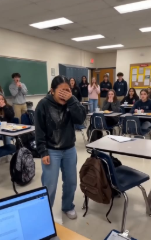
If I cried, they would call me weak.
If I yelled, they would call me dangerous.
If I wiped my face, they would replay it in slow motion.
For one second, I almost apologized.
Not because I was wrong.
Because humiliation is heavy, and sometimes sorry feels like the fastest way to put it down.
Then I saw the proof file.
The laptop was still open on the prep table beside the service log. Chef Alvarez had left it there earlier for students to upload final temperature records. The shared folder tab was visible. So was the file I had created that morning.
HOT FOOD SAFETY CHECK_BACKUP_JADE_NGUYEN.
I remembered why I had not backed down.
I had taken photos when the first tray came out.
I had recorded the time the pan left the oven.
I had sent Chef Alvarez a note at 10:58 saying the dish needed to stay in the warmer if service was delayed.
I had proof.
Not because I expected war.
Because my mother had taught me that when food safety goes wrong, memory is never enough.
“Open the proof file,” I said.
My voice sounded strange.
Too calm for how badly my hands were shaking.
Greer froze.
Chef Alvarez looked at me. “What?”
“Open the proof file. The backup folder. It has the timeline.”
Greer laughed sharply. “Of course she has a file ready. That proves she planned this.”
“No,” I said. “It proves I warned you.”
That was when her phone buzzed.
It sat facedown on the stainless-steel table, close enough for half the front row to see when the screen lit up.
Lacey had texted her.
The preview was short.
Too short to hide.
MAKE SURE JADE TAKES THE FALL BEFORE THEY CHECK THE TEMP LOG.
No one spoke.
Even the oven timer seemed to stop mattering.
Greer lunged.
Chef Alvarez moved faster.
He grabbed the phone before she could snatch it away.
“Office,” he said.
His voice was low, stunned, and furious. “Now.”
The culinary classroom erupted behind us as we walked out.
Not loudly at first. Just whispers, sharp and panicked.
Did you see that text?
Temp log?
Greer set her up?
Jade was right?
The sauce on my shirt cooled. My skin felt sticky. My eyes burned, but I kept walking.
Greer walked ahead of me, shoulders rigid, Lacey and another friend trailing behind until Chef Alvarez pointed at them too.
“All of you.”
The office conference room had never looked so small.
Principal Voss sat at the head of the table. Chef Alvarez stood beside the laptop, jaw tight. Greer sat across from me with her arms folded and her face pale under her makeup. Lacey sat beside her, staring at her own lap.
I sat in a borrowed culinary apron over my ruined clothes.
For a few minutes, adults did what adults often do when something ugly happens in front of students.
They tried to make it smaller.
Principal Voss said words like incident, misunderstanding, heated moment, and competing accounts.
Then Chef Alvarez placed Greer’s phone on the table.
“I saw the notification,” he said. “So did several students.”
Principal Voss stopped talking.
Greer’s father arrived before the evidence was opened.
Of course he did.
Duncan Montgomery entered the office like a man walking into one of his restaurants to correct a seating problem. Expensive suit. Silver watch. Calm smile. He shook Principal Voss’s hand without being invited and looked at me for exactly half a second.
Then he looked away.
“Let’s not let a teenage kitchen disagreement damage reputations,” he said.
My mother arrived five minutes later in her hotel uniform, hair still pinned from work, face tight with fear.
She did not shake anyone’s hand.
She came straight to me and touched the sauce stain near my shoulder.
“Are you hurt?”
“No.”
Her eyes searched mine.
“Are you telling the truth?”
The question did not offend me. From my mother, it meant: I am with you, but I need your feet on solid ground.
“Yes,” I said.
She nodded once and sat beside me.
Duncan Montgomery gave her a polite smile that did not reach his eyes.
“Mrs. Nguyen, I’m sure this has been upsetting, but these programs can be stressful for students. My daughter’s future should not be threatened because of a cafeteria mess.”
My mother looked at him.
“Hot food held at the wrong temperature is not a cafeteria mess.”
His smile faded.
Chef Alvarez connected the laptop to the conference screen.
“Before anything else,” he said, “we are going to open the backup file.”
Greer shifted in her chair.
Lacey’s breathing became audible.
The folder opened.
There were my photos.
10:11 a.m. Chicken tray leaving oven.
10:13 a.m. Temperature logged safe.
10:42 a.m. Tray in warmer.
10:58 a.m. Message to Chef Alvarez: If tasting delayed, chicken needs to remain in warmer. Sponsor table not ready yet.
11:21 a.m. Photo of tray removed from warmer and placed by garnish station.
11:36 a.m. Temperature reading unsafe.
Every image had metadata. Every note matched the shared classroom chat. Every timestamp built a clean trail.
A trail Greer could not decorate her way out of.
Principal Voss looked at Greer. “Why was the tray removed from the warmer?”
Greer’s mouth opened.
Nothing came out.
Duncan Montgomery answered for her.
“These are children learning. Mistakes happen.”
Chef Alvarez turned to him. “A mistake is leaving food out. A cover-up is blaming the student who caught it.”
Greer’s eyes snapped to him, wounded and angry.
“I didn’t cover anything up.”
Chef Alvarez pointed to the phone. “Then why did Lacey text you that Jade needed to take the fall before we checked the log?”
Lacey began to cry.
Duncan Montgomery leaned back. “I would advise against questioning minors without parents present.”
Principal Voss looked exhausted. “We have already called Lacey’s parents.”
My mother’s hand found mine under the table.
Greer stared at the wall.
Then Lacey whispered, “I didn’t want to.”
Greer turned on her. “Shut up.”
The room changed.
Duncan Montgomery said sharply, “Greer.”
But Lacey was already crying harder.
“She told me to send it,” Lacey said.
Greer’s face went white.
“She said Jade saw too much. She said if Jade got blamed for changing the log, no one would ask why the tray was moved.”
“I never said that,” Greer snapped.
“Yes, you did.”
Lacey wiped her face with both hands.
“You said your dad told you the sponsor table had to taste that dish because Chef Alvarez was deciding who got the restaurant internship recommendation.”
The words landed like a pan dropped on tile.
Chef Alvarez slowly turned toward Greer.
“What internship recommendation?”
Duncan Montgomery’s expression hardened.
Greer looked at her father.
And I saw it then.
The same thing I had seen in the classroom.
Fear.
Not of me.
Of him.
Principal Voss looked from Greer to her father. “Mr. Montgomery?”
He gave a short laugh. “This is absurd.”
Chef Alvarez’s voice was dangerously quiet. “Were you promised that your daughter’s dish would be placed in front of the sponsors?”
Duncan Montgomery smoothed his tie. “My company supports this program.”
“That was not my question.”
“My daughter works hard.”
“That was also not my question.”
Greer’s eyes filled with tears now, but not the pretty kind she had used in class. These were messy, angry, trapped tears.
“He said it had to be perfect,” she whispered.
Her father turned sharply. “Greer.”
She flinched.
My mother’s fingers tightened around mine.
Greer swallowed.
“He said if my group’s dish impressed the sponsors, he could talk to Chef about the summer placement. He said I had already embarrassed him enough by not being at the top of the program.”
Duncan Montgomery stood. “This meeting is over.”
Principal Voss stood too. “No, it is not.”
“My daughter is under pressure, and now you’re letting a food-service employee’s child—”
He stopped.
But not soon enough.
The room went still.
A food-service employee’s child.
My mother rose slowly.
She was not tall, but in that moment, she seemed taller than everyone.
“I am a food-service employee,” she said. “That is why my daughter knows the rules your daughter ignored.”
Duncan Montgomery’s mouth tightened.
My mother continued, voice calm enough to cut glass.
“And if my child had not stepped in, students could have eaten unsafe food while you called it success.”
For the first time all day, I wanted to cry for a reason that was not shame.
Greer stared at my mother.
Something in her face cracked.
Maybe it was hearing someone defend me without fear.
Maybe it was realizing that my mother’s job, the thing her father had tried to insult, was exactly why the truth had survived.
Chef Alvarez opened the temperature log.
That was the final piece.
At 11:30, someone had entered a safe temperature number.
But the log showed the user initials.
GM.
Greer Montgomery.
My unsafe reading came six minutes later, with a photo.
Principal Voss closed his eyes for one second.
“Greer,” he said, “did you enter a false temperature?”
She shook her head, but her chin trembled.
Her father said, “Do not answer that.”
Greer looked at him.
And for one long second, I thought she would obey.
Then Lacey whispered, “Greer, please.”
The room waited.
Greer’s shoulders fell.
“Yes,” she said.
Duncan Montgomery’s face darkened.
“Yes what?” Principal Voss asked gently.
Greer began to cry.
“Yes, I entered it. I didn’t think it mattered. I thought if the tray went out fast enough, nobody would check again. Jade checked it. Then I panicked.”
Chef Alvarez’s face looked broken.
“Do you understand what could have happened?”
Greer nodded, crying harder.
“I do now.”
“No,” my mother said softly. “You understood when you blamed my daughter. That is why you blamed her.”
Greer looked at me.
For the first time, she did not look angry.
She looked ashamed.
“I’m sorry,” she whispered.
I wanted to feel something clean.
Victory. Relief. Anger.
Instead, I felt tired.
“You threw sauce at me in front of everyone,” I said.
“I know.”
“You told them I sabotaged your food.”
“I know.”
“You let people think I was trying to ruin you when I was trying to keep them safe.”
Her voice broke. “I know.”
Duncan Montgomery sat back down, but his control was gone. The room no longer belonged to his money. It belonged to the timeline.
The district was contacted.
The sponsor tasting was canceled.
The chicken tray was discarded.
The culinary classroom was cleared and sanitized.
Students were told there had been a food safety issue and that no one would be served from the affected dish. The school collected statements from witnesses, saved the classroom chat, copied the proof file, preserved the temperature log, and documented the notification preview seen by multiple students.
By the next morning, everyone knew enough to stop blaming me.
But knowing the truth did not erase the video of me standing in sauce while people stared.
That was the part adults did not fully understand.
They could correct the record, but they could not unsend every clip.
They could not erase the first version of the story from people’s minds.
They could not make me forget the way some classmates laughed before they knew whether I was hurt.
On Monday, Chef Alvarez asked me to come to the culinary room before first period.
I almost said no.
The room still smelled faintly like detergent and metal. The prep table where Greer’s phone had buzzed was spotless now. Too spotless. Like the school had scrubbed hard to make the memory disappear.
Chef Alvarez stood by the whiteboard.
“I owe you an apology,” he said.
I looked down. “You didn’t throw anything.”
“No. But I trusted the room to behave until I could get there. I should have created a better system so you were not standing alone with the truth.”
That sentence stayed with me.
Standing alone with the truth.
He handed me a folder.
Inside was a printed copy of the corrected safety report, my timeline, and a letter.
“I’ve recommended you for the district food safety leadership award,” he said.
I blinked. “That’s a real thing?”
“It is now.”
Despite everything, I laughed.
Chef Alvarez smiled faintly. “The district is creating student safety lead positions for events. Paid positions.”
I stared at him.
“Paid?”
“Yes. Your mother told Principal Voss that responsibility without authority puts students in danger. She was right.”
Of course she had said that.
My mother could turn one sentence into a policy change when properly annoyed.
Later that week, Greer returned to school.
Not to class.
To make a statement.
Principal Voss gave me the choice to skip it. I stayed.
The culinary students gathered in the classroom. No phones were allowed out. Chef Alvarez stood by the door. Lacey sat in the back with red eyes. Greer stood at the front wearing a plain school hoodie instead of her embroidered jacket.
She looked smaller without her polish.
“I entered a false temperature in the hot-food log,” she said. “I ignored a safety problem because I wanted my dish to be served. When Jade Nguyen caught the issue, I accused her of sabotage and threw sauce at her. Jade was telling the truth. She had already warned the school, and her proof file showed the real timeline.”
Her voice shook.
“I am sorry to Jade. I am sorry to everyone I put at risk. And I am sorry for using my family’s name to make people question someone who was doing the right thing.”
No one clapped.
No one should have.
But the silence felt different this time.
Not cruel.
Accountable.
Afterward, Greer approached me.
She stopped several feet away.
“I know you don’t have to forgive me,” she said.
“I don’t.”
She nodded.
“My dad is furious.”
I said nothing.
“He says I ruined everything.”
I looked at her then.
For the first time, I saw something I had not allowed myself to see before: Greer was not only spoiled. She was trapped inside expectations so expensive they looked like privilege from far away.
That did not excuse her.
It explained the panic.
“You ruined it when you lied,” I said.
She swallowed. “I know.”
“Your dad didn’t throw the sauce.”
“I know.”
“Your dad didn’t type the fake temperature.”
“I know.”
I let the silence sit between us.
Then I said, “But he taught you that looking successful mattered more than being safe.”
Greer’s eyes filled.
“Yes.”
That was all.
No hug.
No instant friendship.
No dramatic forgiveness.
Just the truth, finally spoken without decoration.
The rest of the semester changed around that day.
The culinary program added locked digital temperature logs. Every tray for public service required two student initials and one adult confirmation. Backup photos became standard. Students were trained to pause service without needing permission if a food safety number failed.
Chef Alvarez called it procedure.
Students called it the Jade Rule.
I pretended to hate that name.
I secretly saved the first poster that used it.
My mother framed the award letter before I even received the award. She hung it in our kitchen beside a photo of me from middle school holding a burnt pancake like a trophy.
“You see?” she said one night while packing leftovers for work. “Food teaches everything.”
I smiled. “Even scandal?”
“Especially scandal.”
At the district ceremony in May, I stood on a small stage in front of students, teachers, parents, and local restaurant owners. Chef Alvarez introduced me as “a student who understood that safety is not an obstacle to excellence.”
My mother cried before I even reached the microphone.
I looked out at the crowd and thought about the moment I had almost apologized just to make the staring stop.
I thought about sauce on my face.
Phones in the air.
Greer’s notification lighting up the table.
My proof file waiting quietly within reach.
Then I saw Greer near the back.
She had come with Lacey. She looked nervous, but she stayed.
When our eyes met, she nodded once.
Not like we were friends.
Like she understood the truth did not belong to her anymore.
I accepted the award.
Then the district announced something I had not known was coming.
A paid summer placement with the Southern Nevada Food Safety Council.
For me.
My mother gasped so loudly half the row turned around.
I laughed into the microphone, then immediately cried, which made everyone laugh with me.
For once, the room was not watching me fall apart.
It was watching me become something.
After the ceremony, my mother hugged me so hard my ribs hurt.
“You earned this,” she whispered.
I looked at her hotel uniform, the tired lines under her eyes, the hands that had carried trays and cleaned counters and taught me that safety was love with rules attached.
“No,” I said. “We did.”
She cried harder.
Weeks later, on the first day of my summer placement, I walked into a professional training kitchen with my hair tied back, clipboard in hand, and a clean white apron with my name printed on it.
Not embroidered by family money.
Earned.
The instructor asked why I was interested in food safety.
I thought about giving a polished answer.
Something about public health, accountability, community standards.
Instead, I told the truth.
“Because one day at school, everyone thought the scandal was the girl covered in sauce,” I said. “But the real scandal was the unsafe food nobody wanted to talk about.”
The instructor smiled.
“And what did you do?”
I looked down at the clipboard.
Then back up.
“I told them to check the proof file.”
That evening, after training, I returned to Desert Ridge to pick up my younger cousin from robotics club. The culinary room was dark, but the hallway display case had been updated.
Inside was a new sign.
STUDENT SAFETY LEADS: TRUST THE TIMELINE.
Below it was a laminated copy of the new hot-food procedure, a photo from the district ceremony, and a small quote from Chef Alvarez:
A safe kitchen is an honest kitchen.
I stood there longer than I meant to.
The school had not erased what happened.
It had turned it into a rule.
That felt better.
My phone buzzed.
A message from my mother.
Hot food stays hot. Cold food stays cold. Proud mothers stay proud forever.
I laughed so suddenly the empty hallway echoed.
Then I looked once more at the display case.
Greer had wanted everyone to see me as the liar.
Her friends had wanted the room to blame me before anyone checked the record.
The phones had risen to capture my humiliation.
But the proof file had waited.
The notification had flashed.
The timeline had spoken.
And in the end, the attack that was supposed to bury me became the reason nobody could bury the truth.
I walked out of the school into the Las Vegas heat, the sunset turning the parking lot gold, my clipboard tucked under my arm like a shield I no longer needed to hide.
For the first time, I did not feel like the girl who had been covered in sauce.
I felt like the girl who had stopped the food from reaching the table.
And that was the story no one could edit.
THE END
