Part 2: The Witness Who Broke Her Perfect Smile
The voice behind Paige made her freeze harder than the slap had frozen me.
“No,” the student said again, louder this time. “I saw her do it too.”
Everyone turned toward the back row.
It was Daniel Mercer, the quietest editor in the documentary film club, the kind of boy who wore headphones around his neck even when nothing was playing. His hands were shoved deep into his hoodie pockets, but his voice did not shake.
Paige Monroe stared at him like he had betrayed a royal family.
“Daniel,” she said softly, “don’t.”
That one word told the room everything.
Mr. Alvarez, our film teacher, looked down at the student vote results again. His thumb stopped on the printed tally line.
“The club voted seventeen to five to keep the laundromat scene,” he said. “So why was it removed from the final cut?”
Paige lifted her chin. “Because it slowed the pacing.”
A few of her friends nodded too quickly.
Daniel stepped closer. “That’s not what you said in the edit room.”
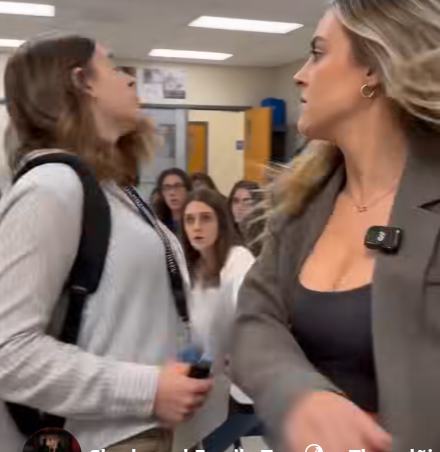
My cheek still burned. My fingers were tight around the edge of the table because I did not trust my knees yet. Around us, camera bags, cables, folding chairs, and half-empty soda cans made the room feel ordinary in a way that made the whole moment worse.
Paige had slapped me in a place where we had spent months telling stories about justice.
Mr. Alvarez asked, “What did she say?”
Daniel swallowed. “She said the scene made her family look bad.”
The room shifted.
Paige’s father owned Monroe Properties, the company buying up half the block around the school. The laundromat owner, Mr. Rivas, had been lending free uniforms to students whose families could not afford replacements.
The cut scene was not just sweet.
It was proof that someone ordinary had helped the students Paige’s family ignored.
Paige laughed once. “That’s absurd.”
Daniel pulled out his phone.
“I saved the rough cut folder before it disappeared.”
Paige’s face went pale.
Then someone near the doorway whispered, “The principal’s coming.”
Paige looked at me, and for one second the fear came back.
Because the vote results had not destroyed her story completely yet.
They had only opened the door.
Part 3: The Deleted Folder With Her Name Inside
Principal Whitaker entered with the club secretary behind her, and the whole meeting room seemed to shrink.
Paige stepped away from me at once, smoothing her blazer like she could polish the slap out of the air.
“Principal Whitaker,” she said, voice trembling just enough to sound wounded, “this has gotten completely out of control.”
I almost laughed.
Out of control was my face burning while everyone stared.
Out of control was being accused of sabotage because I asked why a voted-approved scene had vanished.
Out of control was Paige acting like a victim while the proof sat in Mr. Alvarez’s hands.
Principal Whitaker looked at me first. “Are you hurt?”
I shook my head, though the truth was still hot on my cheek.
Then she turned to Paige. “Did you strike her?”
Paige’s mouth opened.
No sound came out.
Mr. Alvarez answered instead. “Yes.”
A silence followed that answer, heavy and ugly.
Daniel connected his phone to the classroom screen. His fingers moved quickly, but I could see how nervous he was by the way he kept biting the inside of his cheek.
A folder appeared.
ROUGH_CUT_BACKUP.
Inside were clips, audio files, edit notes, and one document named FINAL_CHANGE_REQUEST.
Paige suddenly said, “That’s private.”
Daniel looked at her. “It’s a club file.”
He opened it.
The screen filled with a short list of edits. Most were boring: lower music, trim hallway interview, adjust subtitles.
Then one line sat in the middle.
REMOVE RIVAS LAUNDROMAT SEQUENCE BEFORE SPONSOR REVIEW.
Beside it was an approval note.
P.M.
Everyone knew whose initials those were.
Paige whispered, “That could be anyone.”
The club secretary, Olivia Grant, stepped forward. “No. The edit system records user logins.”
She handed Principal Whitaker a printed page.
Paige stared at Olivia like she had never imagined quiet people kept receipts.
Principal Whitaker read the login name.
“Paige Monroe.”
The room erupted.
Paige’s friends began talking over each other, saying it was a misunderstanding, saying the scene was boring, saying I had always been dramatic.
But Mr. Alvarez raised one hand.
“Why was the sponsor review involved in a student vote?”
No one answered.
Then Olivia opened a second document.
Her face drained of color.
“This was uploaded from an outside account,” she said.
Principal Whitaker leaned closer.
Olivia whispered, “It came from Monroe Properties.”
Part 4: The Sponsor Email Nobody Expected
The name on the screen made everyone stop pretending this was only club drama.
Monroe Properties.
The company logo had been on our school banners for three years. It was on the new media lab plaque, the football scoreboard, and the scholarship luncheon program Paige always posed beside.
Principal Whitaker’s expression tightened.
“Olivia,” she said carefully, “open the email header.”
Paige moved fast.
She grabbed for the laptop.
Daniel slammed it shut before she could reach the trackpad.
The room gasped.
Paige snapped, “You’re all insane!”
“No,” I said, my voice quieter than I expected. “You’re scared.”
She turned on me.
For a second, I thought she might hit me again.
But this time, everyone moved.
Mr. Alvarez stepped between us. Principal Whitaker pointed toward a chair. “Sit down, Paige.”
Paige did not sit.
Olivia reopened the laptop, hands shaking. The email header appeared on the screen.
From: communications@monroeproperties.com
Subject: Sensitive Content Review Before Festival Submission
The club secretary clicked the attachment.
A note filled the screen.
The documentary should avoid presenting local businesses as charitable alternatives to official school support. The Rivas laundromat segment may create reputational complications.
Reputational complications.
That was what they called kids getting clean uniforms for free.
That was what they called a man staying late to wash marching band jackets, cafeteria aprons, and thrift-store blazers so students could walk into class without shame.
My throat tightened.
Paige folded her arms. “My family sponsors the film festival. They have a right to review how they’re represented.”
“You weren’t represented,” I said. “That was the point. The scene wasn’t about you.”
Daniel clicked another file.
A rough-cut video appeared, paused on Mr. Rivas standing beside a row of humming washers, holding a blue uniform shirt in both hands.
My chest hurt when I saw it.
That scene had been gentle. Honest. One of the only parts of the documentary that felt bigger than school politics.
Then Olivia whispered, “There’s a reply.”
She opened it.
Paige’s name appeared at the bottom.
I’ll handle it before anyone notices.
Principal Whitaker read it once.
Then again.
Paige’s perfect face went empty.
And from the doorway, a new voice said, “Before anyone notices what?”
Mr. Rivas stood there in his work shirt, holding a plastic garment bag.
Part 5: The Man Holding The Uniforms
Nobody had told Mr. Rivas to come.
At least, nobody admitted it.
He stood in the doorway with soap powder dust on one sleeve and three freshly pressed school uniforms hanging inside the clear garment bag. His hair was damp from the rain outside, and his eyes moved slowly across the room until they found the paused image of himself on the screen.
Then he saw my face.
“What happened?”
I tried to answer, but my throat closed.
Paige spoke first. “This is a private school matter.”
Mr. Rivas looked at her for a long second.
Then he stepped inside.
“I clean uniforms for half the kids in this room,” he said. “Nothing about shame is private when everyone profits from hiding it.”
The words landed so hard that even Principal Whitaker looked away.
Paige’s face twisted. “We don’t profit from you.”
Mr. Rivas gave a tired smile. “Your father does.”
The room went silent.
Principal Whitaker asked, “What does that mean?”
Mr. Rivas set the garment bag over the back of a chair. His hands were rough, the nails clean but worn from chemicals and heat.
“My lease renewal came last month,” he said. “Triple rent. Thirty days to agree.”
My stomach dropped.
Daniel whispered, “They’re pushing him out.”
Mr. Rivas nodded once. “The film crew asked why I help students. I told the truth. Many families are struggling. Some children come in with clothes they washed in sinks. I said this school looks polished because invisible people keep helping.”
Paige’s eyes flashed. “That has nothing to do with the documentary.”
“It has everything to do with why your family wanted it cut,” I said.
She turned red. “You don’t know anything about my family.”
Mr. Rivas reached into his shirt pocket and pulled out a folded letter.
“I know they sent this after your rough cut screening.”
Principal Whitaker took it.
Her hands tightened as she read.
“Notice of accelerated redevelopment review,” she said.
Mr. Alvarez closed his eyes.
Paige whispered, “That’s not my fault.”
Maybe it wasn’t all her fault.
But she had chosen her side when she slapped me for holding proof.
Then Mr. Rivas looked at me and said something I did not expect.
“You were the one who asked the follow-up question in the interview.”
I nodded.
He smiled sadly.
“That question saved the truth.”
Before I could speak, Paige’s phone rang.
The name on the screen was visible to everyone closest to her.
DAD.
She rejected the call.
Then a text appeared.
Do not let them play the laundromat footage.
Part 6: The Scene Paige Could Not Stop
Principal Whitaker saw the text.
So did Mr. Alvarez.
So did half the room.
Paige locked her phone too late.
Nobody moved for a second. The documentary screen still showed Mr. Rivas in the laundromat, frozen mid-sentence, the washers behind him like round silver eyes.
Mr. Alvarez turned to me.
“Do you want the scene played?”
The question startled me.
I was not used to being asked what should happen next. I was used to doing work, checking records, carrying equipment, cleaning up after shoots, and listening while people like Paige decided what counted.
But this time, the proof had reached my hands first.
I looked at Mr. Rivas.
He gave the smallest nod.
“Yes,” I said. “Play it.”
Paige said, “You can’t.”
Principal Whitaker’s voice was hard. “I can.”
Daniel pressed play.
The room filled with the sound of washing machines.
On screen, Mr. Rivas folded a white shirt with careful hands.
“Uniforms are funny,” he said in the video. “They’re supposed to make students equal. But everybody knows when yours is stained, too small, or smells like it didn’t dry right.”
The room went painfully still.
Several students looked down.
Mr. Rivas continued.
“So I help where I can. No forms. No speeches. Just bring it in, pick it up clean.”
Then my voice came from behind the camera.
“Why don’t you want your name in the school newsletter?”
On screen, Mr. Rivas laughed softly.
“Because help changes when rich people use it for decoration.”
Paige closed her eyes.
The video continued.
“I don’t need a plaque,” he said. “I need them not to raise my rent until I disappear.”
A sound moved through the room.
Not shock exactly.
Recognition.
Students knew. Maybe not the lease details, maybe not Monroe Properties, but they knew what it felt like when polished people used struggle as background.
The clip ended.
Nobody spoke.
Then a freshman near the back raised her hand.
“My uniform came from him,” she said.
Another student stood. “Mine too.”
Then another.
And another.
By the time the tenth student stood, Paige was crying.
But nobody looked away from the screen.
Because the story she tried to cut had become too crowded to erase.
Part 7: The Festival Vote That Changed Everything
The emergency club vote happened fifteen minutes later.
Not because Paige wanted it.
Not because Principal Whitaker planned it.
Because the students demanded it loudly enough that no adult could pretend the room was under control.
Mr. Alvarez wrote three options on the whiteboard.
Submit the cut version.
Restore the laundromat scene.
Withdraw from the festival and release the full documentary independently.
Paige sat in the corner now, surrounded by empty chairs. Her friends had drifted away from her in slow, cowardly inches.
Her eyes were swollen, but when she looked at me, there was still anger there. Smaller now. Cornered.
“You’re going to ruin everything,” she said.
I turned toward her. “No. I’m done protecting what was already rotten.”
Mr. Alvarez passed out paper ballots.
The irony was almost too sharp.
Paige had tried to use the first student vote results against me by pretending they did not exist. Now every student in the room watched the new ballots like their names were attached to them.
Principal Whitaker counted with Olivia.
Daniel filmed the count.
Mr. Rivas stood near the doorway, still holding the empty garment bag, like he had only planned to deliver clean clothes and had accidentally walked into the truth.
The final vote was nearly unanimous.
Release the full documentary independently.
The room erupted.
But Principal Whitaker did not smile.
“This may cost us festival eligibility,” she said. “And possibly Monroe funding.”
A student in the front row said, “Then let it.”
Another added, “We can crowdfund.”
Someone else said, “Post the slap video too.”
I looked at Paige.
For the first time, she looked truly terrified.
Not of punishment.
Of becoming the scene she could not edit out.
Then Mr. Alvarez opened the club laptop one more time.
“There’s something else,” he said.
Paige whispered, “Please don’t.”
He looked at her, almost sadly.
“This was in the deleted audio folder.”
He clicked play.
Paige’s voice filled the room, recorded during editing.
Cut Rivas. My dad says nobody cries over a laundromat unless we teach them to.
The room went dead silent.
Then my own voice appeared on the audio, distant but clear.
That’s not documentary. That’s propaganda.
I had forgotten saying it.
Paige had not.
And that was why she went after me.
Part 8: The Story That Refused To Stay Cut
The documentary went online that night.
Not through the school festival portal.
Not under Monroe branding.
Daniel uploaded it to the club channel with one title: THE CLEAN UNIFORM PROJECT.
For the first hour, only students watched.
Then parents.
Then alumni.
Then people who had never heard of our school but knew exactly what it meant to need help quietly.
By morning, the laundromat scene had more views than every winning film from the previous year’s festival combined.
Monroe Properties released a statement calling the documentary “misleading student content.”
That made it spread faster.
By Friday, local reporters were outside Mr. Rivas’s laundromat. Students showed up with handwritten signs. Teachers brought bags of uniforms. A retired lawyer offered to review the lease for free.
And Paige Monroe disappeared from school for a week.
When she came back, she looked smaller without her audience.
She found me in the meeting room after everyone else had left. I was coiling microphone cables, the same job I had done a hundred times before, but now the room felt different.
She stood by the door.
“I thought if that scene stayed in,” she said, “everyone would hate my family.”
I kept wrapping the cable. “You were more worried about hate than harm.”
She nodded, tears already rising. “Yes.”
It was the first honest thing she had said to me.
“I’m sorry I slapped you.”
I looked at her.
“I’m not the only person you owe.”
She swallowed. “I know.”
The next day, Paige did something nobody expected.
She stood in front of the school assembly and read the deleted edit request herself. No excuses. No soft language. No blaming her father.
Then she turned toward Mr. Rivas, who had been invited to sit in the front row.
“My family tried to make your kindness disappear because it made our money look cruel,” she said. “I helped them.”
The apology did not fix everything.
But it made the silence impossible.
Two months later, Monroe Properties withdrew the rent increase. Not out of goodness. Because the whole city was watching.
The documentary won no festival trophy.
Instead, it became part of a student journalism exhibit, projected on a plain white wall beside the original vote results that had started everything.
At the opening, Mr. Rivas handed me a garment bag.
Inside was my old club jacket, cleaned and pressed, with a small patch sewn inside the collar.
It read: ASK WHO BENEFITS FROM THE CUT.
I laughed before I cried.
Because Paige had gone after me for one small detail.
But the detail was a door.
And once it opened, the whole story walked out clean.
