Part 2: The Date That Made Her Smile Collapse
The paper hit the gym floor with a soft slap, but the silence that followed felt louder than Charlotte’s shove.
A copied completion signature stared up from the top page.
Beneath it, in black ink, was the date everyone could see.
Three days before the inspection was supposedly performed.
My fingers shook as I reached down, but I did not let go of the rest of the folder. Around me, half-packed flood-relief backpacks sat open on folding tables, filled with toothpaste, canned soup, socks, and flashlight batteries. Students who had been laughing five minutes ago now stood frozen between cardboard boxes and donation bins.
Charlotte Hayes looked at the page like it had betrayed her personally.
“That’s not what it means,” she snapped.
Nobody asked her what it meant.
That was the problem.
Mr. Bellamy, the teacher overseeing the service event, bent slowly and picked up the report. His face changed as he read the first page, then the next. The gym’s overhead lights buzzed above us, and somewhere near the bleachers, a plastic water bottle rolled until it tapped against a metal chair.
“Camila,” he said carefully, “where did you get this?”
“My locker,” Charlotte cut in fast. “She stole it.”
My stomach turned.
A few students looked at me.
That was how Charlotte worked. She never needed everyone to believe her forever. She only needed them confused long enough for her family’s name to become the safest answer.
I swallowed hard. “I got it from the public facilities packet emailed to the volunteer safety committee.”
Charlotte laughed. “There is no volunteer safety committee.”
“There is,” said a quiet voice behind the tables.
Everyone turned.
Mateo Ruiz stepped forward with his phone in one hand and a roll of packing tape in the other. He was a junior, always quiet, always behind cameras at school events, the kind of person Charlotte usually forgot existed.
He held up the screen.
“Camila, me, Nora, and Mr. Bellamy are on it. The email came from the district.”
Charlotte’s mouth tightened.
Her friends, Ava and Kendall, shifted away from the exit they had been blocking.
Mr. Bellamy looked at the report again. His thumb hovered over the copied signature.
“This says the north bleacher support was repaired and cleared.”
I turned toward the bleachers.
The warning sign I had noticed that morning was still there, half-hidden behind a rolled-up banner: DO NOT LOAD ABOVE ROW THREE. The tape had been peeled off and stuck crookedly back onto the wall, like someone had tried to hide it without fully removing it.
“The sign was supposed to stay up,” I said. “The maintenance note said the support was cracked after the pep rally.”
Charlotte’s eyes flashed.
“You don’t know anything about facilities.”
“No,” I said. “But I know how to read dates.”
A murmur moved through the gym.
Charlotte stepped toward me again, and Mr. Bellamy moved between us this time.
“Back up, Charlotte.”
Her face reddened, not from shame, but from being corrected in public.
“My father’s company handles this school because nobody else can,” she said. “If some scholarship-club girl wants attention, maybe she should pick a less disgusting way to get it.”
The words landed, but not where she wanted.
The room did not laugh.
Nora Whitfield, who had been packing baby wipes into a backpack, reached down and picked up the before-photo that had slid from my folder.
Her eyes widened.
“Mr. Bellamy,” she whispered. “This photo shows the crack.”
She turned it around.
There it was: the underside of the bleachers, metal bent just enough to look harmless unless you knew what stress fractures looked like. Beside the crack, someone had circled the damage in red marker.
And at the bottom of the photo, printed automatically by the maintenance app, was another timestamp.
The same morning Charlotte’s father signed that it had already been fixed.
Part 3: The Bleachers Nobody Was Supposed To Touch
Mr. Bellamy ordered everyone away from the north bleachers.
His voice was calm, but his hands were not. He passed the photo to Coach Donnelly, who had just walked in carrying a crate of donated blankets. The coach took one look, set the crate down, and turned pale.
“Everybody to the south side,” she said. “Now.”
That was when the crowd finally moved.
The scrape of sneakers on the polished floor filled the gym. Chairs folded. Boxes were dragged back. Someone whispered that the freshman choir was supposed to perform from those bleachers during the relief livestream in an hour.
My pulse jumped.
The freshman choir had thirty-two students.
Thirty-two students would have climbed onto the same structure marked unsafe.
Charlotte heard it too. Her eyes flicked toward the bleachers, then back to the folder in my hands.
For one second, I thought I saw fear.
Then she buried it under fury.
“You’re making this dramatic,” she said. “It’s a tiny crack.”
Coach Donnelly looked at her sharply. “A tiny crack does not get a load warning.”
Charlotte folded her arms. “My father’s team knows what they’re doing.”
“Then why does the report say they inspected it before the repair request was filed?” I asked.
The question slipped out before I could stop it.
The gym went still again.
Mr. Bellamy looked down at the papers.
“What?”
I pulled the pages from the folder with fingers that felt too cold.
“Here. The repair request is dated March 18. The completion report is dated March 15. That means the job was marked finished before the school officially asked for it.”
Mateo came closer. “That’s not a typo?”
I shook my head. “There are three copied signatures. Same angle. Same ink density. Same scan mark.”
Charlotte stared at me like I had spoken another language.
“How would you even notice that?”
I hated that question.
Not because it was hard to answer.
Because the answer made me remember why I had joined the safety committee in the first place.
“My mom works nights cleaning medical offices,” I said. “I help her sort invoices when the copies get messed up. You learn what duplicated signatures look like.”
Someone near the tables whispered, “Oh.”
Charlotte’s expression twisted, like my ordinary life was offensive to her.
Before she could speak, Principal Hartwell entered through the side doors with two district staff members. She wore a navy suit and the tight smile adults used when they had already been warned a situation might become expensive.
“Mr. Bellamy,” she said, “I heard there was a disruption.”
Charlotte immediately stepped forward.
“Yes. Camila started accusing my family’s company in front of everyone.”
Principal Hartwell’s eyes moved to me.
I forced myself not to look down.
Charlotte knew the principal’s weakness. Hartwell cared about appearances, donors, board members, and families whose names appeared on plaques outside the auditorium. The Hayes family had paid for the new scoreboard. They sponsored the annual leadership banquet. Charlotte’s father shook hands with every superintendent who walked into the building.
I held out the folder.
“I reported a safety concern.”
Hartwell did not take it.
The refusal was small, but everyone saw it.
“Camila,” she said, “there is a process for these matters.”
“There was a process,” I replied. “The process says this was fixed.”
Coach Donnelly stepped beside me.
“She’s right. Nobody gets on those bleachers until an engineer checks them.”
Charlotte scoffed. “An engineer? For a school event?”
The doors opened again.
This time, a man in a rain jacket entered carrying a yellow inspection case.
Nora whispered, “That’s Mr. Voss from the district facilities office.”
Principal Hartwell’s face tightened.
Mr. Voss looked at the north bleachers, then at the papers in Mr. Bellamy’s hand.
“I came because a student submitted before-photos through the safety portal,” he said.
Charlotte’s gaze snapped to me.
Mr. Voss continued, “And because the maintenance completion file was altered last night.”
Part 4: The Login That Led Back Home
Last night.
The words moved through the gym like electricity.
Charlotte’s friends stopped whispering.
Principal Hartwell reached for the report at last, but Mr. Bellamy did not hand it over quickly. That tiny hesitation made her cheeks flush.
Mr. Voss opened his inspection case and removed a tablet.
“I need this gym cleared,” he said. “No students near the north wall. No one touches the bleachers.”
Principal Hartwell lowered her voice. “Gerald, is that necessary in front of everyone?”
Mr. Voss did not lower his.
“If a load-bearing support was falsely marked complete, yes.”
Charlotte’s face hardened.
“You can’t accuse my family because of one file.”
Mr. Voss looked at her, then at the tablet.
“I did not name your family, Miss Hayes.”
That shut her up.
But only for a moment.
Her phone buzzed in her hand. She glanced down, and the color drained from her face. I did not see the message, but I saw enough: the way her thumb hovered, the way her jaw clenched, the way panic flashed before she hid it.
Ava leaned toward her. “Char?”
Charlotte shoved the phone into her bag.
Mr. Voss walked to the bleachers and crouched near the underside. Coach Donnelly held students back with one arm. He shone a flashlight along the support beam, then stopped.
His shoulders went rigid.
“Do not let anyone step on this structure,” he said.
The gym went dead quiet.
He took a photo. Then another.
Mr. Bellamy asked, “How bad?”
Mr. Voss stood slowly.
“The bracket was patched cosmetically. It was not replaced.”
My throat tightened.
Cosmetically.
Meaning someone made it look fixed.
Meaning the warning sign had been inconvenient, not wrong.
Principal Hartwell pressed her lips together. “Could this have happened after the inspection?”
Mr. Voss turned his tablet toward her. “The inspection photo uploaded to the completion report is not from this gym.”
Mr. Bellamy blinked. “What?”
“The metadata shows it was taken at another site.”
Charlotte whispered, “No.”
Everyone heard her.
Mr. Voss looked at her again, sharper this time.
I could feel the moment changing. The story was no longer Charlotte shoved Camila. It was no longer even Camila accused the Hayes company.
It was becoming something bigger.
A fake repair.
A hidden safety warning.
A public event minutes away from using the damaged bleachers.
Mr. Voss tapped the tablet.
“There is also a login issue. The completion file was accessed last night at 10:42 p.m. The user account belongs to Hayes Regional Maintenance.”
Charlotte’s nostrils flared. “A company account could be anyone.”
“Yes,” Mr. Voss said. “That is why we checked the IP location.”
Ava whispered, “Charlotte, what is he talking about?”
Charlotte did not answer.
Mr. Voss looked at Principal Hartwell.
“The login came from a residential network registered to the Hayes home.”
The gym seemed to tilt.
My hand tightened around the folder until the cardboard bent.
Charlotte looked at me, and her eyes were wet now, though she looked more furious than sad.
“You did this,” she hissed.
I stared at her. “I don’t have access to your house.”
Her lips trembled.
Then a voice rang out from the doorway.
“No,” someone said. “But I do.”
Everyone turned.
A boy stood there in a wet hoodie, breathing hard like he had run from the parking lot.
I recognized him from the hallway portraits.
Elliot Hayes.
Charlotte’s younger brother.
And he was holding a laptop covered in maintenance company stickers.
Part 5: The Brother Who Brought The Missing File
Charlotte looked like she might collapse.
“Elliot,” she said, too softly for the room.
He stepped inside, rainwater dripping from his sleeves onto the gym floor. He was fifteen, maybe sixteen, with the same pale eyes as Charlotte but none of her practiced shine. His hoodie was too big. His hair stuck to his forehead. He looked terrified, but he kept walking.
Mr. Voss stepped forward. “Are you Elliot Hayes?”
The boy nodded.
Charlotte moved toward him. “Go home.”
Elliot flinched.
Not from her words.
From the tone.
I knew that flinch. It was the kind that came from hearing someone sound exactly like a parent.
“I can’t,” he said.
Charlotte’s face crumpled for half a second. “Please.”
That word stunned me more than her anger had.
Elliot looked at the bleachers.
Then at me.
Then at the folder in my hands.
“I saw the portal open on Dad’s office computer,” he said. “Last night. Charlotte was there.”
A sound rose from the crowd.
Charlotte shook her head hard. “Don’t.”
Elliot’s voice cracked. “I’m sorry.”
“You don’t understand what you’re doing.”
“Yes, I do,” he said, and suddenly he sounded older. “I watched Dad tell you to fix it.”
Principal Hartwell inhaled sharply.
Charlotte’s eyes filled with tears she refused to let fall.
Mr. Bellamy said, “Elliot, did someone ask you to come here?”
“No.” He held up the laptop. “I copied the original file because I knew they’d delete it.”
Charlotte whispered, “Dad will destroy you.”
Elliot looked straight at her.
“He already scares me. That’s not the same as owning me.”
The sentence hit the gym so hard that nobody moved.
Mr. Voss took the laptop carefully, like it might be evidence in a courtroom, which maybe it was.
“What is on it?” he asked.
Elliot swallowed. “The original maintenance photos. The actual estimate. Emails saying the repair would cost too much before the flood-relief event.”
My stomach dropped.
“Cost too much?” Nora repeated.
Elliot nodded.
“They were going to replace the bracket next month. After the livestream. Dad said the school needed the event to look successful because donors were watching.”
Principal Hartwell’s face went white.
Coach Donnelly turned to her. “You knew donors were going to sit on those bleachers.”
Hartwell said nothing.
Mr. Bellamy stared at her. “Lydia?”
The principal’s silence broke something open.
Charlotte looked around the gym, and for the first time, she seemed to understand that her family name could not protect everyone at once. Not her father. Not the school. Not her.
Elliot opened the laptop and typed with shaking hands.
A video appeared on the projector screen because Mateo, quick and silent, had connected the gym display cable before anyone stopped him.
Charlotte whispered, “Mateo, don’t.”
But the screen lit up.
The footage showed a home office. A desk. A maintenance portal open on a monitor. A man’s voice, low and angry.
Charlotte’s father.
“Change the completion date. Use the old signature scan. Hartwell just needs the file clean until Monday.”
Then Charlotte’s voice, smaller than I had ever heard it.
“And if someone checks the bleachers?”
Her father answered, “Then make sure nobody wants to listen to them.”
The gym turned toward me.
My face burned again, but this time not from humiliation.
From the sick realization that Charlotte had not shoved me because she lost her temper.
She had shoved me because she was following instructions.
Part 6: The Principal’s Call Behind The Stage
Mr. Bellamy walked to the projector and turned the volume down, but the damage was already done.
Charlotte stood alone in the middle of the gym, surrounded by students who had seen her as untouchable for years. Now they were looking at her like she was a person, and somehow that seemed to hurt her more.
Principal Hartwell moved toward Mr. Voss.
“This needs to be handled privately.”
Coach Donnelly laughed once, without humor.
“Privately? With students in the room and unsafe bleachers ten feet away?”
Hartwell’s eyes flashed. “Coach, be careful.”
“No,” Mr. Bellamy said. His voice was quiet, but it carried. “You be careful.”
The gym doors opened again. This time two district administrators entered, followed by a school resource officer. The flood-relief livestream was supposed to begin in forty minutes. Instead, the gym had become a place where every hidden thing was walking in late and asking to be heard.
Mr. Voss handed the laptop to one administrator and began explaining.
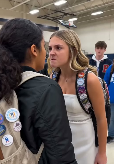
I stepped back, suddenly aware of how many eyes were on me. My hands started to shake harder now that the emergency had slowed. The shove replayed in my body. Charlotte’s palms. The folder slipping. The whole crowd turning.
Nora touched my elbow.
“You okay?”
I nodded because I did not trust my voice.
Charlotte heard the question. She looked at me, and something like shame moved across her face.
Then her phone rang.
The sound cut through the gym.
She looked down.
DAD.
Nobody needed to read it. Her expression told us.
Elliot backed away as if the phone itself could reach him.
Charlotte answered with trembling fingers, but she did not put it to her ear.
She tapped speaker.
Her father’s voice exploded out.
“What did you do?”
Charlotte closed her eyes.
Mr. Voss lifted one finger, signaling everyone to stay silent.
Her father continued, “You had one job. Keep Torres quiet until the event ended.”
My heart stopped.
Charlotte opened her eyes and looked at me.
“I tried,” she said, voice barely audible.
The admission struck harder than denial would have.
Her father snarled, “Do you understand what this contract is worth?”
Principal Hartwell whispered, “Turn it off.”
Charlotte did not.
Her father kept going.
“Hartwell promised me nobody would question the report if the ceremony looked good. The district wants flood-relief donors smiling, not reporters asking why a gym repair wasn’t finished.”
One of the administrators turned slowly toward the principal.
Hartwell’s mouth parted, but no words came.
Charlotte’s father said, “Where is your brother?”
Elliot froze.
Charlotte looked at him.
For one terrible second, I thought she would hand him over with a sentence.
Instead, she said, “Safe.”
The word changed her face.
Her father went quiet.
“What did you say?”
Charlotte’s hand shook around the phone.
“I said Elliot is safe.”
“Charlotte.”
She flinched, but she did not fold.
“I’m done making people afraid because you’re afraid of losing money.”
Her father’s voice dropped low. “You will regret embarrassing this family.”
Charlotte looked across the gym at me.
Then at the bleachers.
Then at her brother.
“I already do,” she said.
And she ended the call.
Part 7: The Apology Nobody Clapped For
No one cheered.
It would have been easier if they had.
Cheering would have turned Charlotte’s choice into a performance, something clean and finished. Instead, the gym stayed quiet while the adults moved into crisis mode around us.
The district administrators shut down the livestream. Mr. Voss taped off the north side of the gym. The school resource officer took statements from Mr. Bellamy, Coach Donnelly, Mateo, Elliot, and finally me. Principal Hartwell was escorted to her office by an administrator with a face like stone.
The flood-relief backpacks still needed packing.
That was the strangest part.
The storm outside had not stopped. Families still needed supplies. Roads were still flooded. People still had water in their living rooms and children sleeping in church basements. The truth had exploded inside our gym, but the world outside still required toothpaste, socks, granola bars, and batteries.
So after the first wave of questions, Mr. Bellamy looked at us and said, “Anyone who wants to stay and help can stay. Anyone who needs to leave can leave.”
Almost nobody left.
Maybe we needed something useful to do with our hands.
I sat at a table and packed canned beans into a red backpack. Nora added soap. Mateo counted flashlights. Elliot sat near Coach Donnelly, wrapped in a donated blanket someone had quietly placed around his shoulders.
Charlotte stood near the door for a long time.
Her friends did not go to her.
Ava and Kendall whispered together by the water fountains, then walked out without looking back.
That seemed to hurt Charlotte more than the crowd’s anger.
Finally, she approached my table.
Every conversation nearby died.
She stopped across from me, not close enough to trap me, not loud enough to perform.
“Camila,” she said.
My hands paused over a pack of batteries.
I did not answer.
She swallowed.
“I shoved you because my father told me to keep you quiet.” Her voice shook. “But I also shoved you because I wanted to. Because I was angry you saw what I was trying not to see.”
I looked at her then.
Her eyes were red, but she did not cry for sympathy.
“I’m sorry,” she said. “Not because I got exposed. Not because my friends left. I’m sorry because you were trying to stop people from getting hurt, and I tried to make everyone think you were the danger.”
The words were better than I expected.
They were not enough.
“You embarrassed me in front of the whole school,” I said. “You blocked the exit. You put your hands on me. You called me a liar.”
“I know.”
“No, you don’t,” I said, and my voice sharpened. “Because after today, people might finally believe me. But before that? For a few minutes, I was just the Puerto Rican girl with a folder being dramatic in front of a rich white girl whose family everyone knows.”
Charlotte looked down.
I kept going because if I stopped, I would never say it.
“You didn’t just shove me. You counted on everyone else already knowing where to place me.”
Her face crumpled.
“I did.”
The honesty made the anger in my chest stumble.
Mr. Bellamy watched from a distance, ready to step in but choosing not to.
Charlotte reached into her canvas backpack slowly and removed her club pins. Student Council. Leadership Board. Service Ambassador. Event Chair.
One by one, she placed them on the table.
“I’m resigning from all of it,” she said.
A murmur moved around us.
I stared at the pins.
“That doesn’t fix the bleachers.”
“No,” she said. “But I shouldn’t be leading service work when I turned it into cover for my family.”
She pushed the pins toward Mr. Bellamy.
Then she looked at me again.
“I’ll give a statement. On record. I’ll say you were right before anyone listened.”
I zipped the backpack shut.
“You should.”
She nodded.
For a moment, she looked eighteen in the smallest possible way.
Not powerful. Not polished.
Just scared.
Then a loud crack split the air.
Everyone turned.
The north bleachers sagged visibly, one metal section buckling where the support had been patched.
No one was on them.
No one got hurt.
But the sound made every face in the gym go pale.
Coach Donnelly whispered, “Forty minutes.”
That was how close we had come.
Part 8: The Gym Wall With The New Name
Two weeks later, the north bleachers were gone.
The whole side of the gym looked strange without them, like someone had removed a jaw from the building. Yellow barriers lined the wall. Workers moved in and out with new steel supports, real permits, and district inspectors who actually looked at what they signed.
Principal Hartwell resigned before the school board hearing.
Hayes Regional Maintenance lost the district contract by unanimous vote.
Charlotte’s father was charged with fraud and reckless endangerment after Elliot’s laptop, Charlotte’s speakerphone call, and the altered maintenance files were turned over to investigators. The local news called it a “contract scandal.” Students called it what it was.
A rich family thought a fake signature mattered more than our bodies.
I did not enjoy watching Charlotte shrink under the weight of that.
I thought I might.
I thought seeing her lose status would feel like justice.
But justice felt different than I expected. It felt less like fireworks and more like finally being able to breathe in a room that had been locked too long.
The flood-relief event happened anyway, just not in the gym. We held it in the parking lot under rented tents, with rain dripping from the edges and volunteers shouting over the wind. More people came because of the scandal, not fewer. Families from across the city donated supplies. Teachers from other schools arrived with boxes. A hardware store sent pallets of bottled water and cleaning gloves.
And on the last table, beside the sign-in sheets, Mr. Bellamy placed a laminated copy of the safety committee form.
Not hidden.
Not optional.
Right there for everyone to see.
The district created a student safety review board the next month. They asked me to chair it.
I almost said no.
Not because I was afraid.
Because I was tired of being brave in rooms where adults had been careless.
Then my mom came to the school board meeting in her cleaning uniform, still smelling faintly of lemon disinfectant, and sat in the front row. When they called my name, she squeezed my hand.
“Go,” she whispered. “Make them read the dates.”
So I said yes.
Charlotte came to the first meeting.
Nobody expected her to.
She sat in the back, quiet, with a notebook open. Some students stared. One girl rolled her eyes. Mateo watched her carefully, not trusting her yet. I did not blame him.
When public comments opened, Charlotte stood.
“My family’s company falsified records,” she said, voice steady despite her shaking hands. “I helped pressure a student who found the truth. I am not asking to be trusted. I am asking to be useful while I earn whatever trust is possible.”
A board member asked what she wanted to do.
Charlotte looked at me.
Then she looked at the maintenance binder.
“Scan every old completion report,” she said. “Start with the ones my father’s company touched.”
That was how we found the cafeteria vent problem.
Then the auditorium stair rail.
Then the elementary school roof invoice that had been paid twice and repaired once.
The scandal grew wider, but so did the repairs.
By spring, the new gym wall was finished.
Where the old bleachers had stood, the school installed a permanent safety board with inspection dates, emergency exits, repair notices, and a clear way for students to report hazards without needing permission from anyone whose reputation depended on silence.
At the dedication, nobody wore gowns. Nobody stood under chandeliers. The folding chairs squeaked, the microphone popped, and the gym smelled like floor polish and new paint.
Mr. Bellamy asked me to unveil the sign.
I pulled the blue cloth down.
The room went quiet.
THE CAMILA TORRES STUDENT SAFETY WALL
My throat closed.
I looked at my mother in the front row. She had both hands pressed over her mouth, crying hard enough that Coach Donnelly passed her tissues.
Charlotte stood near the back with Elliot.
She did not clap first.
That mattered to me.
She waited until my mother did.
Then the whole gym followed.
Afterward, Charlotte approached with a thick binder against her chest.
“I found one more thing,” she said.
I tensed, but her expression was different this time.
Not scared.
Almost hopeful.
She opened the binder to a page from three years earlier.
A scholarship fund donation. Anonymous. Set aside for student safety training, but never used because Hartwell had buried the program.
The donor note was short.
For students who notice what adults miss.
No name.
Only initials.
M.T.
My mother’s initials.
I stared across the gym at her.
She wiped her eyes and gave a small shrug, like quietly donating part of her overtime money to protect other people’s kids was no bigger than packing lunch.
That was the twist Charlotte’s family never saw coming.
They had treated my mother and me like people standing outside the school’s power.
But my mother had been funding the door.
I looked at the new wall, at the dates printed clearly under glass, at the students lining up to sign the first safety board roster.
Charlotte held out the binder.
This time, when I took it, no one tried to pull it from my hands.
And beneath the bright gym lights, where a fake report had almost become a tragedy, my mother’s hidden gift finally became louder than Charlotte Hayes’s family name.
