The moment Madison Sterling slapped me in the auditorium lighting booth, I understood why guilty people hate quiet evidence.
The sound was small compared to the size of the room below us. Down on the stage, the black curtains hung open, the empty chairs waited in neat rows, and the whole auditorium smelled like dust, warm cables, and old velvet. But inside the booth, that slap cracked like a cue gone wrong. It bounced off the glass window, froze the students on the narrow stairs, and made every teacher turn toward me like I had somehow caused the problem by having a face she could hit.
My cheek burned.
Madison stood so close I could see the tiny silver threads stitched into her custom varsity jacket. Her limited-edition sneakers were planted on the booth floor like she owned the building, and her shiny ponytail did not have a single strand out of place. She looked like the kind of girl who never had to shout because the world had already learned to listen.
I was Keira Murphy, seventeen years old, Irish American, wearing the same faded school hoodie I had worn through three late-night rehearsals, black jeans with a paint stain near the knee, and canvas sneakers with one loose lace. I was the girl who stayed after everyone left. The girl who taped cables down so nobody tripped. The girl who checked microphones, labeled props, carried chairs, printed scripts, and never appeared in the thank-you speeches.
That night, I was also the girl everyone thought had ruined the biggest presentation of the year.
“Say it again,” Madison hissed, her blue eyes bright with panic dressed up as fury. “Say you didn’t delete my scene.”
“I didn’t,” I said.
My voice shook. I hated that it shook. But I did not step back.
Behind Madison, a group of theater students clustered near the booth entrance, their phones half-raised, not sure if they were recording a fight, a scandal, or the beginning of someone’s suspension. Below us, teachers were still gathering near the center aisle, whispering in that careful adult way that meant decisions were already being made without the person most affected.
The first thing I had noticed was not the crowd.
It was how quiet the teachers got when my name came up.
Not angry quiet. Worse. Disappointed quiet.
Like they had been waiting for me to become inconvenient.
The disaster had started fifteen minutes earlier, during the final run-through for the district showcase. The event was supposed to happen the next evening in our high school auditorium in Reno. Student clubs, arts programs, sports teams, and academic groups would present their work for parents, donors, and district visitors. Madison Sterling’s scene was the crown jewel of the evening: a polished leadership presentation about student outreach, complete with a spotlight entrance, music sting, and huge projected photos of her smiling beside younger students.
Except during the run-through, her scene vanished.
The stage went dark.
The spotlight cue skipped.
The presentation jumped straight from the robotics club video to the closing music.
Madison had stood in the center aisle while everyone stared, her smile flattening slowly, her hands curling at her sides.
Then someone said, “Keira was handling the lighting cue script.”
And suddenly, the whole room knew where to look.
At me.
I had been in the booth beside the lighting board, holding a printed cue sheet with pencil marks all over it. I had not even touched Madison’s scene that afternoon. My job had been checking transitions, making sure every cue matched the master script, and correcting a dimmer delay in the dance sequence. Boring work. Necessary work. The kind of work nobody remembered unless something went wrong.
When Madison stormed up the stairs, I thought she wanted an explanation.
She did not ask what I found.
She decided the crowd would believe her faster if she made the accusation physical.
Now my face stung, my eyes watered, and Madison was staring at me like she expected me to crumble.
“You’ve been jealous for months,” she said loudly, turning just enough so the students near the door could hear. “Everyone knows it.”
A few students shifted. Nobody defended me.
Jealous.
That word always worked for girls like Madison. If I questioned her, I was jealous. If I corrected something, I was bitter. If I asked for proof, I was trying to steal attention. She had learned early that the easiest way to silence a girl who did the work was to accuse her of wanting the spotlight.
“I said we need to verify the log before anyone gets punished,” I said. “That’s all.”
Madison laughed, but it came out too sharp. “The log? You mean the same system you had access to?”
“Yes,” I said. “Which means it records access.”
Her smile disappeared.
Only for a second.
But I saw it.
So did Mr. Albright, the drama teacher, who had just reached the top of the booth stairs. He was breathing hard, one hand on the railing, his face pale under the auditorium lights.
“Enough,” he said. “Both of you.”
Both of you.
My cheek was burning because she had hit me, and he still said both of you.
Something inside me tightened.
“No,” I said.
The booth went silent.
Mr. Albright blinked. “Keira.”
“No,” I repeated, quieter but steadier. “She slapped me. In front of everyone. And before that, she accused me of deleting a cue without checking the lighting board log. I’m not leaving until someone opens it.”
Madison turned toward him quickly. “Mr. Albright, this is ridiculous. She’s trying to delay because she knows what she did.”
“Then the log will show that,” I said.
Madison’s eyes cut back to me.
For the first time that evening, I saw fear underneath the polish.
I had not planned to become brave. I had planned to survive senior year quietly. Do the work, get my recommendation letters, save money from weekend shifts at my aunt’s bakery, and apply for technical theater programs where maybe, finally, the invisible work would count.
But there was a difference between being quiet and letting yourself be erased.
And Madison Sterling had made a mistake.
She thought the proof was gone because the cue was gone.
She did not know the lighting board saved everything.
Every edit. Every deletion. Every loaded file. Every user ID. Every timestamp.
I knew because I was the person who had read the manual.
Not for glory.
Because somebody had to.
Mr. Albright looked down through the booth window at the auditorium, where Principal Hargrove had appeared near the front row. He looked nervous, which told me more than his words ever had.
Madison’s father was on the district arts fundraising committee. Her mother organized donor dinners. Her older brother’s photo still hung in the trophy hallway from when he won a regional leadership award. The Sterlings were not just involved in the school. They were woven through it like wiring behind a wall.
People did not ask Madison questions unless they already knew they could survive the answer.
Mr. Albright lowered his voice. “Keira, we can handle this privately.”
That sentence hit me harder than the slap.
Privately meant quietly.
Quietly meant easily changed.
Easily changed meant my name would stay attached to the damage, and Madison’s would stay clean.
“No,” I said again. “Open the log.”
Madison crossed her arms. “Fine. Open it.”
She said it like a dare.
But her fingers pressed so hard into her sleeve that the skin around her knuckles whitened.
Mr. Albright hesitated until Principal Hargrove’s voice came from the booth doorway.
“Open it.”
The principal was a tall woman with gray-streaked hair and an expression that usually made students stand straighter without knowing why. She looked at my cheek first, then Madison, then the lighting board.
“Now,” she said.
Mr. Albright moved to the control desk.
The lighting booth suddenly felt too small. The students near the door leaned in. Someone below whispered, and the whisper traveled through the auditorium like wind through dry leaves.
My heart pounded against my ribs.
What if I was wrong?
The thought flashed through me, ugly and cold.
Not wrong about deleting the cue. I knew I had not done that. But what if the log had been cleared? What if Madison had found a way? What if the system only showed the last saved file and not the deletion? What if every adult in the room secretly wanted the easier version, the one where the quiet tech girl made a mistake and the donor’s daughter was the victim?
My hands started to shake.
I shoved them into my hoodie pocket.
Madison saw and smiled.
That almost broke me.
Then I remembered my dad.
He used to work maintenance at a casino before his back gave out. When I was little, he would come home smelling like metal, soap, and cold desert air. He taught me how to fix loose cabinet hinges, reset a breaker, and never trust a machine until I understood where it kept its memory.
“Every system has a witness,” he told me once, crouched beside our old fuse box with a flashlight between his teeth. “People lie. Machines just keep receipts.”
At the time, I thought he was talking about electricity.
Now I knew he was talking about life.
Mr. Albright clicked through the board menu.
System Settings.
Show Control.
Cue Archive.
Event Log.
The screen loaded slowly.
Too slowly.
Madison exhaled like she was bored. “This is wasting everyone’s time.”
Principal Hargrove did not look at her. “Then it will be over quickly.”
The log opened.
Rows of timestamps filled the monitor.
My eyes scanned them so fast they blurred.
5:14 p.m. — User KMURPHY loaded master cue script.
That was me. I had loaded the script before rehearsal.
5:22 p.m. — User KMURPHY adjusted cue 18 fade duration.
That was the dance transition.
5:29 p.m. — User KMURPHY saved master cue script.
Still me.
Then:
5:43 p.m. — External USB mounted.
My stomach dropped.
I had not used a USB.
Mr. Albright leaned closer.
Madison stopped moving.
5:44 p.m. — User MSTUDENT accessed master cue script.
There was a murmur behind me.
MSTUDENT.
Madison Sterling.
I turned, slowly.
Her face had gone blank.
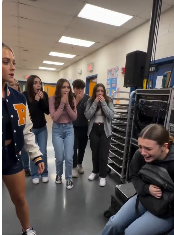
5:45 p.m. — Cue 27 deleted: STERLING PRESENTATION SPOTLIGHT ENTRY.
5:45 p.m. — Cue 28 deleted: STERLING PRESENTATION IMAGE SEQUENCE.
5:46 p.m. — Cue numbering compressed.
5:47 p.m. — Master cue script saved.
5:48 p.m. — User MSTUDENT logged out.
For a moment, nobody spoke.
The room went dead quiet when the proof loaded, and Madison suddenly stopped smiling.
Below us, someone whispered, “She deleted her own scene?”
That whisper became the first crack.
Then the whole auditorium changed direction at once.
People turned away from me and toward Madison. Not dramatically. Not all at once. But enough. Enough for her to feel the weight of what she had done returning to her.
Madison’s mouth opened.
“That’s not—” she started. “I didn’t—someone must have used my login.”
Principal Hargrove stepped forward. “Were you in the lighting booth at 5:44 p.m.?”
“No.”
The answer came too fast.
Mr. Albright’s face twitched.
Principal Hargrove noticed. “Mr. Albright?”
He swallowed.
“Madison came up briefly,” he said. “She said she left her presentation clicker in here.”
Madison spun toward him. “You told me nobody would care about that.”
The words left her mouth before she could catch them.
A wave of shock moved through the booth.
Mr. Albright closed his eyes.
I felt my skin go cold.
Principal Hargrove’s voice was dangerously calm. “Told you?”
Madison’s face flushed. “I mean—he said I could get my clicker.”
But the damage was done.
The log had named her.
Her own panic had named him.
And suddenly the deleted cue was not the whole story.
Principal Hargrove ordered everyone out of the booth except me, Madison, Mr. Albright, and two student stage managers who had witnessed the slap. But the auditorium had already heard enough. Students spilled into the aisles, whispering, texting, replaying what had just happened in voices that grew bolder now that the proof had chosen a side.
Madison looked smaller without the crowd believing her.
Not sorry.
Just smaller.
Principal Hargrove turned to me. “Keira, I need to ask directly. Did you delete any part of Madison’s presentation scene?”
“No.”
“Did you allow anyone to use your login?”
“No.”
“Did you alter the log?”
“No. I don’t even have permission to alter system logs.”
Mr. Albright shifted.
Principal Hargrove looked at him. “Who does?”
His jaw tightened. “Administrators. Faculty account holders. District technicians.”
“And you?”
“Yes.”
My pulse jumped.
Madison whispered, “Please don’t.”
It was barely audible, but I heard it.
So did Principal Hargrove.
She looked between them. “What exactly am I not supposed to know?”
Mr. Albright rubbed one hand over his face. For the first time since I had joined tech crew sophomore year, he looked less like a teacher and more like a man who had been carrying something rotten for too long.
“The showcase awards committee was reviewing student leadership presentations,” he said quietly. “Madison’s project was strong, but there were questions.”
Madison hissed, “Stop.”
He continued anyway.
“There were questions about whether she had actually completed the outreach hours listed in her application.”
My eyes flicked to Madison.
The outreach hours.
For months, Madison had been praised for organizing weekend workshops at the community arts center. She had given speeches about bringing theater to younger students. She had posed for photos with kids holding scripts. Her presentation scene was supposed to show proof of that work.
Except now it had been deleted.
By her.
Principal Hargrove’s expression sharpened. “Why would Madison delete her own presentation if it helped her?”
Mr. Albright did not answer.
But I knew.
The answer arrived in pieces: the missing scene, the panic, the slap, the accusation, the way Madison wanted me blamed before anyone verified anything.
I stepped toward the lighting board.
“Open the media folder,” I said.
Everyone looked at me.
Mr. Albright said, “Keira, that’s not—”
“Open it,” Principal Hargrove said.
Mr. Albright’s hand shook as he navigated to the presentation assets. The folder appeared on the monitor.
STERLING_PRESENTATION_FINAL.
Inside were image files, audio clips, and one video package labeled OUTREACH_MONTAGE.
My mouth went dry.
“Check the source path,” I said.
Madison stared at me like she hated me for understanding systems.
Mr. Albright clicked.
The file properties opened.
Created: 11:58 p.m., previous night.
Imported from: external USB.
Original filename: stock_theater_kids_preview_watermarked.mp4.
The booth seemed to tilt.
Jenna Ruiz, one of the stage managers, whispered, “Stock?”
Principal Hargrove leaned closer. “Was this purchased footage?”
Mr. Albright’s silence answered.
Madison’s face crumpled into rage. “It wasn’t supposed to play big enough for anyone to notice.”
There it was.
The truth, ugly and almost absurd.
Madison had deleted her own presentation scene because the media inside it could expose that her outreach montage was fake. Maybe she planned to blame a tech glitch. Maybe she planned to cry about sabotage. Maybe she planned to replace the scene later with safer images.
But when I said we needed to verify the cue script before punishing anybody, I threatened the plan.
So she slapped me.
Not because I ruined it.
Because I almost saved it.
Principal Hargrove ordered Madison to sit in the front row under supervision. Mr. Albright was told to remain in the booth until district administrators arrived. The stage managers gave written statements. I gave mine with an ice pack on my cheek and my hands finally steady.
By the time my mother arrived, the auditorium was nearly empty.
She walked in wearing her scrubs from the urgent care clinic, her auburn hair tied in a tired bun, her badge still clipped to her pocket. My mom had the kind of face that looked gentle until someone hurt her child.
Then she became weather.
“Where is she?” she asked.
“Mom,” I said, standing.
Her eyes landed on my cheek.
Her mouth tightened.
“Who hit you?”
I did not have to answer. Madison was still in the front row with a counselor beside her, staring at the floor like it had personally betrayed her.
My mother started forward.
I grabbed her sleeve. “Mom, don’t.”
“I’m not going to touch her,” she said. “I’m going to make sure every adult in this building remembers their job.”
And she did.
For the next hour, my mother sat beside me in Principal Hargrove’s office while the district arts director reviewed the lighting log, media folder, witness statements, and security footage from the hall outside the booth. Madison’s parents arrived separately, both dressed like they had come from a charity dinner instead of a school investigation. Her father demanded privacy. Her mother demanded context. Neither of them asked if I was okay.
That told me everything.
Madison cried only when the district arts director said her showcase eligibility was suspended pending review.
“She embarrassed me,” Madison said, pointing at me.
My mother stood up so fast her chair scraped the floor.
“She told the truth after your daughter struck her,” she said. “Do not confuse embarrassment with accountability.”
Madison’s father turned red. “This is a misunderstanding.”
Principal Hargrove placed the printed log on the desk.
“Then it is a very well-timestamped misunderstanding,” she said.
I almost smiled.
Almost.
The next day at school was worse than the slap in a different way.
Everyone knew.
Everyone had a version.
Some people apologized in passing without slowing down. Some stared at my cheek like it was a bulletin board. Some acted overly kind, which somehow felt worse, because their kindness had arrived only after proof made it socially safe.
At lunch, I sat outside the auditorium with my sandwich untouched in my lap.
Jenna Ruiz sat beside me.
She did not ask permission. She just lowered herself onto the floor, stretched her legs out, and handed me a chocolate milk from the vending machine.
“I should’ve said something faster,” she said.
I looked at the carton. “You said something.”
“After the log.”
“At least you said it.”
She nodded, but guilt sat heavy between us.
After a while, she said, “Madison told people you were obsessed with her.”
I laughed once, without humor. “Of course she did.”
“She said you wanted her scene cut because you thought tech crew deserved more attention.”
“I wanted tech crew to get pizza after rehearsal.”
Jenna snorted.
For the first time in twenty-four hours, I felt like a real person instead of a scandal.
Then she said, “There’s something else.”
The hallway seemed to narrow.
“What?”
Jenna looked toward the auditorium doors. “The outreach montage wasn’t the only fake part.”
My stomach tightened.
She lowered her voice. “Madison’s listed service hours? Some of them match hours from other students’ sign-in sheets. Including yours.”
I stared at her.
“What do you mean, including mine?”
“You remember the elementary theater workshop last spring? The one where you ran sound and helped kids record voiceovers?”
“Yes.”
“Madison listed that as her leadership session.”
I could not speak.
That workshop had been one of the best days of my year. I had spent six hours helping fourth graders make tiny radio plays with squeaky microphones. One shy boy named Mateo had refused to speak until I showed him how to make thunder with a sheet of metal. By the end, he was narrating a dragon story into the mic like he had been waiting his whole life for someone to turn the volume up.
Madison had not been there.
Not for one minute.
“Do you have proof?” I asked.
Jenna nodded. “The sign-in sheets were scanned.”
“Where?”
“Old drama drive. Before Mr. Albright reorganized it.”
I stood.
The chocolate milk rolled off my lap and hit the floor.
Jenna blinked. “Now?”
“Now.”
The old drama drive was messy, half-abandoned, and full of folders labeled things like FINAL_FINAL_USE_THIS and LIGHTING OLD MAYBE. I knew it better than some people knew their own lockers. Jenna and I got permission from Principal Hargrove to search it under supervision, and Ms. Patel, the librarian, sat with us while we dug through years of digital clutter.
At first, nothing.
Then a folder.
ELEMENTARY_WORKSHOP_ARCHIVE.
Inside were scanned sign-in sheets.
Photos.
Audio files.
Volunteer assignment lists.
And there it was.
KEIRA MURPHY — SOUND STATION LEAD — 6 HOURS.
Underneath, other names. Other students. Other work.
Not Madison.
Not once.
Ms. Patel printed everything.
The district investigation widened again.
Madison had not only faked footage. She had inflated her service record by copying hours from students she thought nobody would check. Tech crew kids. Quiet kids. Transfer students. Kids without donor parents. Kids who worked backstage, carried boxes, cleaned up after events, and rarely asked for certificates.
My name was just one of many.
That was when the story changed.
It was no longer about Madison slapping me.
It was about a system that had taught her she could.
The twist nobody expected came three days before the rescheduled showcase.
I was called to the auditorium after school. I thought Principal Hargrove needed another statement. Instead, I found the stage lit in a soft amber wash, the kind of warm cue I always loved because it made even empty seats look hopeful.
Onstage stood the tech crew, the drama club, Ms. Patel, Principal Hargrove, and about twenty students whose hours had been copied.
My first instinct was to leave.
I hated attention. Real attention. The kind that pinned you in place and expected your face to do something meaningful.
Jenna ran down the stage steps. “Don’t freak out.”
“That sentence makes people freak out.”
“We fixed the showcase.”
“What does that mean?”
She smiled. “It means the opening scene isn’t Madison anymore.”
The curtains parted.
Projected across the back screen was a new title:
THE INVISIBLE WORK THAT MAKES THE SHOW POSSIBLE.
Under it were names.
Mine.
Jenna’s.
Mateo’s elementary workshop group.
Robotics students.
Art club volunteers.
Stagehands.
Library aides.
Kids whose labor had been borrowed, minimized, or ignored.
My throat closed.
Principal Hargrove stepped beside me.
“The district asked us to create a replacement opening,” she said. “We decided the students who actually did the work should be visible.”
“I don’t want Madison’s spotlight,” I whispered.
“You’re not taking hers,” she said. “You’re turning on the house lights.”
That line stayed with me.
The next night, the auditorium filled completely. Parents, donors, teachers, students, and district guests packed every row. Madison was not there. Mr. Albright was on leave. A district technician sat beside me in the booth, but he did not touch the board. He only nodded when I loaded the new master script.
My hands hovered over the controls.
For a moment, I was back in the slap. Back in the burning silence. Back in the moment everyone stared and waited for me to become guilty.
Then Jenna’s voice came through the headset.
“Ready, Keira?”
I looked down at the stage.
My mother sat in the third row beside my dad, who had ignored his back pain to come. He gave me a thumbs-up so small nobody else would notice.
Every system has a witness.
“Ready,” I said.
The auditorium went dark.
I pressed GO.
The first cue rose cleanly.
Warm amber filled the stage.
One by one, students stepped into the light, not to brag, not to perform perfection, but to tell the truth. A robotics student spoke about staying late to rebuild a failed motor. A library aide described translating flyers. Jenna talked about stage managing through migraines and still making sure everyone knew their entrances. A transfer student explained how his volunteer hours had been used by someone else, then corrected.
Then my recorded voice filled the auditorium.
“I used to think backstage work only mattered if nobody noticed it. But invisible should never mean disposable.”
On the screen, the lighting board log appeared—not Madison’s full scandal, not as gossip, but as a symbol. A timestamp. A record. Proof that work leaves traces even when people try to erase them.
The audience was silent.
Not the bad kind.
The listening kind.
When the opening ended, the applause began slowly, then grew until the booth window trembled faintly under my fingertips.
I did not cry.
Not then.
I had cues to run.
The show went perfectly.
Every transition landed. Every spotlight found its person. Every student got their scene. Not because nothing went wrong, but because the people who knew how to fix things were finally trusted to do their jobs.
After the showcase, Principal Hargrove found me in the booth.
“There’s someone here to see you,” she said.
My stomach clenched. “Madison?”
“No.”
Downstairs, near the front row, stood a boy with round glasses and a shy smile. Beside him was a woman I recognized from the elementary workshop sign-in sheet.
Mateo.
The fourth grader from the radio play.
He held a folded paper in both hands.
“I made another dragon story,” he said, looking at his shoes. “My mom said you might like it.”
I took the paper carefully.
On the front, in uneven pencil letters, he had written:
FOR KEIRA, WHO TURNED ON THE THUNDER.
That was when I cried.
Not loudly. Not dramatically. Just enough that my mother crossed the aisle and wrapped her arm around me without saying a word.
A week later, the district announced new rules for student awards. Digital logs had to be preserved. Service hours had to be verified by two adults. Technical crew credits had to be listed in all event programs. No donor family could have a representative on a committee reviewing their own child’s application.
Madison Sterling transferred to a private academy outside the district before graduation.
Some people said she got away with it.
I did not think so.
Getting away with something means keeping the life you stole.
Madison lost the story she had built from other people’s work. She lost the easy trust of every room she entered. And somewhere, whether she admitted it or not, she had to live with the fact that a girl she thought was disposable had stood still long enough for the truth to load.
As for me, I did not become popular.
Thank goodness.
I became something better.
Credible.
Teachers started asking me how systems worked before blaming students. Tech crew got a budget line. The auditorium booth got a new sign taped above the lighting board, printed in Jenna’s dramatic handwriting:
THE LOG IS ALSO A WITNESS.
On graduation night, I stood backstage with my cap pinned crookedly over my hair, listening to the hum of families filling the auditorium. My cheek had long stopped aching, but sometimes I still remembered the heat of that slap, the shock of everyone staring, the loneliness of being doubted by default.
Then Principal Hargrove stepped to the podium.
“This year,” she said, “we learned that leadership is not always the person standing in the brightest light. Sometimes leadership is the person who protects the truth before anyone else is brave enough to look.”
I stared at the floor.
Jenna elbowed me.
“She means you,” she whispered.
“I know,” I whispered back. “I’m trying not to pass out.”
She laughed softly.
When my name was called, I walked across the stage under a perfect white spotlight.
Not Madison’s spotlight.
Not stolen light.
Mine.
I shook Principal Hargrove’s hand, took my diploma, and looked up toward the booth.
The new tech crew kid gave me a thumbs-up from behind the glass.
The cue had landed.
The record was clean.
And for the first time in a long time, I did not feel like the girl people remembered only when something went wrong.
I felt like the person who had helped make the whole room brighter.
THE END
