Part 2: The Clipboard No One Expected To Matter
The greenhouse went so quiet I could hear water dripping from the misting pipes above the orchid shelf.
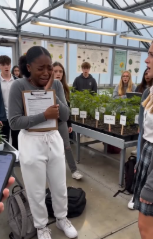
Ms. Halberg, the biology teacher, held the clipboard in both hands like it had suddenly become heavier than paper. Behind her, the glass walls had fogged from the warm air inside, blurring the line of students pressed outside the door. Phones were still raised. Nobody knew what to film anymore.
Olivia Kingsley stood beside the potting bench, one hand frozen near the hair clip at the side of her head. A few seconds earlier, she had looked untouchable. Now her lips parted, but no words came out.
Ms. Halberg read the line again.
“Plant tray C-14 was originally assigned to Aaliyah Brooks and Mateo Laurent. The label change was logged yesterday at 4:16 p.m.”
Mateo, who had been standing near the fern rack with soil on his sleeve, whispered, “I was at tutoring yesterday.”
Ms. Halberg looked up.
Olivia’s face tightened.
Then Mr. Bernier, the assistant principal, stepped forward. He was a tall man with silver glasses and a voice that usually made even the loudest seniors lower theirs.
“Who had greenhouse access at 4:16?”
The answer was already on the second page.
Ms. Halberg swallowed. “Olivia Kingsley.”
A sound moved through the room, not quite a gasp, not quite a whisper. It was worse than either. It was the sound of people changing their minds all at once.
Olivia laughed once, sharp and thin. “That’s ridiculous. I was helping with the donor display.”
Mr. Bernier turned the page.
“The staff confirmation says you signed out the greenhouse key at 4:03.”
Her grandmother’s portrait hung in the main hallway, smiling over generations of scholarship winners. The Kingsley name was on plaques, banners, and the new greenhouse dedication stone outside. Everyone knew what that meant.
But for the first time, it did not save her.
I touched my cheek where the slap still burned. My skin felt hot, but my hands were steady.
Olivia pointed at me. “She set me up.”
I wanted to answer. I wanted to say that I had spent all morning trying not to make this public. But before I could speak, Mateo stepped beside me.
“She didn’t,” he said quietly. “She asked for the record before anyone got blamed.”
Olivia’s eyes flashed toward him like he had betrayed a royal family.
Mr. Bernier closed the folder.
Then he said the sentence that changed the room.
“Everyone who recorded the slap will send the video to my office before leaving today.”
Olivia’s friends lowered their phones as if they had been caught holding evidence instead of entertainment.
For one second, Olivia looked small.
Then the greenhouse door opened behind us.
A woman in a navy coat stepped inside, rain shining on her shoulders.
She looked at the clipboard, then at Olivia, then at me.
And her voice cut through the silence.
“Do not say another word, Olivia.”
Part 3: The Woman With The Principal’s Keys
Everyone knew Mrs. Eleanor Kingsley before she introduced herself.
She was the honorary principal’s widow, the kind of woman whose name appeared on invitations, plaques, and donation letters. She moved through school events like the building had been designed around her shadow.
Olivia’s face filled with relief so fast it almost hurt to watch.
“Grandmother,” she said, voice trembling in a way that sounded practiced. “She’s trying to ruin me.”
Mrs. Kingsley did not look at her.
She looked at me.
I braced myself.
I had been looked at like that before by adults who had already decided which child was easier to doubt. The quiet one. The scholarship one. The one who asked for rules to be followed because rules were the only protection she had.
But Mrs. Kingsley’s eyes did not narrow.
They softened.
“Miss Brooks,” she said, “are you hurt?”
Olivia stiffened.
I blinked. “I’m okay.”
“No,” Mrs. Kingsley said. “You are not required to say that.”
The room shifted again.
Ms. Halberg’s eyes filled with something like shame. Mr. Bernier lowered his clipboard slightly. Mateo looked down at the floor, jaw tight.
I realized then how badly I had wanted just one adult to say that what happened to me mattered.
Olivia whispered, “Grandmother.”
Mrs. Kingsley turned slowly.
“Olivia, I asked you last month whether there were problems with the greenhouse project.”
Olivia’s mouth opened.
Mrs. Kingsley reached into her coat pocket and removed a folded envelope.
“I asked because the committee received an anonymous note claiming the plant records were being altered before judging.”
The greenhouse seemed to shrink.
Olivia’s friend Claudia muttered, “What note?”
Mrs. Kingsley placed the envelope on the potting bench. The paper was cream-colored, expensive, and creased at the corners.
“I hoped it was nonsense,” Mrs. Kingsley said. “I hoped no student in this school would be foolish enough to risk another student’s grade, scholarship recommendation, and safety report over a biology prize.”
My stomach dropped.
Safety report.
That was the part almost nobody had understood. The wrong species label was not just a name. One plant in tray C-14 had been flagged for skin irritation precautions. If the labels stayed switched, the wrong student group would handle it without gloves during tomorrow’s demonstration for younger students.
Olivia had not just tried to steal credit.
She had made it dangerous.
Mr. Bernier’s voice sharpened. “Mrs. Kingsley, may I see that note?”
She handed it over.
He read it once.
Then again.
His face changed.
Ms. Halberg stepped closer. “What is it?”
Mr. Bernier did not answer immediately.
Instead, he looked at Olivia.
“Who is Erik Voss?”
Olivia went pale.
Not embarrassed. Not angry.
Pale.
Her grandmother’s expression turned cold.
“Olivia,” she said, “answer him.”
Olivia’s hand gripped the edge of the bench so hard her knuckles whitened.
And that was when Claudia, her closest friend, took one step backward.
“Oh my God,” Claudia whispered. “You said Erik deleted it.”
Part 4: The Deleted Message That Wasn’t Deleted
Claudia covered her mouth the instant she realized what she had said.
But the words had already landed.
Olivia turned on her. “Shut up.”
It was not loud, but it was vicious enough to make Claudia flinch.
Mr. Bernier pointed toward the hall. “Claudia, office. Now.”
“No,” Olivia snapped. “She doesn’t know anything.”
Mrs. Kingsley’s cane tapped once against the floor.
“Then you should not be frightened of what she says.”
That was the first moment I saw Olivia truly panic.
Not the performance kind. Not the trembling-lip act she used when teachers asked her simple questions. This was raw. Her eyes moved from the clipboard to the envelope to the students outside the glass, calculating which door was still open.
There wasn’t one.
Claudia walked out with Mr. Bernier. Everyone watched her through the fogged greenhouse wall as she crossed the courtyard, head down, cardigan sleeves pulled over her hands.
The rest of us were told to remain.
Ms. Halberg asked the class to sit on the low wooden benches between the plant tables. Nobody argued. Even the students who usually joked through everything stayed silent.
I sat beside Mateo. My cheek had stopped burning, but now the rest of me felt cold.
“You okay?” he murmured.
I nodded.
He did not believe me, but he did not push.
Across the room, Olivia sat alone under the hanging ivy, her plaid skirt perfectly arranged, her hair clip still shining under the greenhouse lights. She looked like a picture in a school brochure. Except her fingers would not stop shaking.
Twenty minutes later, Mr. Bernier returned with Claudia.
Claudia’s face was red from crying.
Behind them walked a man I did not recognize, carrying a school laptop. He wore a maintenance badge and had dirt on his boots.
“This is Mr. Voss,” Mr. Bernier said. “Grounds and greenhouse systems.”
Erik Voss.
Olivia stared at the floor.
Mr. Voss looked deeply uncomfortable. “I didn’t know what she was using it for.”
Mrs. Kingsley’s voice was quiet. “Using what?”
He opened the laptop and turned it toward Mr. Bernier.
“The greenhouse entry log has staff override notes. Students can’t edit them, but I can. Olivia asked me to correct what she called a ‘mistake’ in the sign-out time.”
Ms. Halberg pressed a hand to her chest.
Mr. Bernier asked, “Why would you do that?”
Mr. Voss looked at Mrs. Kingsley, then away.
“She said the Kingsley family would make sure my seasonal contract became permanent.”
Olivia stood so fast the ivy above her trembled.
“That’s a lie.”
Claudia sobbed once.
Then she pulled out her phone.
Her hand shook as she unlocked it.
“I kept the screenshot,” she whispered. “I’m sorry. I got scared.”
Olivia lunged toward her.
Mateo moved first, stepping between them.
Mr. Bernier’s voice cracked like a door slamming.
“Olivia Kingsley, sit down.”
Claudia turned the phone around.
On the screen was Olivia’s message.
Change the log or Aaliyah ruins everything. Make it look like she touched the labels first.
Part 5: The Name Written Under Mine
The school did not explode immediately.
It folded inward.
That was worse.
Nobody screamed. Nobody ran. Nobody even whispered for a few seconds. They just stared at the glowing phone in Claudia’s hand while the truth sat there in black letters.
Make it look like she touched the labels first.
My name looked strange inside Olivia’s message, like it had been stolen from me.
Aaliyah.
Not a person. A target.
Ms. Halberg covered her mouth.
Mr. Voss looked sick.
Mrs. Kingsley closed her eyes for one long breath, and when she opened them again, she looked older than she had when she entered.
Olivia’s voice cracked. “I didn’t mean—”
I laughed.
It surprised everyone, including me.
It was not a funny laugh. It was small and broken and came from somewhere I had been trying to lock shut since the slap.
“You didn’t mean to get caught,” I said.
Olivia stared at me as if I had finally broken the rule she trusted most: staying quiet.
Mr. Bernier asked for my statement. He asked gently, but every word felt like walking over glass. I told him I had noticed the label switch during morning check. I told him I had compared the tray to the official seedling list. I told him I asked Ms. Halberg to verify before the younger students arrived tomorrow.
Then I told him something I had not said before.
“I checked because this happened once already.”
Ms. Halberg’s face changed. “What?”
I opened my folder.
Inside were copies. Not dramatic. Not secret. Just printed records, notes, and photos I had taken because my mother always told me: when people call you dramatic for noticing details, keep the details.
I laid the papers out.
“Two weeks ago, my germination count changed on the shared file. Last week, Mateo’s credit line moved under Olivia’s group summary. Yesterday, the allergen warning note disappeared from tray C-14.”
Mateo looked at me sharply.
“You knew?”
“I suspected,” I said. “I didn’t want to accuse anyone without proof.”
His eyes softened, but his jaw clenched.
Mrs. Kingsley stepped closer to the papers.
At the bottom of one printed project roster, under my name, someone had handwritten a note in blue ink.
Difficult. Overchecks everything. Not team-friendly.
Ms. Halberg whispered, “I didn’t write that.”
I already knew she hadn’t.
Because beside the note was a small, curved initial.
O.K.
Olivia went completely still.
Mr. Bernier picked up the roster.
“Where did you get this?”
“From the recycling bin outside the prep room,” I said. “I thought it was a discarded copy.”
Mrs. Kingsley looked at Olivia.
For the first time, her voice shook.
“You tried to make diligence look like disobedience.”
Olivia’s eyes filled with tears.
But they did not fall.
Not until Mr. Bernier said the next part.
“The biology prize committee meets tonight. Until this investigation is complete, Olivia Kingsley is removed from consideration.”
Olivia whispered, “No.”
Mrs. Kingsley turned toward the door.
“Not only Olivia.”
Everyone looked at her.
Her hand rested on the envelope.
“The Kingsley Foundation is withdrawing its name from the prize.”
Part 6: The Prize That Suddenly Had No Owner
By the next morning, the greenhouse story had reached every hallway before first bell.
But it was different from the usual school scandal.
Nobody knew how to talk about it without admitting they had watched me get slapped and waited to see which side became safer.
Students who had filmed me getting humiliated avoided my eyes. A few deleted the videos. A few apologized in voices so low I could barely hear them.
The loudest apology came from someone I did not expect.
Claudia found me outside the library.
She looked terrible. Her perfect curls were tied back messily, and her eyes were swollen.
“I should have said something sooner,” she said.
I held my books tighter. “Yes.”
She flinched, but she nodded. “I know.”
For a moment, neither of us moved.
Then she said, “Olivia told us you were trying to steal her research. She said you were obsessed with making her look bad.”
I almost smiled, but it hurt too much.
“People like Olivia don’t need to prove stories if everyone already wants to believe them.”
Claudia’s eyes filled again.
“I saved more screenshots.”
That got my attention.
She opened her folder and pulled out three printed pages.
“I gave copies to Mr. Bernier. But I thought you should know what’s in them.”
I did not want to look.
I looked anyway.
There were messages from Olivia to Claudia, to Erik Voss, to two students on the project committee. She had planned the label switch after learning I was being recommended for the regional environmental fellowship.
I had not even known yet.
My fingers tightened around the paper.
“She thought you were going to get it,” Claudia whispered. “The fellowship. She said if your record looked unreliable, the committee would choose her.”
The hallway blurred for a second.
The fellowship was not just a certificate. It paid for summer research in Edinburgh. It could change college applications, recommendations, everything.
And Olivia had known before I did.
That afternoon, my mother came to school.
She walked into Mr. Bernier’s office still wearing her hospital cafeteria uniform, her name tag clipped slightly crooked because she had rushed over between shifts. She did not raise her voice. She did not need to.
She listened to every adult explain what had happened.
Then she placed both hands on the table.
“My daughter came to you with a safety concern,” she said. “She left with a mark on her face and a file proving adults ignored a pattern.”
No one interrupted her.
Not even Mrs. Kingsley.
My mother looked at each of them.
“So don’t tell me this is being handled. Tell me what changes before another quiet student pays for your comfort.”
That was the moment Mrs. Kingsley reached into her handbag and removed a second envelope.
“I believe,” she said, “I owe Aaliyah something that belonged to her before Olivia touched any of this.”
She slid it across the table.
My name was printed on the front.
Inside was the fellowship nomination letter.
But behind it was another document.
One I had never seen.
And at the bottom, signed three weeks earlier, was Olivia Kingsley’s name.
Part 7: The Signature Beneath The Fellowship Letter
I read the document three times before the words arranged themselves into meaning.
Student Concern Form.
Filed by: Olivia Kingsley.
Subject: Aaliyah Brooks.
Concern: Pattern of interference with peer project materials.
My mouth went dry.
Olivia had not only switched labels. She had built a paper trail first.
She had accused me before I even noticed the full pattern.
My mother’s face hardened in a way I had only seen once, when a landlord tried to charge us for damage that existed before we moved in.
Mr. Bernier took the document from me carefully.
“This was never processed through my office.”
Mrs. Kingsley nodded. “Because I stopped it.”
Everyone turned to her.
Rain ticked softly against the office window.
Mrs. Kingsley sat straighter, both hands folded over the handle of her cane.
“Olivia brought it to me privately. She said Aaliyah was unstable, jealous, and damaging her work. She asked me to speak to the committee before the fellowship nomination advanced.”
My chest tightened.
Ms. Halberg whispered, “And did you?”
Mrs. Kingsley looked at me.
“I almost did.”
My mother’s chair scraped back.
Mrs. Kingsley did not look away.
“Then I watched Aaliyah during the greenhouse review. She did not interrupt. She did not posture. She corrected a Latin species name quietly when two younger students copied it wrong. She returned a missing glove box to the safety shelf without announcing it. She did the kind of work people only notice when it is absent.”
Something in my throat ached.
Mrs. Kingsley tapped the document.
“So I asked for records before acting. That is when the anonymous note arrived.”
Mr. Bernier frowned. “Who sent it?”
Mrs. Kingsley opened the second envelope fully.
Inside was a printed email.
The sender line made Ms. Halberg inhale sharply.
It had come from Mr. Voss.
But he had not signed it.
He had written one sentence only:
A student is being framed in the greenhouse, and I am ashamed I helped.
For a moment, nobody spoke.
Then the office door opened.
Olivia stood there with her parents behind her.
Her father wore an expensive coat and an expression that expected doors to open. Her mother looked like she had been crying in the car.
Olivia’s eyes went straight to the paper in my hand.
Her father spoke first.
“We are prepared to resolve this privately.”
My mother stood.
“No.”
He blinked, as if the word had never been directed at him.
Mrs. Kingsley rose too.
Her voice was calm, but the room changed around it.
“There will be nothing private about a public harm.”
Olivia’s father turned red. “Mother, think carefully.”
“I am,” she said.
Then she faced Olivia.
“I built my name into this school because I believed it could protect serious students. Yesterday, you used that name as a weapon.”
Olivia’s mother whispered, “She made a mistake.”
Mrs. Kingsley’s eyes did not move.
“No. A mistake is mislabeling a tray. This was a campaign.”
Olivia finally looked at me.
For one second, I thought she might apologize.
Instead, she said, “You don’t understand what it’s like to have everyone expecting you to be perfect.”
The room went cold.
I stepped forward before fear could stop me.
“No,” I said. “I understand what it’s like to have everyone expecting me to be guilty.”
Her face crumpled.
And that was when Mr. Bernier’s phone rang.
He listened for ten seconds.
Then he looked at me.
“The regional fellowship board is here.”
Part 8: The Greenhouse Door Opened For Her
The fellowship board arrived in coats damp from rain, carrying leather folders and the kind of silence that made students in the hallway step aside.
There were three of them: Dr. Elise Moreau from the university, Mr. Henrik Adler from the regional science council, and a woman named Sofia Laurent, who turned out to be Mateo’s aunt and the fellowship’s safety reviewer.
Olivia saw her and went rigid.
Mateo whispered beside me, “I didn’t know she was coming.”
Neither did I.
Dr. Moreau asked to see the greenhouse.
Not the office. Not the reports first.
“The plants,” she said. “Show me the plants.”
So we walked back through the school in a strange procession: adults, committee members, my mother, Olivia’s family, Mateo, Claudia, and me. Students watched from classroom doors. Nobody laughed now.
Inside the greenhouse, the air was warm and damp, smelling of soil, leaves, and rainwater.
Dr. Moreau stood before tray C-14.
“Miss Brooks,” she said, “explain what you noticed.”
My voice shook at first.
Then the plants steadied me.
I showed her the difference in leaf shape, stem texture, and the small warning marker that should have matched the correct species. I explained how the wrong label would have affected the class record and tomorrow’s demonstration. I showed the photo timestamps and the original assignment sheet.
Dr. Moreau listened without blinking.
When I finished, she turned to Olivia.
“Miss Kingsley, would you like to explain your research process?”
Olivia looked at the tray.
Then at her grandmother.
Then at her parents.
For the first time, there was no crowd to perform for. Only facts.
“I wanted the fellowship,” she whispered.
Her father closed his eyes.
Olivia’s voice cracked. “I thought if Aaliyah got it, everyone would know I wasn’t special. I thought… I thought if she looked careless, no one would question why I was chosen.”
Dr. Moreau’s expression did not soften.
“And the slap?”
Olivia swallowed.
“I needed her to stop talking.”
That sentence seemed to echo against the glass.
My mother’s hand found mine.
Mrs. Kingsley turned her face toward the rain-streaked windows.
Dr. Moreau closed her folder.
“The fellowship board has reviewed the evidence. Olivia Kingsley is disqualified from this year’s regional science honors.”
Olivia made a small sound, but no one moved toward her.
Then Dr. Moreau looked at me.
“Aaliyah Brooks, your nomination stands.”
My breath caught.
But she was not finished.
“In light of the safety issue you identified, your documentation, and your refusal to let public pressure override evidence, the board is offering you the Edinburgh summer research placement.”
The greenhouse blurred.
Mateo grinned so hard he looked like he might cry. Claudia covered her mouth. My mother squeezed my hand until it hurt.
But the shocking part came next.
Mrs. Kingsley stepped forward.
“The Kingsley Foundation will no longer sponsor a prize named after my family,” she said. “Instead, I am establishing a new fund.”
Olivia stared at her.
Mrs. Kingsley looked directly at me.
“It will support students who protect the integrity of shared work, especially when speaking up costs them something.”
She held out the old greenhouse key, the one Olivia had signed out.
“Only if Aaliyah agrees to name it.”
Everyone looked at me.
The girl who had been slapped. The girl who had been filmed. The girl who had almost been turned into a warning.
I looked at the plants, at the corrected labels, at the record that had not saved me quickly enough but had saved the truth eventually.
Then I said, “Call it the Quiet Evidence Fund.”
Mrs. Kingsley smiled through tears.
Months later, when I arrived in Edinburgh, the first thing I unpacked was not my fellowship letter.
It was a small laminated plant label from tray C-14, signed on the back by Mateo, Claudia, Ms. Halberg, my mother, and, unexpectedly, Mrs. Kingsley.
On the last line, in careful handwriting, Olivia had written one sentence before transferring schools:
You were never difficult. You were correct.
I placed it on my desk beside the window, where the Scottish rain tapped softly against the glass, and for the first time in a long time, I believed that being quiet had never meant being powerless.
