The slap was not the part that ruined Kenzie Hale.
It was the silence after it.
That thin, stunned silence that spread across the volleyball court in Honolulu, Hawaii, while the ball rolled under the bleachers and every phone in the gym lifted a little higher. The scoreboard still glowed above us, frozen at 14–14. The air smelled like floor polish, sea salt from the open side doors, and the coconut sunscreen half the girls wore even though practice was indoors.
My cheek burned.
But my hand stayed locked around the folder against my chest.
My name is Malia Fono. I was seventeen, Samoan American, a senior at Leilani Ridge High, and I had spent most of my life learning how to be strong without becoming loud. My mother called it dignity. My father called it restraint. My teammates called it “Malia being Malia,” which usually meant they expected me to swallow whatever was unfair and keep passing the ball.
That day, I was done swallowing.
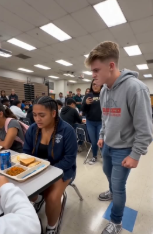
Kenzie Hale stood in front of me with her hand still half-raised, like even she could not believe she had done it in front of the entire varsity team, two assistant coaches, three managers, and half the junior squad waiting for court time. She wore pale jeans, white sneakers, and her captain’s jacket unzipped like the court belonged to her family.
In a way, it did.
Her mother, Laurel Hale, chaired the athletic boosters. Her stepfather owned the company that had paid for the new floor, the updated nets, and the glossy banners hanging above the court with words like HONOR, TEAMWORK, and FAIR PLAY printed in bright blue letters.
Kenzie had grown up under those banners.
I had grown up under expectations.
Show up early. Work twice as hard. Smile when people mispronounce your name. Do not make trouble unless you can prove every word.
And I could prove it.
That was why Kenzie slapped me.
Because the truth was inside the folder she wanted everyone to ignore.
It had started with a lineup sheet.
Not a dramatic thing. Not something most people would even notice.
The night before our district semifinal match, Coach Larkin had posted the official rotation for the first two sets in the team portal. I checked it because I always checked everything. I was starting left back in set one, rotating into serve receive with Keala and Rowan. My younger cousin Sina, a sophomore, was listed as alternate libero in case of injury.
Kenzie was starting outside hitter, as usual.
That part made sense.
But by morning, the lineup had changed.
Sina’s name had disappeared from the roster.
Mine had been moved from starter to bench.
And Kenzie’s best friend, Tessa Moore, who had missed two required practices that week, had been placed into the starting rotation with a note beside her name: “Coach-approved adjustment due to performance review.”
That note was wrong.
Coach Larkin had been off campus at a district meeting when the change appeared.
I knew because I had been in the athletic office printing permission slips at the exact time the edit was made. I had watched the office aide, Mr. Iseri, step away from the computer to take a call. I had seen Kenzie near the desk, leaning over the counter with her phone in her hand.
At first, I told myself not to jump to conclusions.
Then Sina texted me.
Did I do something wrong?
I looked at her message for a long time.
Sina was fifteen. She had quick feet, soft hands, and the nervous courage of someone who still apologized after perfect passes. She had trained all season for one chance to dress for playoffs. Her parents had already asked off work to watch her sit on the bench in uniform, proud just to see her name on the official sheet.
No one had told her she was removed.
No coach. No captain. No adult.
Just a changed file.
I took screenshots.
The original lineup. The altered lineup. The timestamps. The user initials attached to the edit.
KH.
Kenzie Hale.
But the strange part was not only her initials.
Under the approval column, there was a second mark.
LL.
Laurel Larkin.
Coach Larkin.
Except Coach Larkin’s first name was not Laurel.
It was Leona.
Laurel was Kenzie’s mother.
My stomach went cold.
Someone had used an administrator override in the athletic portal. Someone had made the edit look coach-approved by attaching a name close enough to pass at a glance.
I printed everything.
Then I went to Coach Larkin.
She was already on the court, setting up cones, her whistle between her teeth, her dark hair pulled into a tight knot. She was one of the few adults I trusted because she had never treated me like quiet meant easy.
“Coach,” I said, lowering my voice, “the lineup changed.”
She frowned. “What?”
I opened the folder.
Before she could read the first page, Kenzie appeared behind me.
“She’s upset about being benched,” Kenzie said.
I turned slowly.
Coach Larkin looked between us. “Benched?”
Kenzie’s smile was polished and pitying. “Malia saw the final lineup and didn’t take it well.”
“That’s not true,” I said.
Kenzie tilted her head. “Malia, don’t do this right now.”
The way she said my name made something in me tighten.
Like I was a child embarrassing myself.
Coach Larkin reached for the paper. “Let me see.”
Kenzie stepped closer.
“Coach, the boosters are here today for photos before semifinals. My mom already said we need to avoid drama.”
Coach Larkin’s face changed.
Not fear exactly.
Recognition.
“Your mom said what?”
Kenzie’s smile slipped.
That was when I knew the folder mattered more than even I understood.
Before Coach could take it, the athletic director called her from the sideline. A parent was complaining about ticket allotments. A district rep had arrived early. The team photographer needed ten minutes.
“Stay here,” Coach Larkin told me. “Do not lose that folder.”
Kenzie watched her walk away.
Then she leaned close enough that no one else could hear.
“You should have let it go.”
“No.”
One word.
Small. Clean. Final.
And the court tilted.
Kenzie’s eyes hardened.
“You think this makes you brave?” she whispered. “You think everyone will clap because you printed a few pages?”
“I think Sina deserves to know why her name disappeared.”
“Sina is not ready.”
“That was Coach’s decision to make.”
Kenzie laughed under her breath. “You really don’t understand how this works.”
I did understand.
That was the problem.
I understood girls like Kenzie always called unfairness “how this works” when they were the ones benefiting from it.
I walked toward the staff table.
Kenzie followed.
By then, more people were watching. The junior squad had stopped stretching. Tessa stood near the net, arms folded, her face pale. Keala mouthed, What happened? I shook my head once.
Kenzie raised her voice.
“Malia, stop.”
I kept walking.
“Malia, you’re making this worse.”
I turned. “No. You made it worse when you changed the lineup.”
The gym went quiet.
Kenzie’s face flushed.
“I didn’t change anything.”
“I have the timestamp.”
Her eyes flicked to the folder.
“Then show everyone,” she said.
“I’m showing staff.”
“Because you know it won’t prove what you think.”
I stepped away.
She grabbed my wrist.
I pulled free.
“Don’t touch me.”
The words echoed sharper than I intended.
Kenzie’s expression shifted instantly. She looked around, saw the phones, saw the attention, and put on hurt like a jacket.
“Wow,” she said, loud enough for the bleachers to hear. “So now you’re accusing me and acting like I attacked you?”
“I said don’t touch me.”
“You’re unstable because you lost your spot.”
A murmur moved through the girls.
My chest tightened.
There it was.
The story she wanted.
Not the altered lineup. Not Sina’s missing name. Not the fake approval.
Me.
Emotional. Jealous. Bitter. A problem.
“I didn’t lose my spot,” I said. “Someone stole it.”
Kenzie’s eyes flashed.
Then she slapped me.
The sound cracked across the court.
Not loud like in movies. Smaller. Sharper. Real.
My head turned with it. Heat bloomed across my cheek. For one second, all I saw was the polished wooden floor and the painted blue boundary line near my shoe.
Someone gasped.
Someone said, “Kenzie.”
The ball rolled under the bleachers.
I heard every breath around me.
Kenzie stepped back, her face frozen.
Then, impossibly, she whispered, “Look what you made me do.”
Something inside me went still.
Not calm.
Still.
I lifted my head and looked at her.
“No,” I said. “Everyone saw what you chose.”
Her mouth opened.
Before she could answer, a hand reached down and picked up the folder that had slipped from my grip.
Mr. Akana, the equipment manager, stood beside us holding the papers like they were a live wire. He was a quiet man with gray hair, strong shoulders, and a limp from an old surfing injury. Most students barely noticed him unless they needed tape, towels, or spare kneepads.
But Mr. Akana noticed everything.
His eyes moved over the first page.
Then the second.
Then his face changed.
“Coach Larkin,” he called.
His voice carried across the whole gym.
Coach Larkin turned from the sideline.
Mr. Akana did not look away from the papers.
“You need to see this now.”
Kenzie went pale.
“It’s not official,” she said quickly.
Mr. Akana looked at her.
“Then you won’t mind if staff checks it.”
Coach Larkin crossed the court fast. The athletic director, Mr. Voss, followed, annoyed before he even knew why. Kenzie’s mother, Laurel Hale, stood near the booster table in a white linen blouse and gold sandals, speaking with the photographer. She stopped mid-sentence when she saw the folder.
I saw her eyes find Kenzie.
Then the folder.
Then me.
And I knew.
The second name attached to the scandal was close.
Coach Larkin read the first page.
Her jaw tightened.
She read the second.
Then the third.
“Malia,” she said carefully, “where did you get these?”
“The team portal. And the printer log from the athletic office.”
Mr. Voss held out his hand. “Let me see.”
Coach Larkin did not give it to him.
That told me more than any shout could have.
“Coach,” he said.
She looked at him. “Did you approve a lineup change removing Malia Fono and Sina Fono from the playoff roster?”
His mouth tightened. “Lineups are fluid.”
“That is not what I asked.”
The gym was silent again.
Kenzie stared at the floor.
Laurel Hale walked toward us slowly, smiling the way adults smile when they believe a problem can be smothered with manners.
“Leona,” she said, “maybe this conversation should happen privately.”
Coach Larkin did not look at her.
“Did you access the roster portal yesterday at 3:18 p.m.?” she asked Mr. Voss.
He blinked. “Excuse me?”
Mr. Akana pointed to the printout. “Administrator override. Your office terminal.”
A ripple moved through the court.
My pulse hammered.
Kenzie’s name was on the edit.
But the override came from Mr. Voss’s office.
Mr. Voss laughed once, dry and fake. “Students don’t understand system logs.”
“I do,” said a voice behind us.
Everyone turned.
A girl from the AV club stood at the edge of the bleachers with a camera strap around her neck. Her name was June Park. She filmed games, edited highlight reels, and had once fixed the scoreboard software during a power surge while three adults argued over the manual.
June lifted a tablet.
“The team portal syncs to the livestream roster feed,” she said. “Yesterday’s change pushed automatically to our preview file. I saved the metadata because the names didn’t match Coach’s posted lineup.”
Kenzie looked like she might faint.
Laurel’s smile vanished.
Mr. Voss snapped, “June, this is not your concern.”
June did not flinch.
“It became my concern when someone asked me to delete the preview file.”
The words hit the gym like a dropped weight.
Coach Larkin turned slowly. “Who asked you?”
June looked at Laurel Hale.
The booster chair’s face hardened.
“That is a very serious accusation,” Laurel said.
June’s hand tightened around the tablet. “Yes, ma’am.”
For the first time all day, Kenzie looked at her mother not with confidence, but fear.
Laurel stepped forward. “Kenzie, go wait outside.”
Kenzie did not move.
“Kenzie.”
The name cracked like a command.
Kenzie whispered, “Mom, stop.”
Laurel’s head turned sharply.
The whole gym seemed to lean in.
Kenzie swallowed hard. Her eyes flicked to me, then Coach Larkin, then the teammates who had watched her slap me and call me unstable.
“I didn’t know Mr. Voss changed the portal,” she said.
Laurel’s face went white.
Mr. Voss said, “Kenzie.”
But she kept talking.
“I thought Mom just talked to the coach. She said Tessa needed to start because the scout from Pacific Coast University was coming, and Tessa’s family had already paid for the showcase camp, and if the lineup didn’t feature her, the booster sponsorship could get complicated.”
Tessa made a small sound near the net.
Her face crumpled.
“You said Coach approved it,” Tessa whispered.
Kenzie looked at her best friend, ashamed now. “That’s what she told me.”
Laurel moved fast.
Not toward her daughter.
Toward the folder.
Mr. Akana stepped back.
“Don’t,” he said.
Laurel froze.
Mr. Akana’s voice stayed low. “This is evidence.”
Something about the way he said it made every adult around him stop pretending.
Evidence.
Not drama.
Not misunderstanding.
Not teenage jealousy.
Evidence.
Mr. Voss grabbed his radio. “Clear the gym.”
Coach Larkin snapped, “No.”
He glared at her. “This is an internal athletic matter.”
“You altered a student roster.”
“You don’t know that.”
“I know I did not approve that lineup.”
Laurel lifted her chin. “Leona, think carefully. The booster board has supported this program for years.”
Coach Larkin looked at the banners above the court.
HONOR. TEAMWORK. FAIR PLAY.
Then she looked back at Laurel.
“Then support it now by telling the truth.”
Laurel’s mouth tightened.
For a moment, I thought she might confess.
Instead, she turned to me.
“Malia,” she said softly, like we were friends, “I know this feels personal. But college recruitment is complicated. Sometimes coaches need flexibility.”
“My cousin’s name was removed,” I said.
“She is young. She will have other seasons.”
“And my name?”
Laurel sighed. “You are talented, but you are not the only talented girl here.”
The old shame tried to rise in me.
The voice that said maybe I was making too much of it. Maybe I should be grateful to play at all. Maybe standing up for myself made me selfish.
Then Sina stepped out from behind the junior squad.
She was small beside the older players, her practice jersey hanging loose, her eyes shiny.
“But I didn’t do anything wrong,” she said.
Laurel did not even look at her.
That was the moment the team changed.
Keala stepped beside Sina.
Then Rowan.
Then Lani.
One by one, girls moved away from the net, away from Kenzie, away from the booster table, and stood behind us.
Not all of them.
But enough.
Kenzie saw it happen.
Her eyes filled.
The captain had slapped me to turn the crowd against me.
Instead, the court itself had chosen a side.
Then June said, “There’s more.”
Mr. Voss barked, “Enough.”
June tapped her tablet.
The gym speakers crackled.
A recording began to play.
Laurel Hale’s voice filled the court.
“Delete the preview file before Coach sees it. The official lineup needs to match the booster copy by morning.”
June’s voice answered faintly, “Coach Larkin didn’t send that lineup.”
Then Laurel again, colder.
“Coach Larkin works because the booster board funds what this team needs. Don’t be naive, June.”
The recording stopped.
Nobody breathed.
Mr. Voss looked at Laurel as if she had dragged him off a cliff.
Kenzie covered her mouth.
Laurel stood perfectly still.
Then she laughed.
It was the strangest sound I had ever heard.
Not amused.
Furious.
“You recorded me?”
June’s voice trembled, but she stood tall. “You told me to delete an official team file.”
Laurel turned to Coach Larkin. “This is illegal.”
“No,” Mr. Akana said quietly. “Hawaii is a one-party consent state.”
Everyone looked at him.
He shrugged. “My nephew is a lawyer.”
Under different circumstances, someone might have laughed.
No one did.
Coach Larkin took out her phone.
“I’m calling the district athletic office.”
Mr. Voss reached for her wrist.
Mr. Akana stepped between them.
“Don’t make another mistake,” he said.
Mr. Voss lowered his hand.
And Kenzie finally broke.
“I didn’t want this,” she whispered.
I looked at her cheek, streaked now with tears. “You still slapped me.”
Her face crumpled.
“I know.”
“You still lied.”
“I know.”
“You still let everyone think I was jealous and unstable because it was easier than telling the truth.”
Kenzie closed her eyes.
“I know.”
There was no satisfaction in hearing it.
Only exhaustion.
The district officials arrived within thirty minutes.
By then, practice had been canceled. Parents had gathered near the doors. The photographer had packed up without taking a single team photo. The scout from Pacific Coast University had quietly taken notes from the back row, expression unreadable.
I sat on the bleachers with an ice pack against my cheek, though the sting had already faded into a deeper ache.
Sina sat beside me.
“Are you okay?” she whispered.
I looked at the court.
Kenzie was speaking to a district investigator. Laurel stood several feet away with her arms crossed. Mr. Voss had stopped making phone calls after one of the officials asked him to surrender his office key card.
“No,” I said honestly.
Sina nodded.
“Me neither.”
I put my arm around her.
Coach Larkin came over and crouched in front of us.
“I’m sorry,” she said.
The words surprised me.
“For what?”
“For not taking the folder the second you tried to hand it to me.”
“You were busy.”
“I was distracted.” Her eyes moved toward Laurel. “There’s a difference.”
I did not know what to say.
She looked at Sina. “You are back on the roster.”
Sina’s mouth fell open.
“And you,” she said to me, “are starting.”
My throat tightened.
“Coach, I don’t want special treatment.”
“You’re not getting it. You earned your spot before anyone tried to steal it.”
For the first time all day, I almost cried.
But the biggest shock came later that evening.
I was leaving the gym with my parents when the Pacific Coast University scout approached us. She was a tall woman with silver hair pulled into a braid and a navy polo with the university logo on it.
“Malia Fono?” she asked.
My father straightened instantly.
“Yes,” I said.
“I’m Coach Renner. I came to watch the semifinal lineup today.”
My stomach dropped. “I’m sorry. There wasn’t much volleyball.”
She smiled slightly. “There was enough.”
I blinked.
She held out a card.
“I watched your game footage from earlier this season. Strong serve receive. Good court awareness. But today told me more.”
My mother’s hand tightened around my shoulder.
Coach Renner continued, “Programs need athletes who understand pressure. Not just scoreboard pressure. Character pressure.”
I stared at the card.
“I didn’t do it for recruitment,” I said.
“I know,” she replied. “That is why it matters.”
Then she looked toward the gym doors, where district officials were still moving in and out.
“Send me your spring schedule when this settles.”
I held the card like it might disappear.
“Yes, Coach.”
My father waited until she walked away before whispering, “Malia.”
I looked at him.
His eyes were wet.
He did not say he was proud.
He did not need to.
Two days later, the district released a statement.
Mr. Voss was placed on administrative leave pending investigation into unauthorized roster changes, misuse of athletic portal access, and improper communication with booster representatives. Laurel Hale resigned from the booster board. The district suspended all booster involvement in lineup, recruitment, and athlete promotion decisions.
Kenzie was removed as captain.
Tessa kept her roster spot as a player but not as a starter. When she apologized to Sina, she cried so hard Sina ended up hugging her, because Sina had always been softer than me.
As for Kenzie, she disappeared from school for a week.
When she came back, everyone watched her differently.
Not because she was no longer powerful.
Because they had seen where her power came from.
The semifinal match happened the following Friday.
The gym was packed.
Word had spread across the island faster than any official announcement. Parents came early. Students filled the bleachers. Even people who usually did not care about volleyball showed up because scandal always sells tickets, even when the scandal has already hurt real people.
I stood at the service line in the first set with the score tied again.
14–14.
The same numbers from the day of the slap.
My cheek no longer hurt, but I remembered the sound.
I remembered the folder hitting the floor.
I remembered everyone waiting to see whether I would shrink.
I bounced the ball once.
Twice.
Across the net, the opposing team crouched ready.
Behind me, Sina called, “You got this.”
I served.
The ball floated clean and hard over the net, dropped between two defenders, and hit the floor untouched.
Ace.
The gym exploded.
Not for the scandal.
For the point.
For the game.
For the fact that, after all of it, I was still there.
We won in four sets.
Sina subbed in during the final set and made a perfect dig that saved match point. Coach Larkin lifted her off the floor in a hug afterward. My mother cried. My father pretended not to. Mr. Akana handed me a towel and said, “Good folder grip, better serve.”
I laughed for the first time in days.
Kenzie watched from the far end of the bench.
She did not play.
After the match, while everyone celebrated, she approached me near the water station.
For a second, my teammates went still.
Kenzie noticed.
“I’m not here to start anything,” she said.
I waited.
She looked smaller without the captain jacket.
“I gave the district everything,” she said. “Texts from my mom. Messages from Mr. Voss. All of it.”
“Why?”
She swallowed. “Because you were right.”
I said nothing.
She continued, “My mom kept saying she did it for me. For my future. But she didn’t ask who I wanted to become.”
For the first time, I heard something in her voice that was not performance.
Just regret.
“I’m sorry I slapped you,” she said. “I’m sorry I lied. I’m sorry I made everyone look at you like you were the problem when you were the only one brave enough to say something.”
The gym noise softened around us.
I looked at her for a long time.
“I don’t forgive you yet,” I said.
She nodded quickly. “I know.”
“But I hope you keep telling the truth.”
Her eyes filled again.
“I will.”
She turned to leave.
“Kenzie,” I said.
She looked back.
“You were good enough without cheating.”
That broke her.
Not dramatically. Not loudly. Her face simply folded, and for one second I saw the girl underneath all the pressure, the one who had probably been told her whole life that love was something she had to win.
She nodded once.
Then she walked away.
By the end of the season, our team made it to the state quarterfinals. We did not win the championship. The final point bounced off our block and landed just inside the line, and for a few minutes, it felt like the world had ended.
Then Sina started laughing through her tears.
“We still got here,” she said.
She was right.
We had.
Without altered files.
Without fake approvals.
Without booster pressure deciding who deserved the court.
At the spring awards assembly, Coach Larkin announced a new team policy: all lineup changes would require coach verification, timestamped athlete notification, and district-accessible records. Booster members would have no access to roster systems. Student managers would be trained to preserve digital files instead of deleting them when pressured.
June received a media integrity award.
Mr. Akana received a standing ovation, which embarrassed him so badly he pretended to fix a loose microphone cable until everyone stopped clapping.
Then Coach Larkin called my name.
I walked onto the stage, expecting the defensive player award.
Instead, the principal handed Coach Larkin a sealed envelope.
Coach looked at me with a smile she was clearly trying to hide.
“Malia Fono,” she said, “Pacific Coast University has offered you an official recruitment visit and a partial athletic scholarship package, with academic review pending.”
The auditorium erupted.
My knees almost gave out.
Sina screamed so loudly from the sophomore section that three teachers turned around.
I took the envelope with shaking hands.
For months, I had believed the lineup scandal was about a stolen starting spot.
It had never only been that.
It was about who gets believed.
Who gets protected.
Who gets told to be quiet because someone else’s future looks more expensive.
And who finally refuses.
At graduation, the volleyball team lined up outside the gym for one last photo. The old banners still hung above the court, but there was a new one now, smaller and simpler.
HONOR IS WHAT YOU DO WHEN THE LINEUP IS WATCHING.
Nobody knew who approved that wording.
I suspected Mr. Akana.
Kenzie stood at the edge of the group, no longer captain, but still part of the team after completing district discipline and community service. Some girls had forgiven her. Some had not. I was somewhere in between.
When the photographer told us to squeeze together, Kenzie hesitated beside me.
I looked at her.
Then I shifted half a step, leaving space.
She stepped in.
Not close enough to pretend nothing had happened.
Close enough to prove something had changed.
The camera flashed.
Outside, beyond the open gym doors, the Honolulu evening glowed gold over the palm trees, and the ocean wind moved through the court like a quiet blessing.
My phone buzzed.
A text from Coach Renner.
Proud of your season. See you on campus this summer.
I smiled down at the screen.
Sina peeked over my shoulder and shrieked.
My mother started crying again before she even knew why.
My father put both hands on my shoulders and whispered, “You held the line.”
I looked back at the court.
At the service line where I had stood shaking.
At the spot where the folder had fallen.
At the blue boundary line I had stared at after the slap, wondering if everyone would believe the lie before I could lift my head.
For a long time, I thought power meant having the right last name, the richest booster table, the cleanest sneakers, or the loudest voice in the gym.
I was wrong.
Power was proof.
Power was refusing to let humiliation become the story.
Power was a quiet girl with a folder, a cousin who deserved her name on the roster, a teammate brave enough to save metadata, and a staff member who picked up the paper nobody was supposed to check.
The slap had lasted one second.
The truth changed everything after.
THE END
